Novelhalla
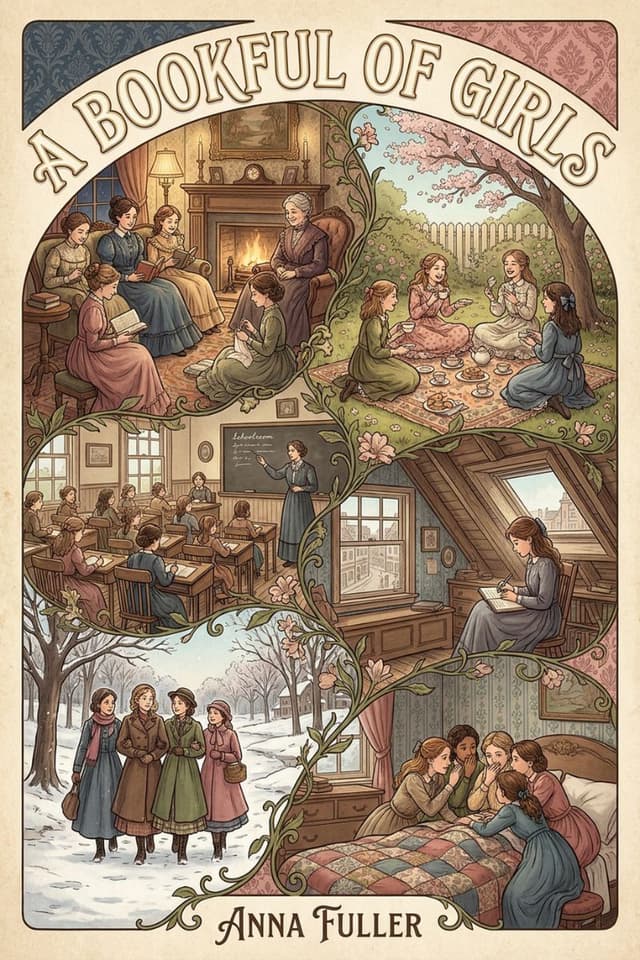
A Bookful of Girls
Read A Bookful of Girls by Anna Fuller for free on Novelhalla, and try out our easy-to-read modern edition of this classic book. You can also download the EPUB and read it on any device if you prefer!
The Plot
A Bookful of Girls is a light social novel that focuses on friendship, youth, and the everyday dramas of young women coming of age in late nineteenth-century America.
A Circle of Friends
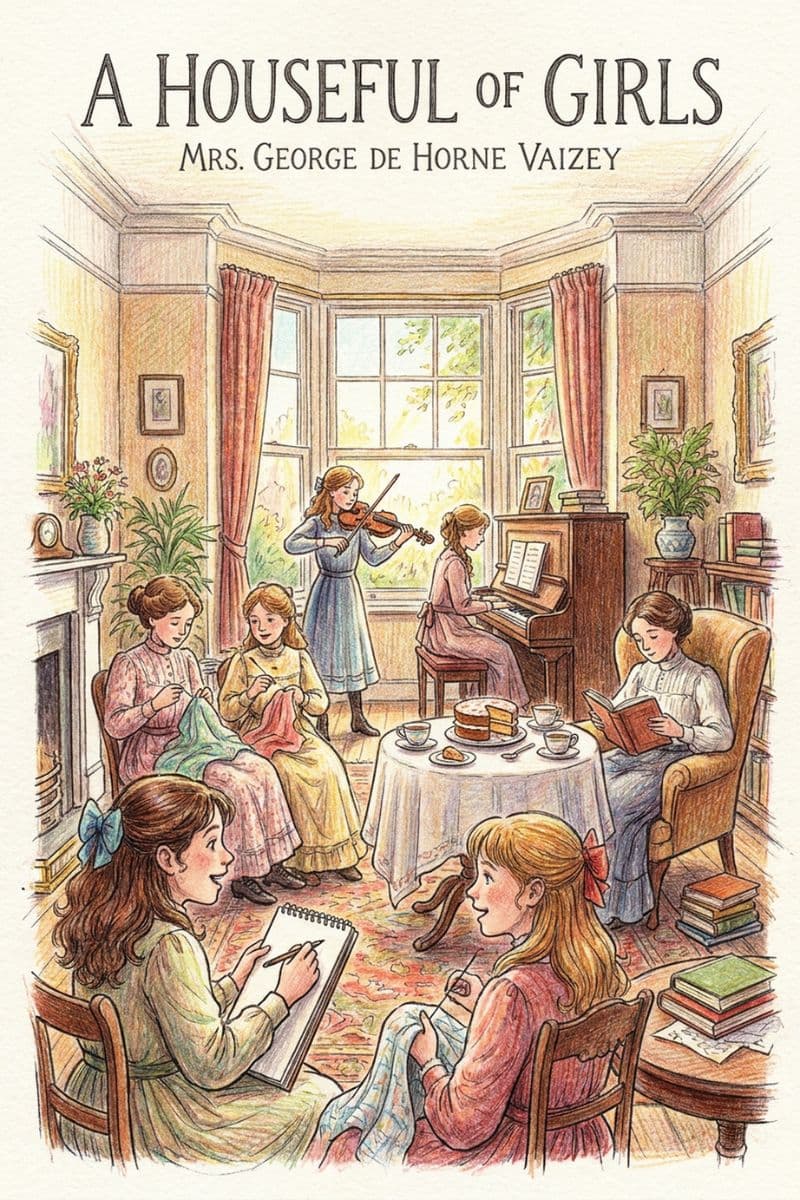
Rather than following a single protagonist, the novel presents a lively group of young women whose personalities, ambitions, and temperaments differ widely. Bound by friendship and shared experiences, they navigate education, social expectations, romance, and independence together.
The episodic structure allows each girl time in the spotlight, creating a collective portrait rather than a tightly plotted narrative.
Everyday Conflicts
The conflicts in the book are small in scale but emotionally recognizable. Misunderstandings, rivalries, disappointments, and shifting affections form the core of the story. Much of the drama unfolds through conversation, observation, and subtle social maneuvering rather than major events.
Fuller places particular emphasis on how young women learn to understand themselves through their relationships with one another.
Growing Up
As the novel progresses, the girls mature intellectually and emotionally. They confront the tension between personal desire and social expectation, especially regarding education, marriage, and independence.
The book avoids moralizing, instead presenting growth as uneven and sometimes uncomfortable. Change happens gradually through experience rather than revelation.
A Gentle Resolution
The novel does not build toward a single climactic ending. Instead, it closes with a sense of continuity, suggesting that the characters’ lives and friendships will carry on beyond the final page.
About the Author: Anna Fuller
Early Life
Anna Fuller was born in 1853 in the United States. She was educated at a time when women’s access to higher learning was expanding, an influence that strongly shaped her fiction.
Literary Career
Fuller became known for novels and stories centered on women’s social lives, friendships, and inner worlds. Her writing often focused on educated, middle- or upper-class women negotiating new possibilities for independence.
A Bookful of Girls, published in 1895, was one of her best-known works and enjoyed wide popularity with readers.
Style and Approach
Fuller favored realism over melodrama. Her prose is conversational and observant, with attention to dialogue, manners, and emotional nuance rather than plot-driven excitement.
Later Life
Though not as widely remembered today, Fuller was part of a generation of women writers who expanded the literary depiction of female friendship and autonomy. She died in 1916.
Fun Facts About the Book
Episodic Structure
The novel reads almost like a series of connected sketches, giving it a relaxed, intimate rhythm.
Focus on Friendship
Unlike many novels of its era, the book places female friendship at the center rather than treating it as secondary to romance.
Contemporary Appeal
Readers at the time praised the novel for its natural dialogue and recognizable characters.
A Snapshot of Change
The book captures a moment when women’s roles were shifting, particularly in education and social freedom.
Themes
Female Friendship
The novel treats friendship as a formative and sustaining force, not merely a background element.
Identity
Each character grapples with questions of selfhood, ambition, and belonging.
Social Expectation
Fuller explores the pressures placed on young women to conform to established norms while quietly questioning those limits.
Growth Through Experience
Maturity in the novel comes from lived experience rather than instruction or moral correction.
Everyday Meaning
By focusing on ordinary moments, the book suggests that significance is found in daily life rather than dramatic turning points.
The Book’s Legacy
A Bookful of Girls remains a representative example of late nineteenth-century women’s social fiction. Its importance lies less in plot innovation and more in its careful attention to friendship, conversation, and the inner lives of young women.
While largely overlooked today, the novel offers valuable insight into changing attitudes toward women, education, and independence during a period of social transition.