Novelhalla
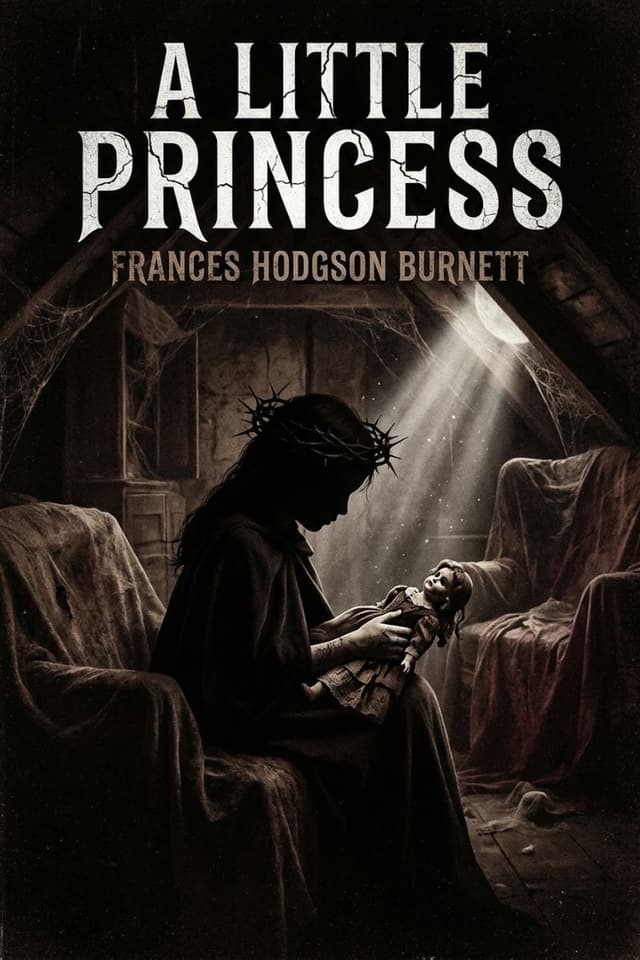
A Little Princess
Read A Little Princess by Frances Hodgson Burnett for free on Novelhalla, and try out our easy-to-read modern edition of this classic book. You can also download the EPUB and read it on any device if you prefer!
The Plot
The Richest Girl at Miss Minchin's
Seven-year-old Sara Crewe has grown up in India, adored by her father, Captain Crewe, who gives her absolutely anything she wants. But children born to British families there are sent home to England for school, and so one foggy London day, Sara arrives at Miss Minchin's Select Seminary for Young Ladies.
She's not your average new student. Her father is fabulously wealthy, and he makes sure everyone knows it. Sara gets her own private sitting room, a French maid, a pony and carriage, closets full of velvet and lace, and an enormous doll named Emily who Sara is half convinced comes alive when no one's looking. Miss Minchin, who loves money far more than she loves children, fawns over her and parades her around as the school's showpiece pupil.
A Princess on the Inside
Here's the surprising thing: Sara isn't spoiled. She's strange, thoughtful, wildly imaginative, and kind. She tells stories so vivid that the other girls crowd around to listen. She befriends Ermengarde, the slow, sweet girl everyone teases, and mothers little Lottie, a four-year-old who throws spectacular tantrums. And she notices Becky, the exhausted, half-starved scullery maid who sneaks peeks at the stories from the doorway, and treats her like a friend.
Sara has a private game she plays with herself. She pretends she's a princess, and she believes a true princess is gracious and generous to everyone, no matter what. It's easy to act like a princess when you have everything. The question is whether she could still do it if she had nothing at all.
The Birthday Party
On Sara's eleventh birthday, Miss Minchin throws her a lavish party, with presents piled high and the whole school celebrating. In the middle of the festivities, a visitor arrives from India with news. Within a single afternoon, Sara's world falls apart. Every luxury disappears, and Miss Minchin's sweetness turns into something cold and cruel.
A Life in the Attic
Sara is moved into a freezing, rat-infested attic next to Becky's and put to work as a servant in the very school where she was once the star pupil. She runs errands through the rain in worn-out boots, goes to bed hungry, and endures the smug satisfaction of Lavinia, the jealous classmate who always resented her.
But Sara refuses to break. She keeps imagining, keeps telling stories, keeps sharing what little she has. Across the rooftops, a mysterious, sorrowful gentleman has moved into the house next door, along with a servant and a mischievous little monkey who keeps finding its way into Sara's attic. And strange things are about to start happening in the coldest room in the house.
About the Author: Frances Hodgson Burnett
Early Life
Frances Eliza Hodgson was born in 1849 in Manchester, England. Her father died when she was just a toddler, and the family's comfortable life slipped steadily into poverty as her mother tried to keep his business afloat. Frances escaped into books and made up endless stories, often acting them out with her dolls.
A New Start in America
In 1865, when Frances was fifteen, the family emigrated to Tennessee, hoping for a better life near relatives. Things didn't go smoothly and money was painfully tight. Determined to help, Frances decided to sell a story to a magazine. According to family legend, she and her sister picked wild grapes and sold them to pay for the postage and paper. Her first story was accepted, and by her late teens she was supporting the family with her writing.
Fame and Family
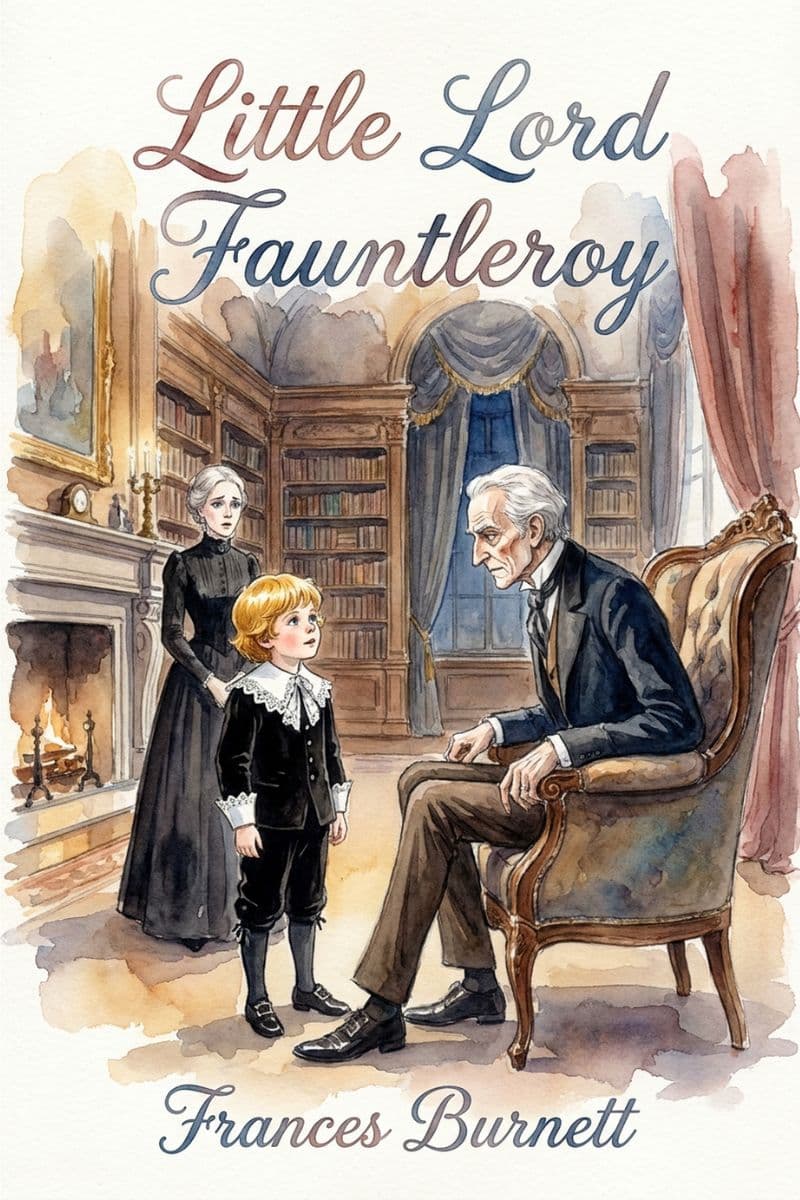
She married Swan Burnett, a doctor, in 1873, and they had two sons, Lionel and Vivian. Her early novels for adults were well received, but her breakthrough came in 1886 with Little Lord Fauntleroy, a children's book that became a full-blown phenomenon. Its hero was modeled partly on Vivian, and the velvet suits with lace collars he wore sparked a fashion craze among parents (and a lot of misery among the boys forced to wear them).
When an unauthorized stage version of Little Lord Fauntleroy appeared in England, Burnett sued and won, in a case that helped strengthen authors' rights over adaptations of their work.
Heartbreak and Reinvention
In 1890, her older son Lionel died of tuberculosis at fifteen, a loss that devastated her for the rest of her life. She later divorced Swan Burnett, made a short-lived second marriage, and divided her time between England and America. For several years she rented Great Maytham Hall in Kent, where she restored an old walled garden that later inspired The Secret Garden (1911).
Final Years
Burnett settled for good in Plandome, on Long Island, New York, where she gardened, wrote, and remained one of the most popular authors of her day. She died there in 1924 at age 74.
Fun Facts About the Book
The Same Story, Three Times
A Little Princess went through three versions. It started as a short novel called Sara Crewe, or What Happened at Miss Minchin's, serialized in St. Nicholas Magazine beginning in December 1887. In 1902 Burnett turned it into a stage play, and then her publisher asked her to expand the whole thing into a full novel, which came out in 1905.
The Full Title Is a Tease
The 1905 book's complete title is A Little Princess: Being the Whole Story of Sara Crewe Now Being Told for the First Time. Burnett explained that writing the play made her realize there were scenes and people she'd left out of the original story, so the novel was her chance to tell everything.
The Play Had a Different Name
The 1902 stage version opened in London as A Little Un-fairy Princess. When it moved to New York in early 1903, the title got trimmed to something a little catchier.
Beautifully Illustrated
The first edition, published by Charles Scribner's Sons, featured twelve full-page color illustrations by Ethel Franklin Betts.
Burnett Admitted Sara Wasn't Perfect
Sara is famously good-hearted, but Burnett made a point of noting that she isn't flawless. Sara has a temper, struggles with pride, and sometimes has to fight hard not to say cruel things back to the people who hurt her, which makes her goodness feel earned.
The Doll Named Emily
Sara's doll, Emily, is one of the most memorable "characters" in the book. Sara talks to her, confides in her, and half believes Emily listens. It's a small detail that perfectly captures how Sara's imagination keeps her going.
Miss Minchin Is Built to Hate
Miss Minchin has become one of the great villains of children's literature, not because she's monstrous, but because she's so recognizably petty, greedy, and snobbish. Readers have been rooting against her for well over a century.
Themes
Imagination as Survival
Sara's greatest strength isn't money or status. It's her imagination. When she's cold, she imagines warmth. When she's hungry, she imagines a feast. The book makes a powerful case that the stories we tell ourselves can carry us through almost anything.
What Makes Someone Truly Noble
Sara's princess game asks a big question: is nobility about what you own and how others treat you, or is it about how you treat others? The book is firmly on one side, and it shows the difference through every character's reaction to Sara's change in fortune.
Kindness Without Conditions
Sara is generous when she's rich, and even more striking, she stays generous when she has almost nothing. One of the most memorable moments in the book centers on what she does when she's starving and finds a little money in the street.
Money and Snobbery
Miss Minchin and Lavinia show how wealth can warp people, turning respect into something you can buy and drop the moment the money runs out. The book has a lot of fun exposing how shallow that kind of admiration really is.
Friendship Across Social Lines
Sara's friendship with Becky, a servant girl who would normally be invisible to the students, is the emotional heart of the novel. Their bond shows that the walls between classes are made by people, and can be crossed.
Resilience
Above all, this is a story about holding on to who you are when the world tries to take everything else away.
The Book's Legacy
Along with The Secret Garden and Little Lord Fauntleroy, A Little Princess is one of the three books that made Frances Hodgson Burnett a giant of children's literature, and it's never gone out of print.
It's been adapted many times. Mary Pickford starred in a 1917 silent film, and Shirley Temple played Sara in the 1939 version, one of the most famous films of her career. Alfonso Cuarón directed a lush 1995 adaptation that earned Academy Award nominations for its cinematography and art direction. There have also been TV miniseries, stage musicals, a Japanese anime series, and countless retellings.
Its influence runs deep. The rags-to-riches orphan, the cruel headmistress, the cold attic, and the child who survives through imagination all became enduring building blocks of children's fiction. Readers who loved stories like Matilda or Harry Potter's cupboard under the stairs are walking a path Sara Crewe helped clear.
More than anything, the book has lasted because Sara herself has lasted. Generations of readers have grown up wanting to be the kind of person who stays kind when life is unfair, and Sara has been showing them how for more than a century.