Novelhalla
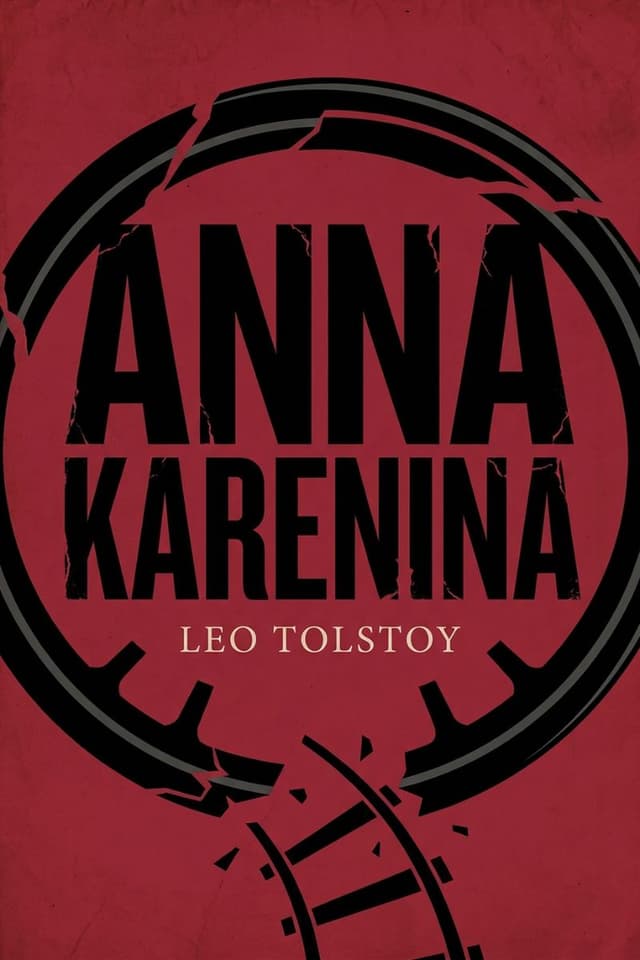
Anna Karenina
Read Anna Karenina by Leo Tolstoy for free on Novelhalla, and try out our easy-to-read modern edition of this classic book. You can also download the EPUB and read it on any device if you prefer!
The Plot
A Household in Chaos
The story opens in Moscow, in the home of Stepan Oblonsky, a charming, easygoing aristocrat everyone calls Stiva. Stiva has a problem. His wife, Dolly, has just discovered he's been having an affair with the family's former governess, and the whole house has fallen apart. Dolly is threatening to leave, the servants are taking sides, the children are running wild, and Stiva, who genuinely can't understand why everyone's so upset, has summoned the one person he thinks can fix it: his sister Anna.
Anna Arrives
Anna Karenina comes down from St. Petersburg, where she lives a polished, respectable life as the wife of Alexei Karenin, a powerful, cold, and very proper government official, and the mother of a young son she adores. She's beautiful, warm, intelligent, and magnetic. Everyone who meets her falls a little bit under her spell.
At the Moscow train station, she meets Count Alexei Vronsky, a dashing young cavalry officer who's been escorting his mother on the same train. It's only a brief moment on a crowded platform. But neither of them forgets it.
A Ball and a Broken Heart
Meanwhile, Dolly's younger sister Kitty is eighteen, lovely, and in the middle of her first glittering social season. Two men want her. One is Konstantin Levin, an awkward, intensely serious landowner who has loved her for years and finally works up the courage to propose. The other is Vronsky, who's been paying her so much attention that everyone, Kitty included, assumes a proposal is coming any day.
Then comes a grand ball. Kitty arrives in a pink dress, glowing and certain her future is about to be decided. Anna arrives in black. And as the evening goes on, Kitty watches something happen between Anna and Vronsky that changes everything.
Two Paths
From there, the novel follows two very different lives. In the countryside, Levin throws himself into running his estate, working alongside the peasants in his fields and wrestling with big questions about faith, work, and what makes a life worth living.
In St. Petersburg, Anna tries to return to her ordinary world, but Vronsky follows her. The high society that once admired her is watching closely, her husband is beginning to notice, and Anna has to decide what she's willing to risk for a feeling she can't seem to control. Then, at a crowded officers' steeplechase with half of Petersburg looking on, a single unguarded moment threatens to expose everything.
About the Author: Leo Tolstoy
Early Life
Count Lev Nikolayevich Tolstoy was born in 1828 at Yasnaya Polyana, his family's country estate south of Moscow. He came from old Russian nobility, but his childhood was marked by loss. His mother died when he was two and his father when he was nine, and he was raised by relatives. He went to Kazan University but dropped out, spending the next several years drifting, gambling, running up debts, and filling his diary with resolutions to become a better person that he almost never kept.
The Soldier Who Wrote
In the early 1850s Tolstoy followed his older brother into the army and served in the Caucasus, where he started writing seriously. His first book, Childhood, was a hit. He then fought in the Crimean War during the siege of Sevastopol, and his Sevastopol Sketches, with their unflinching descriptions of real combat, made him famous in Russia.
Family and Masterpieces
In 1862 he married Sophia Behrs, who was sixteen years younger than him. They had thirteen children, and Sophia became his secretary and copyist, famously writing out drafts of his enormous manuscripts by hand over and over again. During the first fifteen or so years of their marriage, Tolstoy wrote War and Peace and then Anna Karenina, the two novels that put him among the greatest writers who ever lived.
The Crisis
In the late 1870s, right around the time he finished Anna Karenina, Tolstoy fell into a deep spiritual crisis. He became obsessed with the meaning of life and death, eventually developing his own radical version of Christianity built around nonviolence, simple living, and rejecting the authority of church and state. He gave up meat, alcohol, and hunting, dressed like a peasant, and tried to give away his property, which caused enormous conflict with his wife. His ideas on nonviolent resistance deeply influenced a young Mahatma Gandhi, who corresponded with him. In 1901 the Russian Orthodox Church excommunicated him.
Final Years
Tolstoy became a world-famous moral figure, with pilgrims traveling to Yasnaya Polyana to see him. He was nominated for the Nobel Prize repeatedly but never won. In November 1910, at age 82, he secretly left home in the middle of the night to escape his unhappy marriage and live as a wanderer. He fell ill with pneumonia within days and died in the small village of Astapovo. He's buried at Yasnaya Polyana in a simple grave with no headstone.
Fun Facts About the Book
One of the Most Famous First Lines Ever
The novel opens with the line "Happy families are all alike; every unhappy family is unhappy in its own way." It's one of the most quoted opening lines in all of literature, and it's even inspired a scientific concept called the "Anna Karenina principle," which describes how success often depends on avoiding every one of many possible failures.
It Was Released in Installments
Like many novels of its time, Anna Karenina came out in pieces in a magazine called The Russian Messenger, with readers following it over several years in the mid-1870s.
The Editor Wouldn't Print the Ending
Tolstoy had a falling out with the magazine's editor, Mikhail Katkov, over the last part of the novel, which included Tolstoy's unpopular views on Russian volunteers heading off to fight in the Balkans. Katkov refused to publish it as written, so the complete novel didn't appear until it came out as a book in 1878.
Anna Was Inspired by Pushkin's Daughter
Tolstoy met Maria Hartung, the elder daughter of the legendary Russian poet Alexander Pushkin, at a dinner. Her elegance stuck with him, and she's believed to have helped inspire Anna's looks and bearing. Tolstoy later described the first spark of the character coming to him as a daydream of a bare, aristocratic elbow.
Levin Is Basically Tolstoy
Konstantin Levin is widely seen as Tolstoy's stand-in, sharing his restlessness, his love of farming, his awkwardness in society, and his endless questions about faith and the meaning of life. Even the name comes from Tolstoy's own first name, Lev.
Tolstoy Considered It His First Real Novel
As strange as it sounds, Tolstoy didn't think of War and Peace as a novel at all. He saw it as something bigger and harder to classify, which made Anna Karenina, in his view, the first true novel he ever wrote.
Critics Didn't Get It at First
Some Russian critics at the time brushed it off as a trivial society romance. Dostoevsky disagreed completely and called it flawless as a work of art. Later, Vladimir Nabokov adored its style, and William Faulkner called it the best novel ever written.
Voted the Greatest Novel Ever Written
In 2007, a poll of 125 prominent authors for the book The Top Ten ranked Anna Karenina number one, ahead of every other novel in history.
Karenin or Karenina?
You'll sometimes see the book called Anna Karenin. In Russian, women's surnames take a feminine ending, so Karenin's wife is Karenina. Some early English translators dropped the ending to make it sound more natural in English.
Themes
Passion Versus Society
Anna lives in a world where affairs are quietly tolerated as long as everyone keeps up appearances. The novel asks what happens when someone refuses to pretend, and how a society that forgives hypocrisy reacts to honesty.
Two Kinds of Love
The book is built around a contrast between two love stories. One is a sweeping, dangerous passion that defies every rule. The other is quieter, clumsier, and rooted in everyday life. Tolstoy sets them side by side and lets readers wrestle with what each one costs and offers.
Family
From the very first line, this is a novel about families: what holds them together, what tears them apart, and how the choices of one person ripple out to everyone around them.
The Search for Meaning
Levin's story is driven by huge questions. Why are we here? How should we live? What do we do with the knowledge that we're going to die? Tolstoy was asking himself the same things as he wrote, and you can feel his urgency on the page.
City Versus Country
The glittering ballrooms and drawing rooms of Moscow and St. Petersburg are contrasted with the fields, harvests, and seasons of country life. Tolstoy clearly has opinions about which world is more real.
Judgment and Hypocrisy
Who gets punished for breaking society's rules, and who gets away with it? The novel pays very close attention to the double standards of the world it describes, and Stiva's breezy, consequence-free life is a pointed part of that picture.
The Book's Legacy
Anna Karenina is regularly named among the greatest novels ever written, and it's still a staple of every serious list of the world's essential books. It's admired especially for its psychological realism. Tolstoy gets inside his characters' heads in ways that felt startlingly modern, tracing every flicker of jealousy, pride, hope, and self-deception.
Anna herself has become one of literature's most iconic and debated heroines, alongside figures like Emma Bovary. Readers have argued about her for nearly 150 years, and they're still not done.
The novel has been adapted constantly. Greta Garbo played Anna twice, in the silent film Love in 1927 and again in 1935. Vivien Leigh took the role in 1948, Sophie Marceau in 1997, and Keira Knightley in Joe Wright's theatrical 2012 version with a screenplay by Tom Stoppard, which won the Academy Award for Best Costume Design. There have been ballets, operas, stage plays, and many Russian and British television versions.
It's also reached huge new audiences in modern times, including a turn as an Oprah's Book Club pick in 2004, which sent a 900-page Russian novel from the 1870s soaring up the bestseller lists. That's a pretty good sign of just how gripping it still is.