Novelhalla
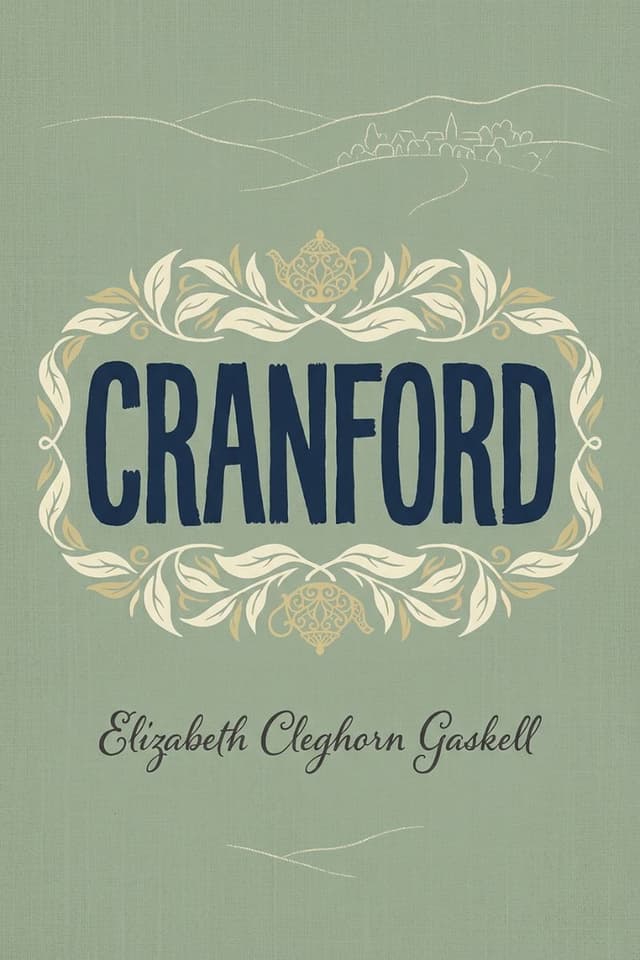
Cranford
Read Cranford by Elizabeth Cleghorn Gaskell for free on Novelhalla, and try out our easy-to-read modern edition of this classic book. You can also download the EPUB and read it on any device if you prefer!
The Plot
Cranford is not a novel with a conventional plot. Instead, it unfolds as a series of interconnected sketches depicting life in a small English village dominated by elderly women. The fictional town of Cranford is based on Knutsford, the Cheshire village where Elizabeth Gaskell spent her childhood.
The World of Cranford
The novel opens with a famous declaration: "In the first place, Cranford is in possession of the Amazons." The town's society is ruled almost entirely by women, most of them widows or spinsters living on modest fixed incomes. Their husbands, if they ever existed, have died or disappeared on business elsewhere. The few men who do appear tend not to stay long.
These genteel ladies have developed an elaborate code of conduct they call "elegant economy." They never speak openly of money or poverty. They visit each other only during approved hours. They serve inexpensive refreshments but pretend not to notice. They go to bed early to save on candles. Every aspect of their lives is governed by rigid propriety, and any breach of etiquette becomes the subject of intense discussion.
Captain Brown's Disruption
The novel's first disruption comes with Captain Brown, a retired military officer who has moved to Cranford with his two daughters. He commits the unthinkable sin of openly discussing his poverty. Miss Deborah Jenkyns, the unofficial matriarch of Cranford society, is scandalized. She and the Captain also clash over literature: he prefers Dickens while she champions Samuel Johnson.
Yet despite his vulgarity, Captain Brown wins the town's affection through his genuine kindness. He helps everyone, listens attentively, and treats all the ladies with respect. When he is killed trying to save a child from an oncoming train, the ladies rally around his surviving daughter Jessie, eventually helping her marry her old suitor Major Gordon.
Miss Matty Takes Center Stage
After Miss Deborah Jenkyns dies, her younger sister Miss Matty becomes the novel's central figure. Where Deborah was strong-minded and commanding, Matty is gentle, timid, and perpetually worried about doing things properly. She has spent her life deferring to her sister's opinions and now struggles to make decisions on her own.
Through Miss Matty, we learn of old sorrows. Long ago, she loved a farmer named Mr. Holbrook, but Deborah and their father considered him beneath her station and prevented the match. When Mr. Holbrook reappears and invites Matty to dinner, a possible rekindling seems imminent, but he dies shortly after a trip to Paris, leaving Matty to mourn what might have been.
We also learn of Miss Matty's brother Peter, who ran away from home as a boy after their father publicly flogged him for a prank. Peter joined the army and was last heard of fighting in India. Their mother died of grief at never seeing him again.
About the Author: Elizabeth Gaskell
Early Life
Elizabeth Cleghorn Stevenson was born on September 29, 1810, in Chelsea, London. Her father, William Stevenson, was a Unitarian minister who later became a writer and civil servant. Her mother died when Elizabeth was just a year old, and the infant was sent to live with her mother's sister, Hannah Lumb, in the small Cheshire town of Knutsford.
This arrangement proved happy. Elizabeth later called her aunt "my more than mother." She spent thirteen formative years in Knutsford, absorbing the rhythms of small-town life, the gossip, the social hierarchies, and the eccentric characters who would later populate her fiction. Knutsford became Cranford, and Gaskell's childhood memories formed the foundation of her most beloved work.
Loss and Education
Elizabeth's only brother, John, joined the merchant navy and disappeared during a voyage to India in 1827. This loss echoed through her writing; several of her works feature brothers who vanish overseas and return unexpectedly.
She attended a progressive school in Stratford-upon-Avon run by the Byerley sisters, who catered to Unitarian and liberal families. After leaving school at seventeen, she nursed her father through his final illness until his death in 1829.
Marriage and Manchester
In 1832, Elizabeth married William Gaskell, a Unitarian minister at Cross Street Chapel in Manchester. They settled in that rapidly industrializing city, which offered a stark contrast to her rural Knutsford childhood. Manchester was the center of the cotton industry, full of factories, workers living in appalling squalor, and political unrest.
The Gaskells had six children, though their only son died in infancy at ten months, a loss that devastated Elizabeth. Her husband suggested she try writing to cope with her grief, advice that launched her literary career.
Literary Career
Gaskell's first novel, Mary Barton (1848), drew directly on her Manchester experiences, depicting the desperate lives of factory workers with unprecedented sympathy. The book was controversial but successful, winning praise from Thomas Carlyle and Charles Dickens.
Dickens invited her to contribute to his magazine Household Words, where Cranford first appeared as a series of sketches beginning in 1851. She never intended to write more than the first installment, but Dickens encouraged her to continue, and readers responded enthusiastically. The complete novel was published in 1853.
Her other major works include Ruth (1853), a controversial novel about an "fallen woman" treated with compassion; North and South (1854-55), which explored industrial conflict; and Wives and Daughters (1864-66), left unfinished at her death.
The Bronte Biography
In 1857, Gaskell published The Life of Charlotte Bronte at the request of Charlotte's father. The two women had become friends, and Gaskell's biography, while controversial for its revelations about the Bronte family, established Charlotte's lasting fame and is considered one of the first modern literary biographies.
Death
Elizabeth Gaskell died suddenly of a heart attack on November 12, 1865, while visiting a house in Hampshire that she had secretly purchased as a retirement gift for her husband. She was 55. Wives and Daughters was published posthumously, its final chapter unwritten. She is buried near Brook Street Chapel in Knutsford, the town she immortalized as Cranford.
Fun Facts About the Book
Not Meant to Be a Novel
Gaskell never planned to write Cranford. The first two chapters were published in Household Words in December 1851 as a standalone sketch called "Our Society in Cranford." Only Charles Dickens's encouragement, and the enthusiastic reader response, prompted her to continue. She wrote additional episodes sporadically over eighteen months, resulting in the episodic structure that defines the book.
The Cow in Flannel
One of the novel's most famous comic moments involves Miss Betty Barker's beloved Alderney cow, which falls into a lime pit and loses most of its hair. Captain Brown jokingly suggests clothing the shivering animal, and Miss Barker takes the advice literally, sewing the cow a complete outfit of grey flannel. The entire town turns out to watch the cow go to pasture in its new wardrobe. This incident was based on an actual event Gaskell remembered from Knutsford.
The Pea Problem
In a memorable dinner scene, the ladies face a dilemma: Mr. Holbrook eats his peas with a knife (then a common practice), but to do so would be "ungenteel." The young narrator tries it, but the older ladies cannot bring themselves to commit such a breach of etiquette, and "the good peas went away almost untouched."
How to Eat an Orange
The novel includes elaborate instructions on the proper way for a lady to eat an orange in company, involving gradual peeling, division into segments, and the use of a handkerchief to avoid any unseemly juice.
Based on Real People
Many Cranford characters were based on actual Knutsford residents Gaskell remembered from childhood. In a letter to John Ruskin, she admitted she had included less than she actually knew "for fear of being thought to exaggerate."
Slow Success
Cranford was not widely reviewed when first published and took decades to become truly popular. It was the illustrated editions of the 1890s, particularly Hugh Thomson's 1891 version with its nostalgic Regency-style illustrations, that transformed it into a beloved classic.
The Term "Elegant Economy"
Gaskell coined this phrase, which perfectly captures the Cranford ladies' approach to genteel poverty: maintaining appearances through careful thrift while pretending not to notice each other's financial constraints.
Written During Ruth
Gaskell wrote the later Cranford chapters while simultaneously working on Ruth, her controversial novel about illegitimacy. The contrast between the two works could hardly be starker: one a gentle comedy of manners, the other a serious social problem novel. Both were published in 1853.
The BBC Adaptation
The 2007 BBC television adaptation, starring Judi Dench, Eileen Atkins, and Imelda Staunton, combined Cranford with material from several other Gaskell works. It introduced the novel to a new generation of readers and is often credited with reviving interest in Gaskell's writing.
Themes
Female Community and Independence
Cranford depicts a world run by women, and Gaskell is sympathetic to this arrangement. The "Amazons" of Cranford support each other through crises, pool resources to help those in need, and maintain their dignity despite limited means. The novel suggests that women can create meaningful, supportive communities without male involvement.
Elegant Economy and Class Anxiety
The elaborate code of "elegant economy" reveals the anxieties beneath genteel poverty. The Cranford ladies are desperate to maintain their status as gentlewomen despite their dwindling incomes. Their refusal to discuss money openly, their careful economies, and their terror of appearing vulgar all reflect the precarious position of the Victorian middle class.
Old Ways vs. New
Cranford represents a vanishing England. The railway that kills Captain Brown also symbolizes the industrial changes transforming the country. The town is out of step with the modern world represented by Drumble (Manchester). Gaskell treats the old ways with affection but also gentle irony, acknowledging that change is inevitable.
Kindness vs. Propriety
Throughout the novel, moments of genuine kindness triumph over rigid propriety. Captain Brown wins the town despite his vulgarity. The ladies help Miss Matty despite the awkwardness of her reduced circumstances. Lady Glenmire marries beneath her station for love. Gaskell suggests that human connection matters more than social rules.
Lost Opportunities and Second Chances
Miss Matty's story is one of opportunities lost to propriety. She gave up Mr. Holbrook because others deemed him unsuitable. She lost her brother to family conflict. Yet the novel offers hope: Peter returns, and Miss Matty finds contentment. Gaskell suggests it is never too late for reconciliation and happiness.
The Book's Legacy
Cranford holds an unusual place in literary history. During the twentieth century, it was often dismissed as minor, sentimental, or merely quaint. Gaskell herself was overshadowed by her more famous contemporaries and remembered primarily as Charlotte Bronte's biographer.
Since the 1970s, feminist scholars have rediscovered Cranford as a significant work of proto-feminist literature. Its depiction of a functioning female community, its attention to women's economic vulnerability, and its celebration of female friendship have attracted new critical attention.
The 2007 BBC adaptation brought Cranford to millions of new viewers and sparked renewed interest in Gaskell's entire body of work. Today she is recognized as one of the major Victorian novelists, and Cranford is read not just as a charming period piece but as a subtle exploration of gender, class, and community in a changing world.