Novelhalla
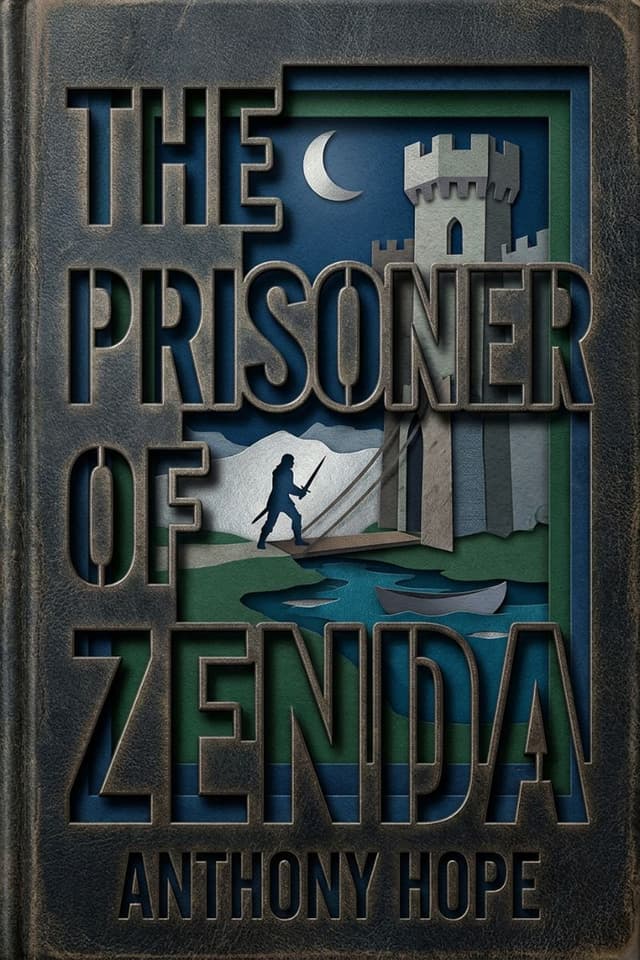
The Prisoner of Zenda
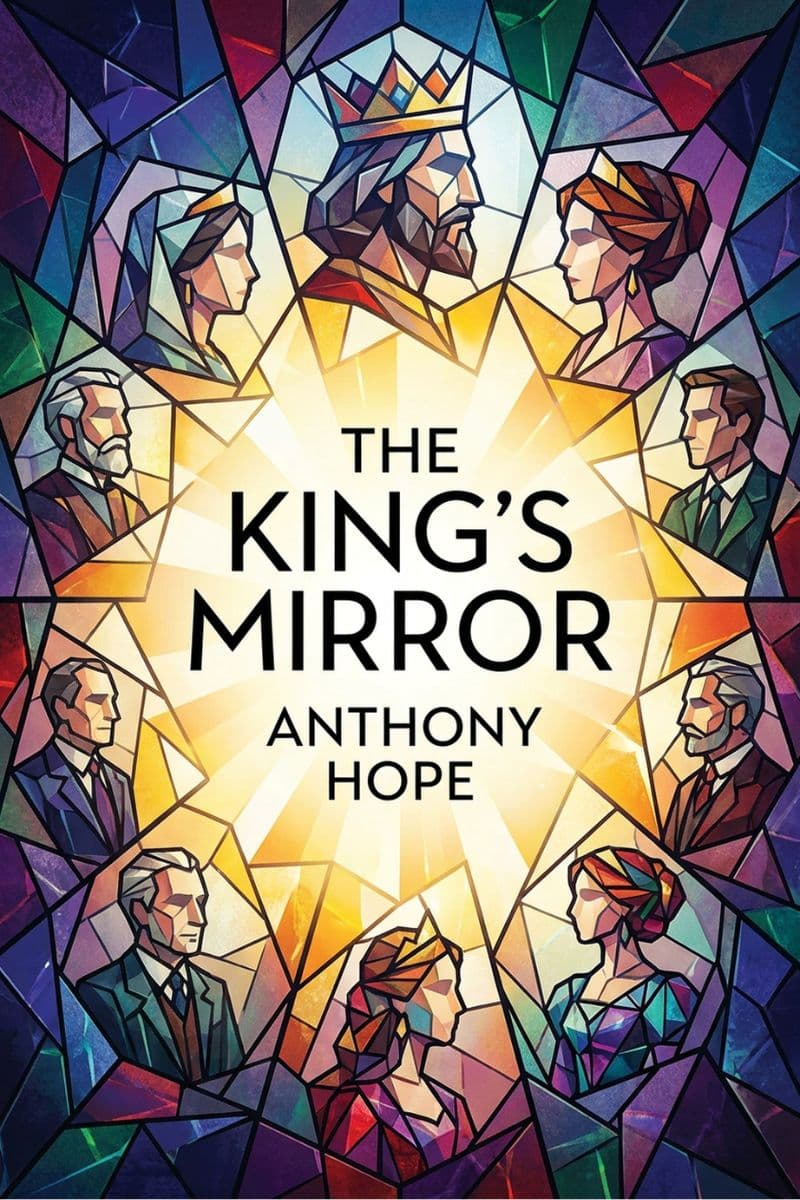
Read The Prisoner of Zenda by Anthony Hope for free on Novelhalla, and try out our easy-to-read modern edition of this classic book. You can also download the EPUB and read it on any device if you prefer!
The Plot
The Englishman Abroad
Rudolf Rassendyll is a well-bred, well-educated, thoroughly idle English gentleman with no particular ambitions and no desire to acquire any. He has a good income, a sharp mind, and absolutely nothing to do with either. His sister-in-law Rose keeps nagging him to get a profession, but Rassendyll has other plans. He's going on a fishing holiday to Ruritania, a small kingdom tucked somewhere in the middle of Europe that most people have never heard of.
There's one odd thing about Rassendyll, though. Thanks to a scandalous chapter in his family history, he bears an uncanny resemblance to the Ruritanian royal family. Same red hair. Same long, straight nose. Same face, really. It's the kind of coincidence that would be absurd if it weren't backed up by a portrait on his dining room wall and a grandmother who preferred not to discuss it.
A Dangerous Resemblance
Rassendyll arrives in Ruritania just as the country is preparing for the coronation of King Rudolf the Fifth. He stumbles into the orbit of Colonel Sapt and Fritz von Tarlenheim, two loyal officers of the king, who are stunned by how much this random Englishman looks like their monarch. When the three men are introduced to the king himself, even Rudolf is startled. The resemblance is extraordinary. They share a family tree, it turns out, and they share a face.
The king invites Rassendyll to dine at his hunting lodge the night before the coronation. They eat, they drink, they drink some more. The king's half-brother, Duke Michael, known as "Black Michael," has sent over a particularly fine wine. The king drinks every drop.
By morning, he cannot be woken up.
The Impersonation
The wine was drugged. And with the coronation just hours away, Colonel Sapt faces a brutal choice. If the king doesn't show up at the cathedral, Black Michael will seize the throne. Michael commands loyalty in the capital. He has soldiers, money, and ambition. The only thing standing between him and the crown is a ceremony that his half-brother now cannot attend.
Unless someone attends it for him.
Rassendyll is horrified. But Sapt is persuasive, and the logic is iron. Either Rassendyll walks into that cathedral and pretends to be the king, or Michael wins. There is no third option.
So Rassendyll puts on the uniform, rides to the capital, and is crowned King of Ruritania in front of the entire nation. He waves, he smiles, he plays the part. And standing in the crowd, watching everything with cold, calculating fury, is Black Michael, who knows exactly what has happened.
The Princess
There is one complication Rassendyll didn't anticipate. Princess Flavia.
She is the king's cousin and his expected bride. She is beautiful, intelligent, and has spent years enduring Rudolf's indifference. But the man standing before her now is not the king she knows. This Rudolf is attentive, charming, and present in a way the real king never was. Flavia begins to fall in love with him.
And Rassendyll begins to fall in love with her.
This is a catastrophe, and he knows it. He is living in another man's life, wearing another man's crown, and falling for another man's future wife. Every moment he spends with Flavia makes the eventual reckoning worse. But every moment he spends with her also makes it harder to stop.
The Prisoner
Meanwhile, Black Michael has not been idle. While Rassendyll was playing king at the coronation, Michael's men seized the real Rudolf and locked him in the castle at Zenda, a fortress surrounded by a moat with walls that might as well be made of iron. The king is alive, but barely. Michael's orders are clear: if anyone attempts a rescue, the king dies and his body disappears into the water. No evidence. No witnesses. No king.
Rassendyll and his small band of loyalists know where Rudolf is. They know who holds him. What they don't know is how to get him out alive. Because Michael has stacked the deck. He's surrounded himself with six dangerous men, including the dazzling and utterly unprincipled Rupert of Hentzau, a young nobleman who fights like a devil and smiles while he does it.
The Game
What follows is a deadly chess match played across drawing rooms and forests, castle walls and moonlit gardens. Rassendyll must keep pretending to be king long enough to rescue the real one, all while Black Michael tightens the noose. Michael can't openly accuse Rassendyll without admitting he kidnapped the king. Rassendyll can't reveal the deception without handing the throne to Michael. They are locked together, each holding a secret that would destroy them both.
And between them stands Rupert of Hentzau, loyal to no one but himself, who sees the whole situation as a magnificent game and intends to be the last man standing when it's over.
The clock is ticking. The king grows weaker in his cell. Michael grows bolder in his scheming. And Rassendyll is falling deeper into a life that was never his, loving a woman he can never have, knowing that the best possible outcome still ends with him losing everything that matters.
The rescue will come down to cold water, sharp steel, and a handful of men willing to die for a king who doesn't know they're coming.
About the Author: Anthony Hope
The Lawyer Who Walked Away
Anthony Hope Hawkins was born in London in 1863, the son of a clergyman and headmaster. He was educated at Marlborough College and Balliol College, Oxford, where he excelled academically and became president of the Oxford Union. He trained as a barrister, was called to the bar in 1887, and seemed set for a perfectly respectable legal career. He even stood as a Liberal candidate for Parliament in 1892, though he lost.
But while practicing law, Hope had been writing in his spare time, publishing novels that sold modestly and attracted little attention. That changed in the autumn of 1893, when the plot of a new story came to him during a walk through London. He wrote the first draft in a month, scribbling two chapters a day between court appearances. The book was in print by April 1894.
Instant Fame
The success of the novel was immediate and enormous. Robert Louis Stevenson praised it. Andrew Lang praised it. The public devoured it. Hope followed it the same year with The Dolly Dialogues, a witty collection of society sketches, and suddenly he had a choice to make: law or literature. He chose literature and never looked back.
He toured America in 1897, where reporters noted his resemblance to his own hero: well-dressed, sharp, charming, with a dry sense of humor. He published a sequel in 1898 and wrote more than thirty books over his lifetime, though none matched the lightning strike of his most famous work.
A Literary Family
Hope was cousin to Kenneth Grahame, the author of The Wind in the Willows. When Grahame died in 1932, Hope wrote the epitaph for his gravestone, a lovely tribute to a man who made childhood and literature "more blest for all time."
Later Years
Hope married an American woman, Elizabeth Somerville Sheldon, in 1903. They had two sons and a daughter. He was knighted in 1918 for his contributions to propaganda work during World War I and spent his later years at his country estate in Surrey. He died of throat cancer in 1933 at the age of seventy.
Fun Facts About the Book
Written in a Month
Hope conceived the entire plot during a walk through London and wrote the first draft in roughly a month, fitting the writing around his legal work. The speed shows in the novel's breathless pace. It reads like a man who couldn't get the story down fast enough.
It Invented a Genre
The novel didn't just tell a story set in a fictional European kingdom. It created an entire literary category. The "Ruritanian romance," stories set in imaginary Central or Eastern European countries full of royal intrigue and swashbuckling, became a recognized genre named after Hope's fictional Ruritania. Writers from Edgar Rice Burroughs to Dorothy L. Sayers were influenced by it, and Hergé's Tintin comics feature the Ruritania-inspired countries of Syldavia and Borduria.
The Word "Ruritania" Entered the Dictionary
Hope's invented country name became a real English word. "Ruritanian" entered common usage to mean any romanticized, fictional setting involving royal courts and political intrigue. The Oxford English Dictionary defines it as "the novelist's and dramatist's locale for court romances in a modern setting." Not many novelists get to add a word to the language.
The Sequel
Hope published a sequel, Rupert of Hentzau, in 1898, centered on the charismatic villain from the first book. The sequel is darker and more morally complex than the original, and some readers consider it even better. The two novels are often published together.
Robert Louis Stevenson Was a Fan
Stevenson, the author of Treasure Island and Kidnapped and one of the towering adventure writers of the century, praised Hope's novel. Coming from the man who essentially defined the modern adventure story, that was about as high a compliment as a young novelist could receive.
A Lawyer's Instinct for Plotting
Hope's legal training shows in the novel's construction. The central conflict isn't just about swordfights and castles. It's about two men trapped in a logical deadlock, each holding information that would destroy the other, neither able to act without exposing himself. It's the kind of problem a barrister would love.
Themes
Identity and Performance
Rassendyll doesn't just look like the king. He becomes a better king than the king. He's more attentive to Flavia, more decisive with the court, more commanding in public. The novel keeps prodding at an uncomfortable question: if the impostor does the job better than the real thing, what exactly makes someone the "real" king?
Duty vs. Desire
The heart of the novel is the collision between what Rassendyll wants and what he knows is right. He loves Flavia. She loves him. He could, conceivably, keep the crown and the woman and let the real Rudolf rot. The fact that he never seriously considers this is what makes him a hero, but the novel doesn't pretend the sacrifice is painless.
Honor in a Cynical World
Rassendyll, Sapt, and Fritz operate by a code of honor that the villains find genuinely puzzling. Michael schemes. Rupert of Hentzau treats loyalty as a joke. The novel asks whether old-fashioned virtues like courage, self-sacrifice, and keeping your word still mean anything when the people around you have abandoned them entirely.
The Allure of the Villain
Rupert of Hentzau is one of the great literary villains precisely because he's so likable. He's brave, witty, impossibly handsome, and completely without conscience. He fights brilliantly and betrays everyone with a smile. Hope makes the reader half-admire him even while hoping he gets what's coming to him. The novel understands that the most dangerous people are often the most charming.
The Book's Legacy
One of the Most Adapted Stories Ever
The novel has been adapted for stage, screen, radio, and television more times than almost any other adventure story. The first stage production opened in 1895, just a year after publication. The first film version came in 1913. The definitive adaptation is the 1937 Hollywood version produced by David O. Selznick and starring Ronald Colman, which holds a perfect score on Rotten Tomatoes and was selected for preservation in the National Film Registry by the Library of Congress. A 1952 Technicolor remake starred Stewart Granger and James Mason and used the same screenplay virtually word for word.
Hollywood's Favorite Template
The novel's "commoner impersonates royalty" plot became one of the most recycled story structures in film and television history. You can trace its DNA through everything from The Great Race to Dave to The Prince and the Pauper adaptations. Even Star Trek borrowed from it. Director Nicholas Meyer ordered the Starfleet uniforms in The Wrath of Khan to be modeled on the military costumes in the 1937 film.
The Adventure Novel's Missing Link
Hope's novel sits at a fascinating crossroads in literary history. It looks backward to the romantic adventures of Alexandre Dumas and Walter Scott, but it looks forward to the twentieth-century thriller. Its combination of wit, pace, moral complexity, and pure storytelling energy influenced generations of adventure writers and helped bridge the gap between Victorian romance and the modern action novel.
Still in Print After 130 Years
The novel has never gone out of print since its first publication in 1894. It continues to sell thousands of copies a year, a testament to the sheer momentum of its storytelling. Readers keep coming back for the same reason they always did: it's one of those rare books that grabs you on the first page and doesn't let go until the last.