Novelhalla
The King's Mirror
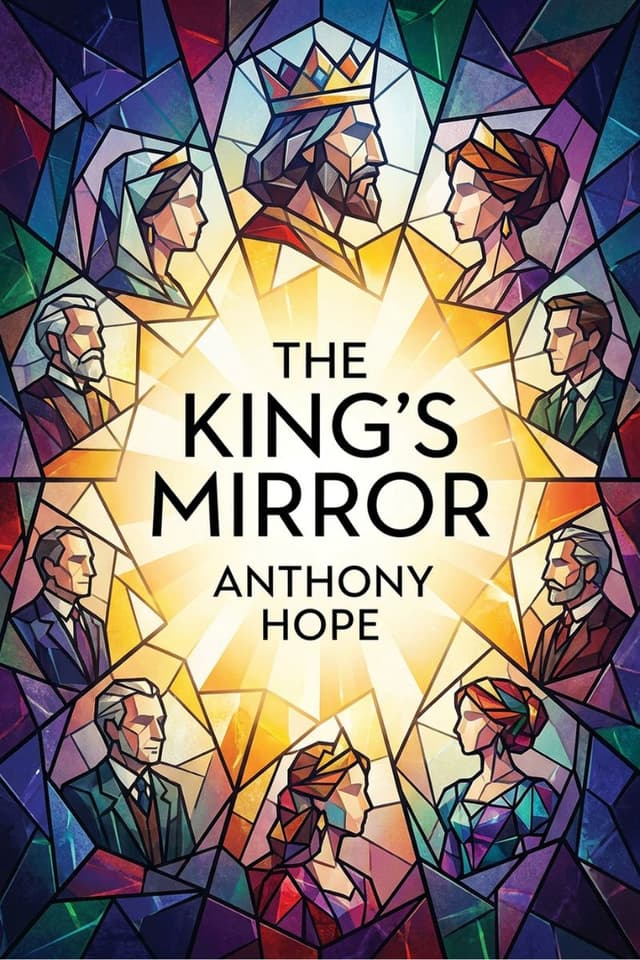
Read The King's Mirror by Anthony Hope for free on Novelhalla, and try out our easy-to-read modern edition of this classic book. You can also download the EPUB and read it on any device if you prefer!
The Plot
Crowned and Whipped
Augustin is not quite eight years old when they make him king. His father is dead. His uncle, the previous king, is dead. There is no one else. So they put a crown on his head in the cathedral, and the archbishop tells him that henceforth God is the only power above him.
That night, feeling newly sovereign, Augustin refuses to take off his shoes for his governess. He throws one at her head. His mother is summoned. He is spanked.
This, the boy discovers, is what it means to be king. The crown in words, the whip in fact. It is a lesson he will spend his whole life learning.
The Golden Cage
Augustin grows up in the palace of a small, fictional European kingdom, raised by his formidable Styrian mother and her even more formidable governess, Krak, under the watchful management of Prince von Hammerfeldt, the cunning old statesman who actually runs the country. The boy is smart, sensitive, and lonely. His sister Victoria is his closest companion, but she can't be king for him. Nobody can.
He is given a tutor, Geoffrey Owen, a brilliant young Englishman full of liberal ideas and genuine warmth. For the first time in his life, Augustin has a real friend. Owen treats him like a person, not a symbol. They read together, row together, argue about philosophy. Augustin adores him.
And then Hammerfeldt takes Owen away. Because a king cannot have a friend. A friend becomes a partisan, a liability, a threat to the careful balance of power. Augustin is fifteen, and he weeps in his bed for the loss. He will not see Owen again for years, and when he does, it will be across an unbridgeable distance.
The Education of a King
The years pass. Augustin comes of age and begins to navigate the real business of monarchy: the politics, the ceremonies, the constant performance. He is witty, self-aware, and quietly miserable. He understands his position with painful clarity. The king belongs to everyone and to no one.
There are people who orbit him. The charming Countess von Sempach, who showed him kindness as a child and whose warmth still draws him. The dashing Donovetz family and their complications. A beautiful actress named Coralie Mansoni who moves through his circle with dangerous ease. A duel is fought, because of course a duel is fought. This is a European court, and young men with swords and wounded pride are a reliable combination.
Through it all, Augustin watches and reflects. He records his observations in a private journal with the dry, sharp eye of someone who sees everything and is permitted to act on almost nothing.
Cousin Elsa
And then there is Elsa. His cousin, young and pretty, chosen for him as a bride when they were both practically children. A marriage arranged for reasons of state, approved by Hammerfeldt, expected by the nation. Augustin has barely paid her any attention. She is a girl he has known forever and never really looked at.
Now he must look. Now he must court her. And here the story turns into something unexpectedly painful. Because Elsa wants to be queen, but she is not entirely sure she wants to be married to Augustin. She is afraid of him, not because he is cruel but because he is complicated, because he has lived a life she cannot quite reach. He is afraid of hurting her, and hurt that she keeps him at arm's length.
Victoria, loyal and sharp-tongued, does her best to bridge the gap. But some distances are built into the architecture of power itself.
The Mirror
The question at the heart of the novel is devastatingly simple: Can a king be known? Can he love and be loved, not as a title but as a man? Augustin stares into the mirror of his own life and sees a figure dressed in robes and responsibilities, surrounded by people who bow and smile and never quite tell him the truth.
Whether there is a real person behind the reflection, and whether anyone will ever be allowed close enough to find out, is the question the novel refuses to answer easily.
About the Author: Anthony Hope
The Barrister Who Invented Ruritania
Anthony Hope Hawkins was born in London in 1863, the son of a clergyman. He was educated at Marlborough College and Balliol College, Oxford, where he earned first-class honors in Classics. He trained as a barrister, studying under the future Prime Minister H. H. Asquith, who considered him promising and was disappointed when Hope turned to writing.
The Walk That Changed Everything
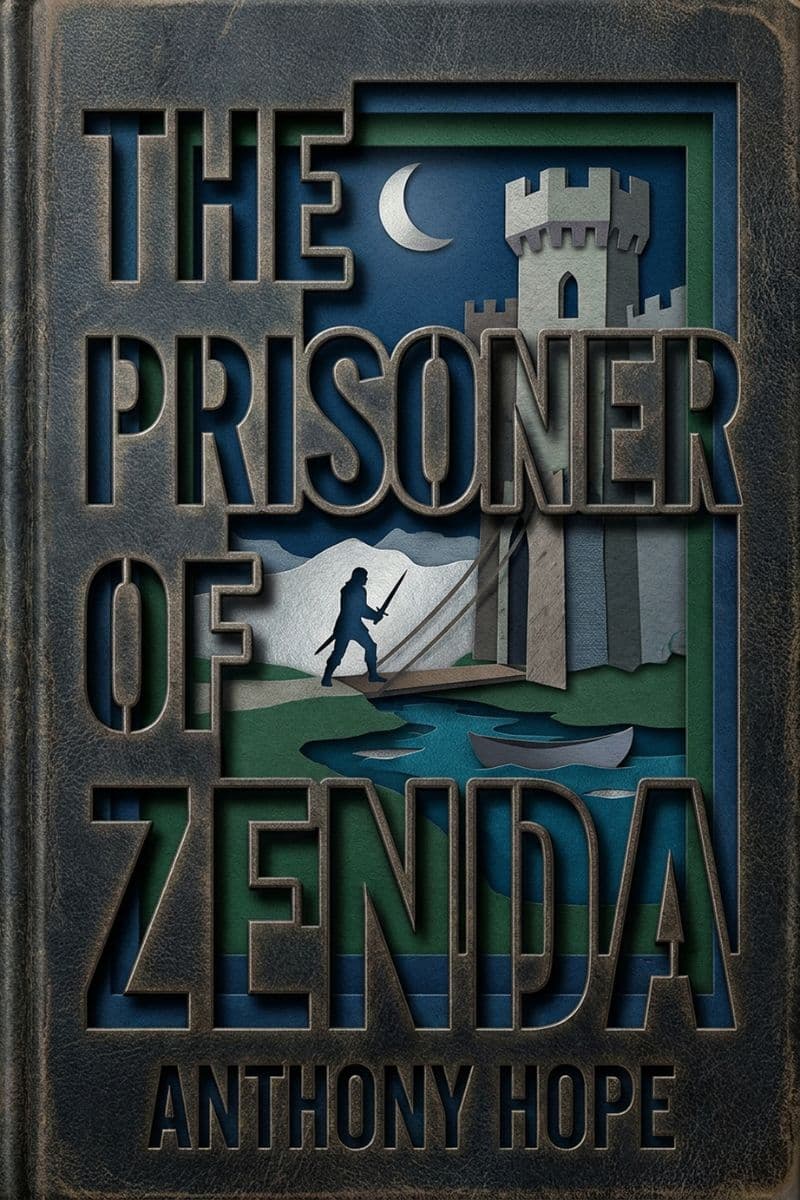
In late 1893, while walking through London, the plot for a novel dropped fully formed into Hope's head. He finished the first draft of The Prisoner of Zenda in a single month. Published in 1894, it became an instant sensation and essentially invented the "Ruritanian romance," a genre of swashbuckling adventure set in fictional European kingdoms. The word "Ruritania" itself entered the English language.
A Prolific Career
Hope wrote over thirty novels and ten plays, but he never escaped the shadow of Zenda. He published the sequel, Rupert of Hentzau, in 1898, and followed it with The King's Mirror in 1899, which he considered among his finest work. He married an American woman, Elizabeth Somerville Sheldon, in 1903. They had three children. He was knighted in 1918 for his public service during World War I, and spent his later years at a country estate in Surrey. He died in 1933 at the age of seventy.
Fun Facts About the Book
Hope's Personal Favorite
Anthony Hope considered this novel one of his best works. Most readers expecting another Prisoner of Zenda were surprised, and some were disappointed, to find a quiet, introspective character study instead of a sword-fighting adventure. But Hope was clearly reaching for something deeper here, and he knew it.
Not Ruritania, But Close
The novel is set in an unnamed fictional European kingdom, much like the Ruritanian setting of Hope's more famous works. But where Zenda is all action and intrigue, this kingdom feels heavier, more real, more confined. The palace here is less a backdrop for adventure than a beautifully gilded prison.
A Novel Written as a Diary
The entire book is presented as King Augustin's private journal, a first-person account spanning roughly ages eight to thirty. The intimate, reflective voice was unusual for Hope and gives the novel a quality closer to memoir than adventure fiction. Augustin's self-awareness and dry humor make him one of Hope's most fully realized characters.
The Coronation Scene
The opening chapters, in which a small boy is crowned king and then punished for acting like one, set the tone for everything that follows. Hope reportedly considered this scene one of the best things he ever wrote, and critics at the time agreed. The London Chronicle called the novel "a strong book, charged with close analysis and exquisite irony."
Written at the Peak
This was published in 1899, when Hope was at the height of his fame and productivity. He had already published Zenda, Rupert of Hentzau, and several other novels. The King's Mirror represents the moment when the adventure writer tried to become something more, and largely succeeded.
Themes
The Loneliness of Power
Augustin's life is defined by isolation. Every relationship is filtered through his position. Friends are removed. Lovers are complicated by politics. Even his marriage is an arrangement. The novel argues, with quiet devastation, that the highest seat in the room may also be the emptiest.
The Man Behind the Crown
The central metaphor is right there in the title. When a king looks in the mirror, does he see a man or a monarch? Augustin spends the whole novel trying to answer this question, and the answer keeps shifting. He is constantly performing, constantly watched, and the line between who he is and what he represents has been blurred since he was eight years old.
Duty Versus Desire
Augustin wants to be known and loved as himself. Duty requires him to be a symbol. Every personal impulse, from friendship to romance, is weighed against political consequences. The novel treats this tension not as melodrama but as a slow, quiet tragedy.
The Distortion of Relationships
Nobody around the king can be entirely honest with him. His mother manages him. His advisors manipulate him, however gently. His friends are taken away. His bride is chosen for him. Every human connection is warped by the gravitational pull of the crown, and Augustin is achingly aware of it.
Coming of Age in a Cage
This is a bildungsroman, but one where growing up means growing into constraint rather than freedom. Augustin doesn't rebel and he doesn't escape. He learns to wear the cage with grace. Whether that counts as wisdom or surrender is left to the reader.
The Book's Legacy
The King's Mirror has always lived in the shadow of The Prisoner of Zenda, and probably always will. Readers who come to it expecting swordplay and daring escapes will be disappointed. But those who give themselves over to its quieter pleasures find something rare: a deeply intelligent, genuinely moving portrait of what it costs to be born into a role you never chose.
The novel anticipates by decades the modern fascination with the private lives of royals, the loneliness behind the ceremony, the human being inside the institution. Readers who love The Remains of the Day, or who find themselves drawn to stories about the invisible cages of privilege and duty, will recognize something familiar in Augustin's voice.
Hope may have invented Ruritania for adventure. But in this novel, he went back to that same imaginary kingdom and found something much more interesting: a real person, trapped inside it, writing in his journal by candlelight and wondering if anyone will ever truly see him.