Novelhalla
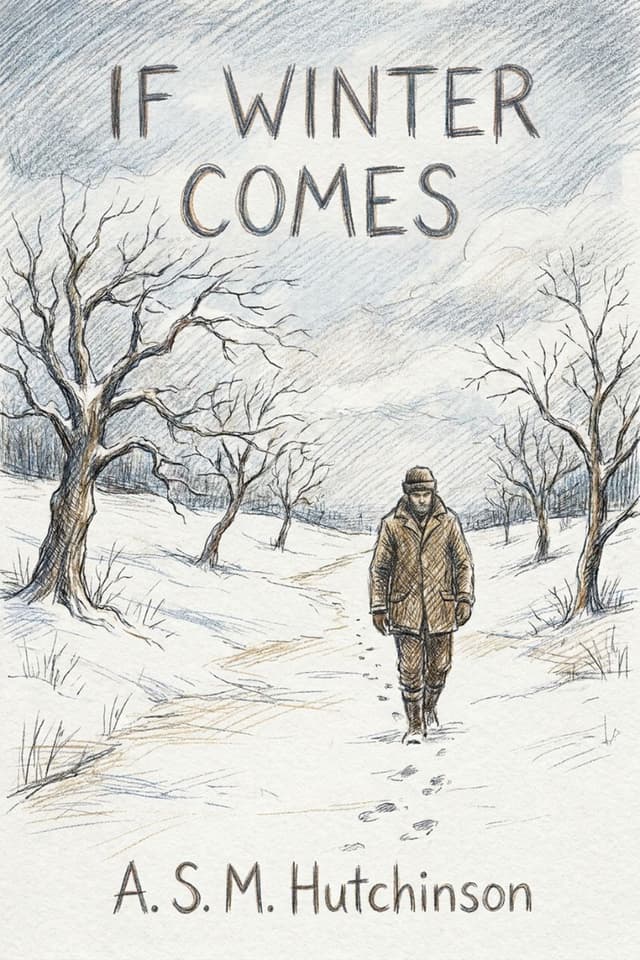
If Winter Comes
Read If Winter Comes by A. S. M. Hutchinson for free on Novelhalla, and try out our easy-to-read modern edition of this classic book. You can also download the EPUB and read it on any device if you prefer!
The Plot
Mark Sabre is a partner at Fortune, East and Sabre, a long-established firm in the English town of Tidborough that supplies furnishings to churches and schools. He lives with his wife Mabel in Dolorosa Doyle Penny Green, a quiet old village seven miles from town that's just beginning to see new development. On the surface, his life looks comfortable and successful.
But Sabre is a difficult man to live with. He has a habit of scrunching up his forehead and saying "I don't quite see that" whenever something doesn't make sense to him, or "I see what he means" when defending someone everyone else is attacking. His old school friends called him Puzzlehead, and the nickname fits. He thinks too much, questions too much, and can't leave things alone.
A Troubled Marriage
Sabre's marriage to Mabel is strained in ways neither of them fully acknowledges. She's pretty and proper, interested in village gossip and social standing. He's lost in abstract thoughts about life and meaning that bore her completely. They occupy the same house but seem to live in different worlds. The tension between them simmers beneath a surface of polite routine.
War Comes
When the Great War breaks out, it tears through Sabre's carefully ordered life. The conflict forces him to confront questions about duty, sacrifice, and what he truly believes. Some men find clarity in war. Sabre finds his confusions deepened and his certainties shattered.
He eventually enlists and serves in France, where he's badly wounded. He takes bullets in the shoulder and knee. The shoulder heals well enough, but the knee nearly costs him his leg. He's discharged from the Army and sent home, barely able to walk, facing a future with a cane and a permanent limp.
Coming Home
The Sabre who returns to Penny Green is changed. He's grey and ill-looking, hobbling around on his stick, and something seems broken in him beyond just the leg. His partners at the firm are cold and distant. His wife seems more like a stranger than ever. Friends who visit find him alternately desperate for company and lost in dark thoughts.
What happened to Sabre during the war? What has he done or failed to do that haunts him now? And can a man who sees too much ever find peace in a world that rewards those who don't look too closely?
About the Author: A.S.M. Hutchinson
Early Life
Arthur Stuart-Menteth Hutchinson was born in India in 1879, the son of a British military officer. He was sent to England for his education, attending Dulwich College and later studying medicine at St. Thomas's Hospital in London. He never practiced as a doctor, instead turning to journalism.
Journalism Career
Hutchinson worked as a journalist for several publications, eventually becoming editor of the Daily Graphic. His newspaper work gave him a sharp eye for social observation and a fluent, accessible prose style. He began writing fiction on the side, publishing several novels before the war.
Success with If Winter Comes
If Winter Comes was published in 1921 and became a massive bestseller on both sides of the Atlantic. It captured something about the postwar mood, the sense of a world turned upside down and old certainties destroyed. The novel stayed on bestseller lists for months and made Hutchinson famous.
Later Life
Hutchinson continued writing novels through the 1920s and 1930s, though none matched the success of If Winter Comes. He lived quietly in later years and died in 1971 at the age of ninety-one, having long outlived his literary reputation.
Fun Facts About the Book
A Massive Bestseller
If Winter Comes was one of the biggest selling novels of the early 1920s. In America it topped the bestseller lists for 1922, outselling every other novel that year. It was the kind of book everyone seemed to be reading and talking about.
The Title Comes from Shelley
The title is taken from the closing line of Percy Bysshe Shelley's poem "Ode to the West Wind": "If Winter comes, can Spring be far behind?" The poem is about destruction and renewal, death and rebirth, themes that run throughout the novel.
Filmed Twice
The novel was adapted for film twice. A silent version appeared in 1923, just two years after publication, capitalizing on the book's popularity. A sound remake followed in 1933 with a different cast. Neither film is much remembered today.
The Framing Device
The novel uses an unusual structure. Much of the early story is told through a long conversation between two old school friends, one of whom is catching the other up on what's happened to Sabre. This gives the narrative a gossipy, secondhand quality that mirrors how we actually learn about other people's lives.
Postwar Resonance
The novel struck a nerve with readers who had lived through the Great War. Sabre's struggles with meaning, his sense that the old world had been destroyed, and his difficulty fitting back into civilian life echoed what millions of veterans and their families were experiencing.
Critical Dismissal
Despite its enormous popularity, If Winter Comes was largely dismissed by literary critics. They found it sentimental and middlebrow. The novel has been mostly forgotten by literary history, though it remains an interesting document of its time.
A Character Study
Unlike many popular novels of its era, If Winter Comes isn't driven by a strong plot. It's primarily a character study of a man who doesn't fit, who thinks differently from those around him, and who suffers for his inability to simply go along. Readers either connected deeply with Sabre or found him frustrating.
Themes
The Outsider
Mark Sabre doesn't fit. He sees things differently, questions what others accept, and can't stop himself from understanding perspectives that make him unpopular. The novel explores what it costs to be the person who always says "I see what he means" in a world that wants conformity.
Marriage and Miscommunication
The Sabres' marriage is a study in two people who simply don't connect. They're not villains to each other, just fundamentally mismatched. Hutchinson shows how a marriage can become a prison even when no one is obviously at fault.
The Great War's Aftermath
The novel captures the disorientation of the postwar period. The war shattered old certainties about progress, civilization, and meaning. Sabre embodies this confusion, returning home wounded in body and spirit to a world that seems to have lost its bearings.
Class and Hypocrisy
English society in the novel is riddled with unspoken rules and petty judgments. Respectability matters more than truth. Appearance matters more than substance. Sabre's inability to play these games makes him vulnerable in ways he doesn't fully understand.
Faith and Doubt
Sabre works for a firm that supplies churches, lives in a village dominated by its vicar, and exists in a culture saturated with religious language. Yet the novel questions what any of it actually means. Is faith just another form of respectability, or is there something real beneath the surface?
The Book's Legacy
If Winter Comes was one of those novels that captures a moment perfectly and then fades from view. It told readers of the early 1920s something they needed to hear about their own confusion and pain. A decade later, it already seemed dated.
The novel is worth reading now as a window into postwar Britain, into the anxieties and disappointments of a generation that had been promised the war would make everything better. Sabre's struggles feel surprisingly modern in some ways: the alienation, the sense of not fitting in, the marriage that looks fine from outside but is hollow within.
Hutchinson never wrote anything else that mattered as much. He had one story that connected, told it well, and watched the world move on. But for readers who discover it today, If Winter Comes still has the power to move, even if its prose sometimes feels overwrought by contemporary standards.
The title's question hangs over the whole book: if winter comes, can spring be far behind? For Mark Sabre, the answer is uncertain. The novel earns its darkness, but it also reaches for hope, however tentatively. That tension between despair and the possibility of renewal is what made it resonate in 1921, and what gives it whatever life it still has today.