Novelhalla
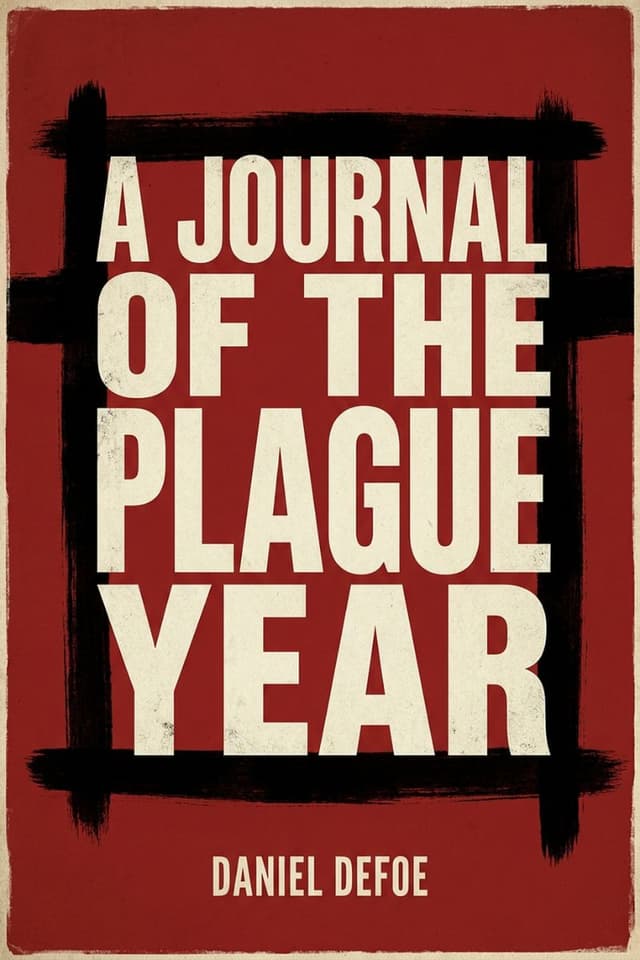
A Journal of the Plague Year
Read A Journal of the Plague Year by Daniel Defoe for free on Novelhalla, and try out our easy-to-read modern edition of this classic book. You can also download the EPUB and read it on any device if you prefer!
The Plot
Unlike most novels, A Journal of the Plague Year doesn't follow a traditional narrative arc with protagonists and antagonists. Instead, it presents itself as a firsthand account of London's Great Plague of 1665, told by a saddler who identifies himself only as "H.F."
The Narrator's Dilemma
As rumors of plague spread from Holland and then appear in London's outer parishes, H.F. faces a crucial decision: flee the city like the wealthy are doing, or stay and trust in Providence? After much deliberation and a moment of spiritual guidance, he chooses to remain.
A City Transformed
What follows is H.F.'s chronicle of London's descent into nightmare. He walks the emptying streets, observes grass growing between cobblestones in once-busy thoroughfares, watches the death carts roll by at night, and records the weekly bills of mortality as the numbers climb from dozens to hundreds to thousands per week.
Stories Within Stories
H.F. collects accounts from across the city. A man discovers a purse in a courtyard and watches another retrieve it using gunpowder, fire, and tongs to avoid infection. A waterman lives in his boat to support his plague-stricken family, leaving money on a stone and calling to them from a distance. Three men escape London on foot, forming a small community of refugees. Families are locked in their homes with watchmen at the doors. The poor wander into fields to die alone.
The Broader Picture
Beyond personal stories, H.F. examines the city's response to catastrophe. He debates the effectiveness of shutting up infected houses, describes the overwhelmed burial system, discusses the surprisingly stable bread supply, and questions the accuracy of official death counts (suggesting the real toll was far higher than recorded).
About the Author: Daniel Defoe
Early Life
Daniel Foe (he added the aristocratic "De" later) was born around 1660 in London, the son of a tallow chandler. He was educated at a dissenting academy since, as a Presbyterian, he was barred from Oxford and Cambridge.
A Life of Many Ventures
Before becoming a famous writer, Defoe tried his hand at seemingly everything. He traded in hosiery, wine, tobacco, and other goods. He owned a tile factory. He went bankrupt spectacularly and was haunted by creditors for years. He also served as a spy and political pamphleteer for various factions, getting arrested multiple times for his writings.
The Pillory
In 1703, Defoe was sentenced to stand in the pillory for three days for writing a satirical pamphlet. The crowd, instead of throwing rotten food at him, reportedly threw flowers and drank to his health. He wrote a poem about the experience.
Late Bloomer
Defoe didn't publish Robinson Crusoe until 1719, when he was nearly sixty years old. It became a massive success, essentially inventing the English novel as we know it. He followed it with a flurry of books including Moll Flanders, Roxana, and A Journal of the Plague Year, all within a few years.
Death
He died in 1731, possibly hiding from creditors, leaving behind over 500 published works on topics ranging from economics to the supernatural.
Fun Facts About the Book
Is It Fiction or Nonfiction?
This is the book's central puzzle. Defoe published it in 1722 as if it were a genuine journal from 1665. H.F. writes like an eyewitness, includes statistical tables, names specific streets and parishes, and agonizes over details. But Defoe was only about five years old during the plague. He likely drew on his uncle Henry Foe's memories (note the initials H.F.), parish records, and earlier published accounts.
Published During Another Outbreak
Defoe wrote the book in 1722 when plague was devastating Marseille and threatening to spread to England again. It was partly a warning and practical guide disguised as history.
The Bills of Mortality
Throughout the book, H.F. references the weekly bills of mortality, which were real documents published in London listing deaths by parish and cause. Defoe clearly studied these records closely, and the numbers H.F. cites are largely accurate to the historical record.
The Death Toll Debate
H.F. argues that the official count of about 68,590 plague deaths was a serious undercount, and that the true number was likely 100,000 or more. Modern historians generally agree with this assessment.
No Hero's Journey
The book has no real plot in the conventional sense. Nobody falls in love, defeats a villain, or undergoes a transformation. H.F. simply survives, observes, and records. This documentary approach was unusual for its time and remains striking today.
Defoe's Sources
Scholars have traced many of H.F.'s anecdotes to earlier plague accounts, sermons, and city records. Defoe was essentially doing historical research and weaving it into a first-person narrative, a technique that was innovative for prose fiction at the time.
Themes
Statistics and Human Suffering
The book constantly moves between cold numbers and vivid human stories. H.F. quotes mortality figures, then describes the cries of a mother whose children have died. This tension between data and lived experience runs throughout.
Providence and Free Will
H.F. wrestles with whether to stay or flee, ultimately leaving the decision to what he interprets as divine guidance. Questions of fate, choice, and God's role in catastrophe appear throughout as characters respond differently to the same crisis.
The Limits of Authority
City officials try desperately to manage the plague through quarantine orders, burial regulations, and public health measures. Some work, some fail, and H.F. debates their effectiveness with surprising nuance for a 300-year-old text.
Class and Catastrophe
The wealthy flee while the poor remain trapped. Servants catch plague running errands for their employers. The rich can afford to wait out the epidemic in the countryside while laborers must choose between starvation and infection.
Truth and Record-Keeping
H.F. constantly qualifies his accounts, noting what he saw personally versus what he heard from others, acknowledging that official records are incomplete, and admitting uncertainty. The book is oddly modern in its concern with verifiable truth during crisis.
The Book's Legacy
A Journal of the Plague Year influenced how writers approach historical fiction and disaster narratives. Its documentary style, mixing personal observation with statistics and official records, anticipated techniques that journalists and novelists would develop centuries later.
The book has seen renewed interest during modern epidemics. It was widely read during the COVID-19 pandemic, with readers finding uncomfortable parallels in its descriptions of quarantine, social distancing, economic disruption, and debates over public health measures.
Albert Camus cited it as an influence on The Plague. It remains one of the most vivid accounts of epidemic disease ever written, fictional or otherwise.