Novelhalla
Jane Eyre
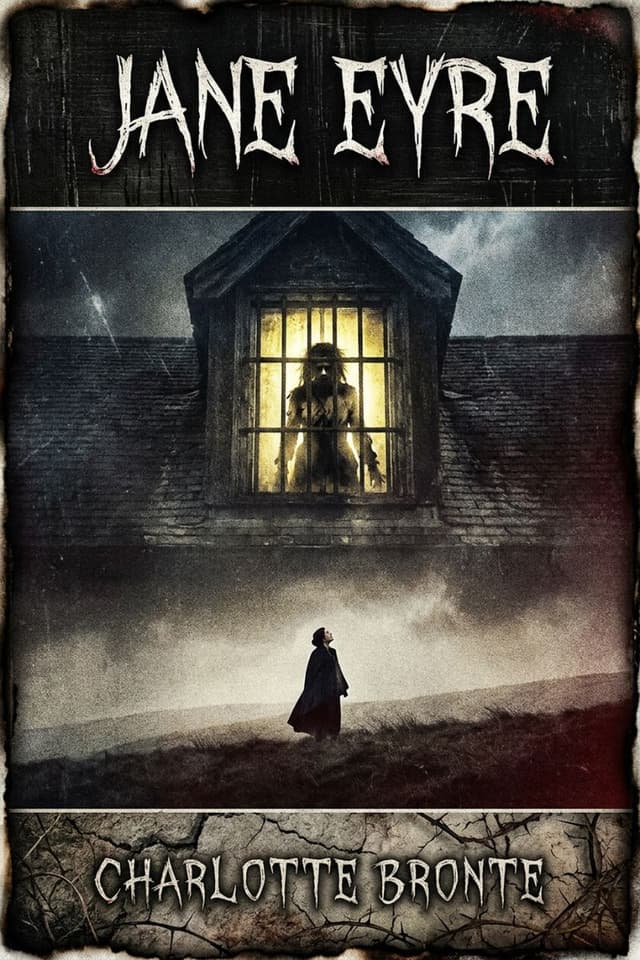
Read Jane Eyre by Charlotte Bronte for free on Novelhalla, and try out our easy-to-read modern edition of this classic book. You can also download the EPUB and read it on any device if you prefer!
The Plot
Jane Eyre follows the life of its narrator from a tormented childhood through her journey toward independence, love, and self-discovery in early 19th century England.
Jane's Early Years
Jane Eyre is an orphan living with her cruel aunt, Mrs. Reed, and three spiteful cousins at Gateshead Hall. Treated as an unwanted burden and constantly reminded of her low status, Jane endures years of emotional and physical abuse. After a violent confrontation with her cousin John, she's sent away to Lowood Institution, a charity school for orphaned girls.
At Lowood, Jane faces harsh conditions, insufficient food, and the tyrannical Mr. Brocklehurst. But she also finds friendship with the gentle Helen Burns and mentorship from the kind Miss Temple. These relationships shape Jane's character and provide her first experiences of genuine affection.
Thornfield Hall
After eight years at Lowood (six as a student, two as a teacher), Jane seeks independence and takes a position as governess at Thornfield Hall. Her pupil is Adèle, a young French girl, and her employer is the mysterious Edward Rochester.
Rochester is unlike anyone Jane has met: brooding, unconventional, and prone to testing her with sharp conversation. Despite their differences in age, wealth, and social position, an intense connection develops between them. But Thornfield holds secrets, including strange laughter echoing from the upper floors and unexplained nighttime disturbances.
The Central Mystery
Jane learns that Thornfield harbors a dark secret that threatens to destroy any chance of happiness. What she discovers forces her to make an agonizing choice between passion and principle, between the love she craves and the self-respect she's fought her whole life to build.
About the Author: Charlotte Brontë
Early Life
Charlotte Brontë was born in 1816 in Thornton, Yorkshire, England. When she was five, her family moved to Haworth, where her father served as a clergyman. Her mother died the following year, leaving six children to be raised primarily by their aunt and their own imaginations.
The Brontë Siblings
Charlotte was part of one of literature's most remarkable families. Along with her sisters Emily (who wrote Wuthering Heights) and Anne (who wrote The Tenant of Wildfell Hall), Charlotte grew up inventing elaborate fantasy worlds. The children created detailed imaginary kingdoms with their own histories, politics, and characters, filling tiny handmade books with microscopic writing.
Two older sisters, Maria and Elizabeth, died young from tuberculosis contracted at a harsh boarding school. This experience directly influenced Charlotte's portrayal of Lowood Institution in Jane Eyre.
Struggles and Pseudonyms
Charlotte worked as a teacher and governess, experiences she drew upon heavily for her fiction. The Brontë sisters initially published their poems under male pseudonyms (Charlotte was "Currer Bell") because female authors faced significant prejudice. Jane Eyre appeared in 1847 under this pen name and was an immediate sensation.
Brief Success
Charlotte published three novels during her lifetime: Jane Eyre (1847), Shirley (1849), and Villette (1853). She watched both Emily and Anne die of tuberculosis within months of each other in 1848-1849, and her brother Branwell died just before them from complications of alcohol and drug addiction.
In 1854, Charlotte married Arthur Bell Nicholls, her father's curate. She died the following year at age 38, likely from complications related to pregnancy, though tuberculosis may have contributed.
Fun Facts About the Book
The Famous Opening
While not as quoted as Anna Karenina's opening, Jane Eyre's first line immediately establishes its narrator's direct, unconventional voice: "There was no possibility of taking a walk that day." Jane speaks to readers as an equal, setting the tone for an unusually intimate narrative.
Published Anonymously
When Jane Eyre appeared in 1847, readers had no idea "Currer Bell" was a woman. The novel's passion and its portrayal of a woman demanding equality shocked many readers. Some suspected a female author; others couldn't believe a woman could write so boldly about desire and independence.
Autobiographical Elements
Like Jane, Charlotte was small, plain, and worked as both a teacher and a governess. The cruel boarding school Lowood was based on the Clergy Daughters' School at Cowan Bridge, where Charlotte's older sisters contracted the tuberculosis that killed them. Charlotte's portrayal was so recognizable that the school's founder was publicly identified and humiliated.
It Caused a Scandal
Victorian critics were divided. Some praised the novel's power and originality. Others were appalled by its "coarseness" and the impropriety of a woman writing so openly about passion. One reviewer suggested that if "Currer Bell" was female, the book must be "one that no lady would have written."
The Red Room
The terrifying red room where young Jane is locked as punishment has become one of literature's most analyzed symbols. Scholars have read it as representing everything from the womb to Victorian attitudes about female rage to the blood of menstruation. Charlotte probably just wanted to scare her readers.
Gothic Elements
Jane Eyre blends realism with gothic conventions: the mysterious mansion, the madwoman, the secrets in the attic, supernatural omens, and dark family histories. Charlotte transformed these sensational elements into psychological depth, making the gothic serve the story rather than overwhelm it.
It Was Written Fast
Charlotte wrote Jane Eyre in less than a year, often composing in the evenings after caring for her increasingly blind father. The novel's emotional intensity and narrative momentum may owe something to this compressed composition.
Immediate Bestseller
Unlike many now-classic novels, Jane Eyre was popular from the start. It went through multiple editions within months. Queen Victoria read it. William Makepeace Thackeray (to whom Charlotte dedicated the second edition) praised it publicly. Within a year, Charlotte Brontë was famous, though few knew who she really was.
Themes
Independence and Self-Respect
Jane's central struggle is to maintain her dignity and autonomy in a world that sees her as inferior due to her poverty, plainness, and gender. She refuses to accept love on unequal terms, insisting on being treated as Rochester's equal rather than his dependent.
Class and Social Position
The novel examines Victorian England's rigid class structure. Jane exists in an uncomfortable middle space: educated and refined, but poor and without family connections. She's too good to be a servant but not good enough to be accepted as a gentleman's equal.
Religion and Morality
Different characters embody different approaches to faith. Helen Burns practices patient acceptance of suffering. Mr. Brocklehurst uses religion to justify cruelty. St. John Rivers pursues cold, joyless duty. Jane must find her own moral compass, one that balances passion with principle.
Gender and Equality
Jane's famous declaration that women "feel just as men feel" and need exercise for their faculties was radical for its time. The novel insists that women have the same emotional and intellectual depths as men, and deserve the same freedoms.
Passion vs. Reason
The novel explores the tension between following one's heart and obeying one's conscience. Jane feels things intensely but also possesses a strong moral sense. The plot repeatedly forces her to choose between what she desperately wants and what she believes is right.
Appearance and Inner Worth
Plain Jane succeeds where beautiful women fail because of her character rather than her looks. The novel challenges Victorian assumptions about beauty and worth, suggesting that inner qualities matter more than external appearance.
The Book's Legacy
Jane Eyre helped establish the template for the romantic novel and influenced countless works across every medium. Its first-person narrative voice, combining introspection with direct address to the reader, was innovative for its time and remains compelling today.
The novel is credited with creating the archetype of the "Byronic hero" in romantic fiction and pioneering the portrayal of a complex, passionate female consciousness. Its influence extends from Rebecca to Wide Sargasso Sea to countless modern romances.
Jane Eyre has been adapted into dozens of films, television series, and stage productions. It remains widely taught, widely read, and widely beloved more than 175 years after its publication.