Novelhalla
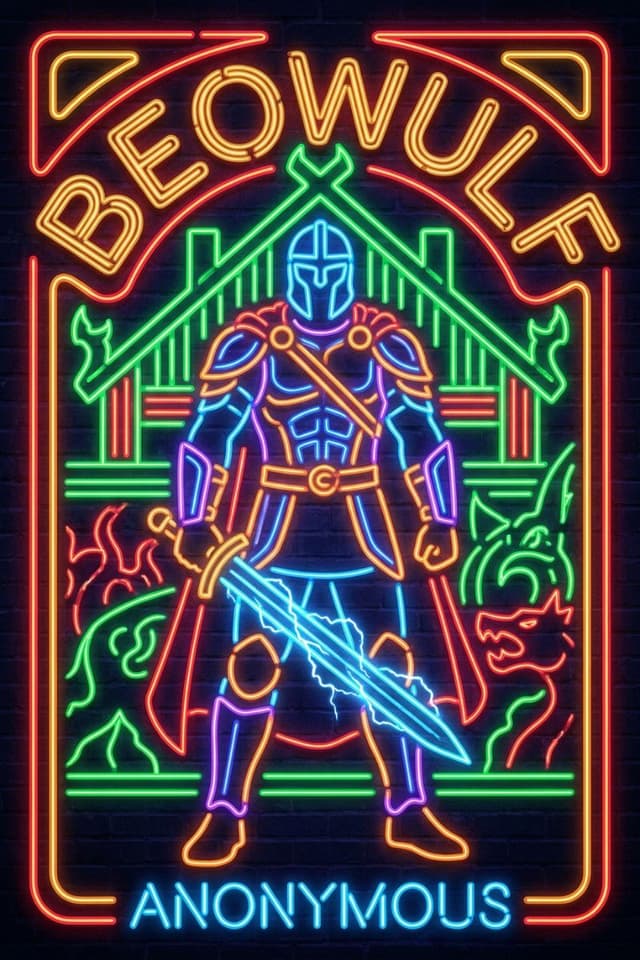
Beowulf
Read Beowulf by Anonymous for free on Novelhalla, and try out our easy-to-read modern edition of this classic book. You can also download the EPUB and read it on any device if you prefer!
About This Work
Beowulf exists in two distinct forms: the original is an Old English epic poem composed sometime between the 8th and 11th centuries, written in alliterative verse. This version presents the plot as a prose narrative, making the ancient story accessible without the linguistic challenges of the original Anglo-Saxon text.
The Plot
The epic unfolds in three major episodes, spanning decades in the life of its legendary hero.
Part One: Grendel
The story opens in Denmark, where King Hrothgar has built a magnificent mead-hall called Heorot. For twelve years, this hall has been terrorized by Grendel, a monstrous creature descended from the biblical Cain who attacks at night, slaughtering Hrothgar's warriors as they sleep.
Beowulf, a young warrior from Geatland in southern Sweden, hears of Hrothgar's plight and sails to Denmark with fourteen companions. He has a reputation for extraordinary strength, said to possess the power of thirty men in his grip.
That night, Beowulf faces Grendel unarmed, believing no weapon can harm the creature. In a brutal wrestling match, Beowulf tears off Grendel's arm at the shoulder. The mortally wounded monster flees to die in his lair.
Part Two: Grendel's Mother
The celebration is brief. Grendel's mother, a fearsome creature dwelling in an underwater cave, attacks Heorot seeking vengeance. She kills Hrothgar's closest advisor and retrieves her son's severed arm.
Beowulf tracks her to a haunted mere and dives into the depths, facing his most dangerous battle yet in her underwater lair.
Part Three: The Dragon
Fifty years pass. Beowulf has ruled Geatland as king, bringing peace and prosperity. But a thief disturbs a dragon's ancient hoard, awakening the serpent's fury. The dragon begins burning villages across the land.
The aged Beowulf knows he must face this final threat. With his loyal warrior Wiglaf at his side, he confronts the fire-breathing creature in a battle that will determine the fate of his kingdom.
About the Author: Anonymous
The Mystery of Authorship
The poet who composed Beowulf remains unknown. Scholars refer to this figure simply as "the Beowulf poet." The work survives in a single manuscript dating to around 1000 CE, but the poem itself was likely composed centuries earlier and transmitted orally before being written down.
The Manuscript
The sole surviving copy, known as the Nowell Codex, nearly perished in a 1731 fire at Ashburnham House in London. The edges of the manuscript were damaged and have continued to deteriorate, making early transcriptions invaluable for reconstructing damaged passages.
Christian and Pagan Elements
The anonymous poet blended Germanic heroic tradition with Christian theology. The monsters are linked to biblical Cain, and characters praise God for victories, yet the poem also preserves older pagan customs like ship burials and the fatalistic acceptance of wyrd (fate).
Oral Tradition
The poem shows clear signs of oral composition, including formulaic phrases, kennings (poetic compounds like "whale-road" for sea), and repetition that would have aided memorization and performance. The poet was likely working within a tradition of professional singers called scops.
Fun Facts About the Work
The Only Copy
Beowulf exists in just one manuscript. If that single document had been destroyed in the 1731 fire, we would have lost the poem entirely. The survival of major literary works often hinges on such accidents of history.
Rediscovery
Though the manuscript dates to around 1000 CE, Beowulf was largely ignored until the 19th century. The first printed edition appeared in 1815, and the poem only entered mainstream literary study after that.
Tolkien's Influence
J.R.R. Tolkien's 1936 lecture "Beowulf: The Monsters and the Critics" transformed how scholars viewed the poem. He argued that the monsters were central to its meaning, not embarrassing digressions. Tolkien's own fiction, including The Hobbit and The Lord of the Rings, draws heavily on Beowulf's themes and imagery.
The Kennings
Old English poetry relied on kennings, compound metaphors that describe things indirectly. The sea becomes the "whale-road" or "swan's riding." A king is a "ring-giver." A body is a "bone-house." These compressed images give the poetry its distinctive texture.
Historical Figures
Though Beowulf himself is legendary, several characters in the poem were real historical figures. King Hygelac of the Geats died in a raid on Frisia around 520 CE, an event mentioned in Frankish historical sources. This helps date the poem's setting to the early 6th century.
Length
At 3,182 lines, Beowulf is the longest surviving Old English poem. The alliterative verse form, where each line contains words beginning with the same sound, creates a driving rhythm quite different from later rhyming poetry.
No Horned Helmets
Despite popular depictions of Vikings, archaeological evidence shows that Germanic warriors of this period wore helmets without horns. The poem describes helmets decorated with boar images, which matches archaeological finds from the period.
Themes
Fame and Legacy
In the warrior culture depicted, lasting fame through heroic deeds provides the only true immortality. Characters repeatedly emphasize that reputation outlives the body. Beowulf seeks glory not from vanity but because earned fame is the proper goal of a noble life.
Loyalty and Kinship
The bonds between lord and retainer form the social foundation of the poem's world. Warriors owe absolute loyalty to their ring-giver, who in turn must be generous and protective. The contrast between faithful and faithless warriors drives key moments in the story.
Good vs. Evil
The monsters represent forces of chaos and darkness opposed to civilization and light. Grendel attacks Heorot precisely because he cannot stand the sounds of joy and community. The battles are not merely physical but symbolic struggles between order and destruction.
The Passing of Time
The poem is haunted by transience. Great warriors die, kingdoms fall, treasures rust. The dragon's hoard represents wealth that has outlived its owners and now benefits no one. Even victory is shadowed by the knowledge that all things end.
Fate and Courage
The concept of wyrd (fate) pervades the poem. Characters accept that their deaths are predetermined, yet this fatalism does not lead to passivity. Instead, knowing that death is certain makes courage all the more important. A warrior cannot change his fate, but he can choose to face it bravely.
The Work's Legacy
Beowulf stands as the foundational work of English literature, even though it describes Scandinavian heroes and was written in a language almost unrecognizable to modern readers. It preserved Germanic heroic traditions that would otherwise be lost and established themes that echo through English literature to this day.
The poem's influence on fantasy literature is immense. Tolkien drew on it for everything from the dragon Smaug to the mead-halls of Rohan. Its DNA runs through countless works featuring dragons, cursed treasure, and heroes who stand against monsters in the dark.