Novelhalla
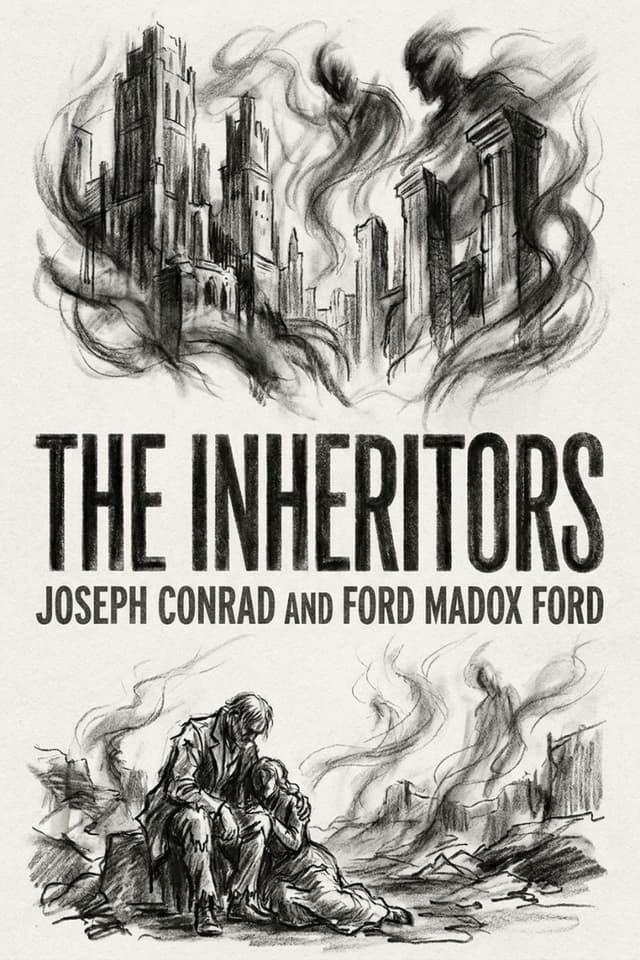
The Inheritors
Read The Inheritors by Joseph Conrad and Ford Madox Ford for free on Novelhalla, and try out our easy-to-read modern edition of this classic book. You can also download the EPUB and read it on any device if you prefer!
The Plot
A Chance Encounter
Arthur Etchingham Granger is a struggling writer from an old aristocratic family whose fortunes have dwindled along with his literary ambitions. While wandering near Canterbury Cathedral, he meets a mysterious and strikingly beautiful young woman who claims to be from the Fourth Dimension. She speaks in riddles and metaphors, telling him that she and her kind are destined to "inherit the earth." Arthur dismisses her as mad or merely theatrical. She assures him they will meet again.
They do. At the home of Callan, a famous novelist, the woman reappears and introduces herself as Miss Etchingham Granger, Arthur's sister. She is nothing of the sort. Arthur has no sister. But the woman has adopted his name, his family, and soon begins financing improvements to his aunt's estate while insinuating herself into the highest levels of British political society.
The Web of Intrigue
Arthur, desperate for money, takes a job writing celebrity profiles for a new journal called The Hour. The publication turns out to be a tangled web of competing interests: financiers, politicians, and journalists all using the paper to advance their own agendas. At the center of everything is the Duc de Mersch, a bombastic European aristocrat running a massive philanthropic scheme to develop Greenland. He speaks of civilizing the native population, building railways, and bringing progress to the frozen north. The British government is considering backing the venture with public funds.
But something is wrong with the Greenland scheme. Whispers circulate about atrocities committed against the indigenous people. The Duc's grand humanitarian mission may be nothing more than a cover for brutal exploitation. And the mysterious woman who calls herself Arthur's sister seems to be pulling strings behind it all, working alongside the cold and calculating politician Gurnard, a man poised to seize power when the scandal breaks.
A Dangerous Attraction
Arthur finds himself hopelessly drawn to the woman, even as he recognizes her complete lack of human warmth. She tells him plainly that she and her kind feel nothing, that they view ordinary humans as an inferior race to be displaced. They will inherit the earth not through violence but through superior calculation, by letting the old order destroy itself through its own corruption and sentimentality.
Arthur watches as the scandal unfolds. A damning exposé reveals the horrors of the Greenland scheme. Careers are ruined. A financier commits suicide. The Foreign Minister who championed the project is disgraced. And through it all, the woman and her Fourth Dimensionist allies maneuver closer to power, using the chaos they have orchestrated.
Arthur must decide where his loyalties lie: with the crumbling old world that at least believed in honor, duty, and human connection, or with the cold new order that sees such things as weaknesses to be exploited.
About the Authors
Joseph Conrad
Joseph Conrad was born Józef Teodor Konrad Korzeniowski in 1857 in what is now Ukraine, then part of the Russian Empire. His parents were Polish patriots, and his father, a poet and translator, was arrested and exiled to northern Russia for revolutionary activities. Conrad's mother died of tuberculosis when he was seven, his father when he was eleven. Raised by an uncle, he left Poland at seventeen to become a sailor in the French merchant marine.
Conrad spent twenty years at sea, eventually joining the British merchant navy and becoming a naturalized British citizen in 1886. Though he did not learn English until his twenties, he became one of the greatest prose stylists in the language. His experiences at sea and in distant corners of the globe provided material for his fiction, but his work transcended mere adventure to explore profound questions of morality, isolation, and the darkness within human nature.
By the time he collaborated on this novel, Conrad had just published Lord Jim and was working on Heart of Darkness, both drawing on his 1890 journey up the Congo River. That experience of witnessing colonial brutality firsthand haunted him and shaped his writing for the rest of his life.
Conrad married Jessie George in 1896 and spent his later years writing in England, producing masterworks including Nostromo and The Secret Agent. He was offered a knighthood but declined. He died of a heart attack in 1924 at age sixty-six.
Ford Madox Ford
Ford Madox Ford was born Ford Hermann Hueffer in 1873 in Surrey, England. His father was a German music critic for The Times; his maternal grandfather was the Pre-Raphaelite painter Ford Madox Brown, after whom Ford was named and about whom he would later write a biography.
Ford published his first book at eighteen and went on to become a prolific novelist, poet, critic, and editor. He founded two of the most influential literary magazines of the early twentieth century, The English Review in 1908 and The Transatlantic Review in 1924, discovering and championing writers including D.H. Lawrence, Ezra Pound, and Jean Rhys.
His friendship with Conrad began in the late 1890s, and the two collaborated on three novels, though this partnership was often fraught. Ford did most of the actual writing on their joint works while Conrad edited and revised. Ford would later write a memoir about their friendship, though its accuracy has been questioned.
Ford served as an infantry officer in World War I, was gassed at the Battle of the Somme, and returned to write his masterpiece, The Good Soldier, and the four-novel sequence Parade's End. He changed his German-sounding surname to Ford after the war. His personal life was chaotic, marked by failed marriages and troubled relationships. He spent his final years teaching at Olivet College in Michigan and died in France in 1939. Anthony Burgess called him "the greatest British novelist" of the twentieth century.
Fun Facts About the Book
The First Collaboration
This was the first of three novels Conrad and Ford wrote together, followed by Romance in 1903 and The Nature of a Crime in 1909. The collaboration began when the two became neighbors in Kent, and the process was unusual: Ford would draft chapters, then Conrad would revise and edit. Conrad later described his contribution as involving "long and heated discussions, lasting well into many nights."
Conrad's Only Science Fiction
This remains the only work in Conrad's entire body of writing that ventures into speculative fiction. He never again used supernatural or science fiction elements, returning permanently to psychological realism. Ford also largely avoided fantasy, with only one other exception in his career.
Inspired by H.G. Wells
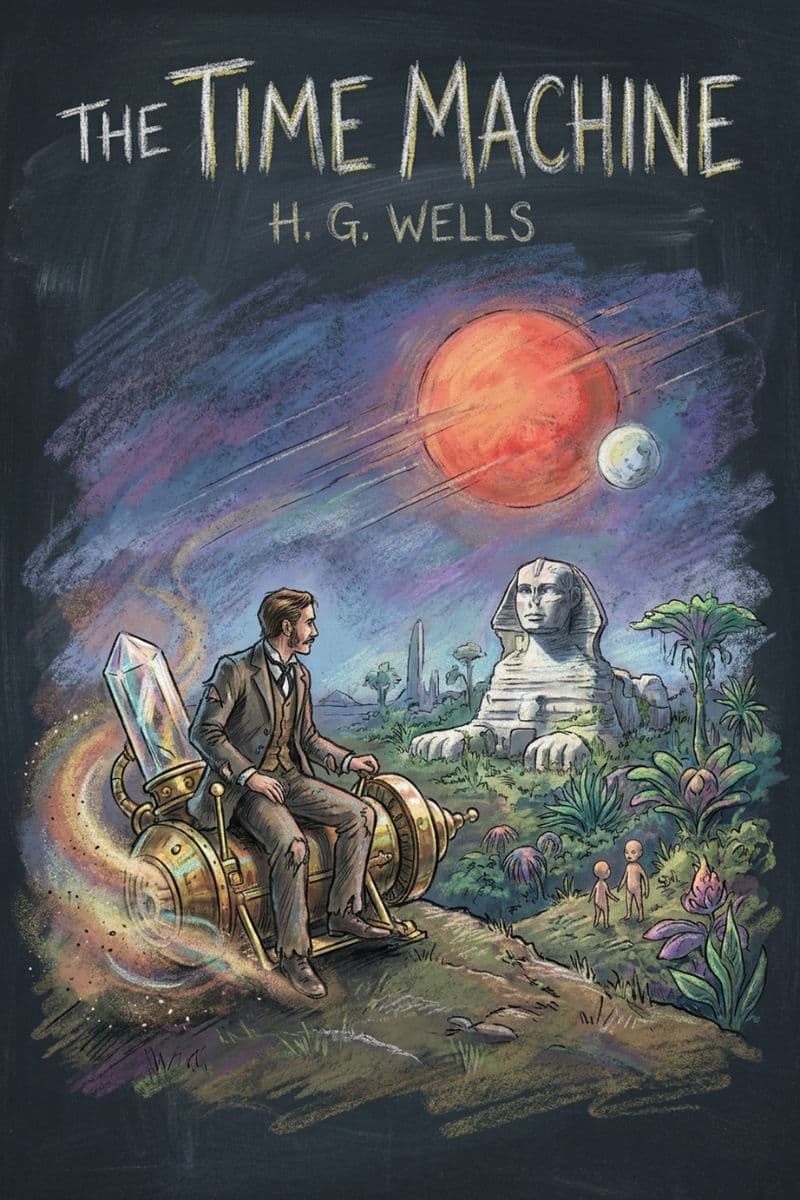
The "Fourth Dimension" concept was borrowed from their friend and neighbor H.G. Wells, whose novel The Time Machine had popularized the idea. Wells had originally written an essay about the fourth dimension as a traversable coordinate like length, width, and height, but his editor told him to put it in a story instead. Conrad and Ford were responding to Wells's utopian predictions about the future of society, essentially writing a darker counter-argument.
A Disguised Congo
The fictional "Greenland" scheme in the novel is a thinly veiled satire of King Leopold II of Belgium's brutal exploitation of the Congo Free State. Conrad was working on Heart of Darkness at the same time, drawing on his own horrific experiences witnessing Belgian colonial atrocities in 1890. The Duc de Mersch character is modeled on Leopold, with his lofty rhetoric about "civilizing" native peoples masking systematic exploitation and violence.
Written for Money
Both authors were struggling financially when they began the collaboration. Conrad had yet to achieve commercial success despite critical recognition, and he was considering returning to the sea. They hoped the novel would capitalize on the popularity of H.G. Wells's science fiction and provide quick income. It did not succeed commercially.
Ford Wrote Most of It
Scholars who have examined the manuscript evidence and applied stylistic analysis conclude that Ford wrote the majority of the text, with Conrad serving primarily as editor and reviser. Conrad himself acknowledged his "share in this work is very small so far as actual writing goes."
Conrad's Dismissal
Conrad never thought much of the finished product. He referred to it as "a sort of skit upon the political novel" and considered it an experiment rather than a serious work. Ford was more invested in the project and its themes, which anticipated concerns he would explore throughout his career about the decline of the old order.
Prescient Themes
Published in 1901, the novel's vision of a ruthless new generation replacing traditional values, manipulating media and finance to seize power, and viewing human sentiment as weakness to be exploited struck many later readers as eerily prophetic of the twentieth century's totalitarian movements.
Themes
The End of an Era
The novel captures turn-of-the-century anxiety about societal transformation. The Fourth Dimensionists represent the coming modern age: cold, calculating, efficient, and utterly without sentiment. The old aristocratic order, represented by Arthur's family and the politician Churchill, clings to concepts of honor and tradition even as these prove inadequate against the new ruthlessness.
The Power of the Press
Control of information is central to the plot. The journal The Hour serves multiple masters, promoting schemes and destroying reputations according to who pays. The novel shows how media can be weaponized, how public opinion can be manufactured, and how scandals can be timed for maximum political impact.
Colonial Exploitation
Like Heart of Darkness, the novel exposes the hypocrisy behind European imperialism. The Duc de Mersch's speeches about bringing civilization and progress to Greenland echo the rhetoric used to justify the exploitation of Africa. The atrocities committed against indigenous people are first rumored, then confirmed, then used as a political weapon, but never truly mourned.
Manipulation and Seduction
Arthur is drawn to the mysterious woman despite knowing what she represents. His attraction to her cold beauty mirrors the seduction of modernity itself, the appeal of power and efficiency over warmth and conscience. He becomes complicit in schemes he knows are wrong because he cannot resist being close to her.
The Corrupted Narrator
Arthur is both observer and participant, a writer who becomes a propagandist, an aristocrat who works for those destroying his class. His complicity compromises his judgment, and readers must constantly question how much of his account to trust.
Human Obsolescence
The Fourth Dimensionists tell Arthur that his kind will be displaced as surely as colonizers displace native peoples. The novel inverts the imperial dynamic: the supposedly superior race being supplanted by beings even more ruthless and less burdened by conscience.
The Book's Legacy
The novel received mixed reviews upon publication and never achieved commercial success. Critics found its blend of political satire and science fiction awkward, and it has remained the least-read work in both authors' catalogs. Conrad scholars typically mention it only in passing as a curiosity.
Yet the book has attracted renewed interest from readers who see its themes as remarkably relevant. Its vision of politics as spectacle, media as weapon, and ruthless efficiency replacing human values resonates differently in the twenty-first century than it did in 1901. The "Fourth Dimensionists" can be read as prophetic of any number of forces that have reshaped modern life.
For scholars of Conrad and Ford, the novel offers valuable insight into their working relationship and their response to the cultural anxieties of their moment. It represents a road not taken: what might Conrad's career have looked like if he had continued experimenting with speculative fiction?
The novel also stands as an early example of literary collaboration between major authors, a practice that remains rare. The creative tension between Conrad's precise moral vision and Ford's more playful experimentalism produced something neither would have written alone.
Most intriguingly, the book's themes connect it to both authors' later masterworks. The colonial critique anticipates Heart of Darkness. The unreliable narrator foreshadows Ford's revolutionary use of the technique in The Good Soldier. The sense of a civilization in decline prepares the ground for Parade's End. In this odd, neglected experiment, two of the twentieth century's greatest novelists were working out ideas that would define their careers.