Novelhalla
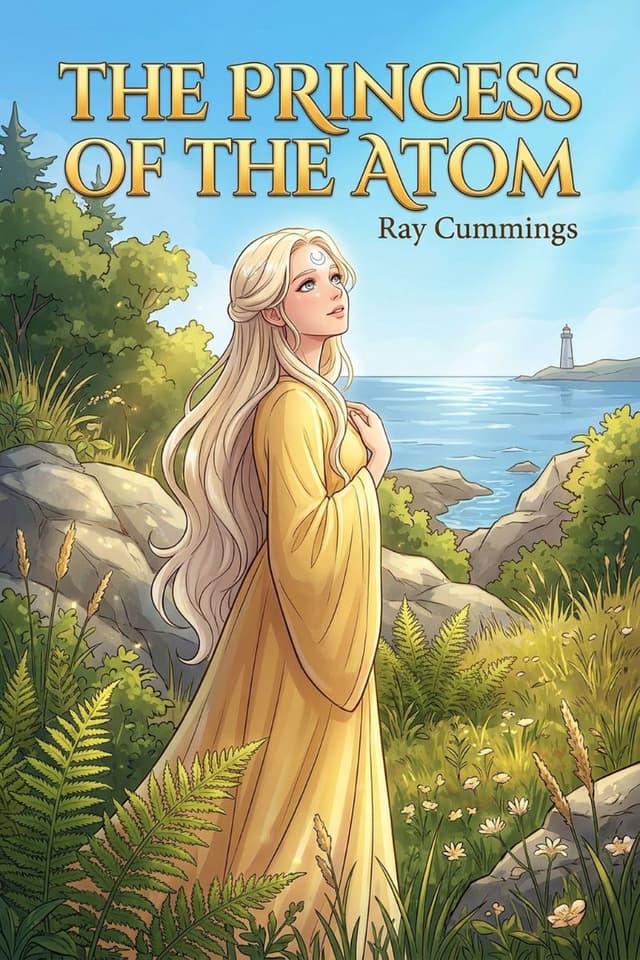
The Princess of the Atom
Read The Princess of the Atom by Ray Cummings for free on Novelhalla, and try out our easy-to-read modern edition of this classic book. You can also download the EPUB and read it on any device if you prefer!
The Plot
A Sister Who Never Quite Belonged
Frank Ferrule grew up with his older brother Drake and their younger sister Dianne, and for most of his life that was all there was to it. Dianne was beautiful in a way that didn't seem entirely of this world, but she was family, and the Ferrule boys never questioned it. Then, when Frank is 17 years old Dianne disappears near their summer home on the coast of Maine. Their father reveals that she had been adopted.
It happens on an ordinary family outing to Bird's Nest Island, a rocky bit of land off the coast. One minute Dianne is there, and the next she's simply gone. No body, no trace, no explanation. She had disappeared from the home of her guardian, Dr. Ferrule, and had been sought in vain. The boys are left with grief and a family secret they never knew existed.
Giants From the Sea
Then things get much stranger. The story quickly shifts from a domestic tragedy, Dianne's sudden, inexplicable disappearance during a family outing on Bird's Nest Island, to much grander events: the appearance of giants off the New England coast and growing public panic. Enormous figures are seen wading out of the ocean, and nobody can say where they came from or what they want.
And on the very day the giants arrive, Dianne comes back. Giants appeared off the coast of New England on the day beautiful Dianne returned from oblivion. She isn't the girl who vanished, though. She brings a warning, a story almost too wild to believe, and the name of a man the Ferrules will soon learn to fear: Togaro.
Into Infinite Smallness
What Dianne has to tell them turns everything upside down. She comes from a microscopic atomic civilization, an entire world hidden inside a speck of matter too small to see. Getting there and back takes two drugs, one made you larger, the other made you smaller. Those same drugs are what let the giants grow to monstrous size in our world, and someone on the other side means to use them for conquest.
So Frank and Drake have a choice to make. They can stay in Maine and watch the coastline fill up with towering invaders, or they can swallow the drug, shrink away into a tiny universe nobody on Earth has ever seen, and take the fight to its source. Rocky caverns turn into endless landscapes, pebbles become mountains, and the brothers find themselves fighting for a world they didn't know existed, and for a girl both of them may love more than they ought to. With Togaro scheming at both ends of the scale, Frank and Drake are about to find out how far down the danger really goes.
About the Author: Ray Cummings
Early Life
Raymond King Cummings was born on August 30, 1887, on Times Square in New York City. He grew up mostly in the city, though his education took a few turns. He was educated at Princeton University and on his family's orange plantation in Puerto Rico, which gave him a broader view of the world than most young New Yorkers of his day.
Working for Edison
Before he wrote a word of fiction for money, Cummings had a job most science fiction writers would envy. He worked with Thomas Edison as a personal assistant from 1914 to 1919, where he arranged phonograph record albums and wrote labels for Edison Records. Facsimiles of his signature appear on many of the labels. Spending those years around Edison's labs gave him a real feel for invention and scientific possibility, and you can see it all over his fiction.
The Pulp Years
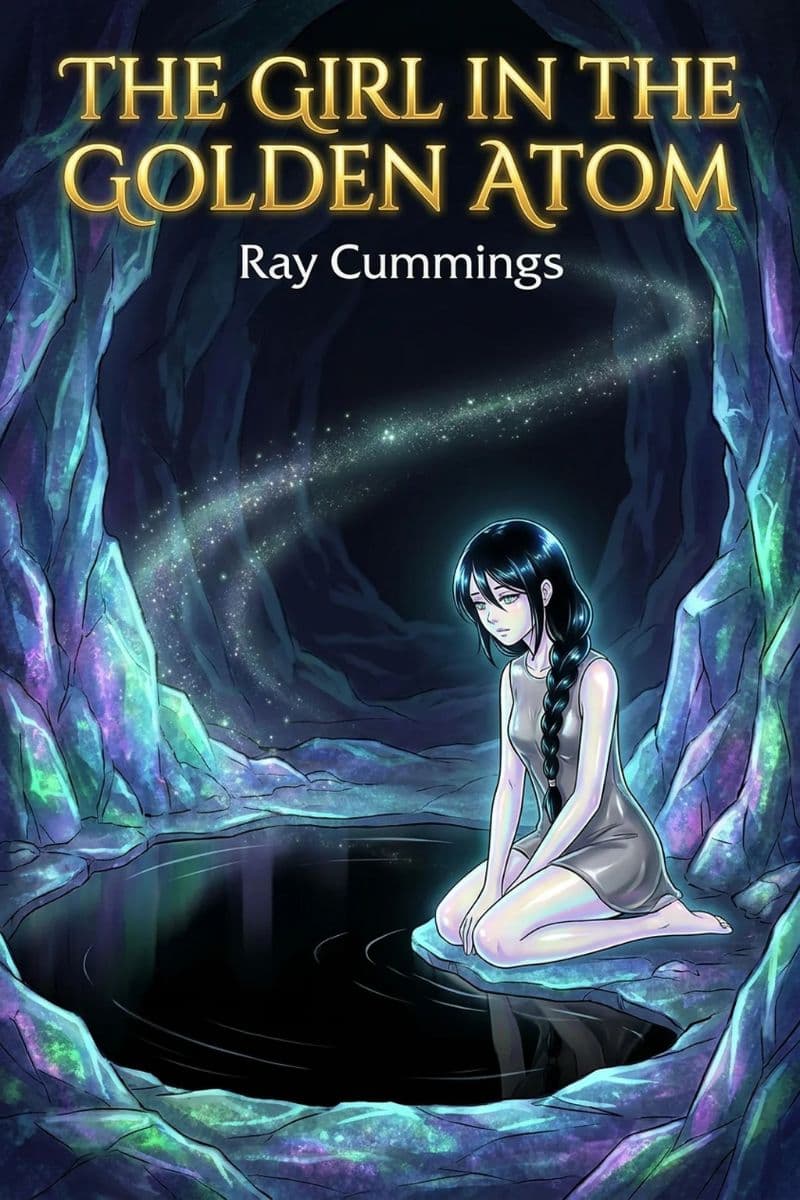
All-Story Weekly published the first story he ever sold, "The Girl in the Golden Atom", in 1919. It was a hit, and it kicked off one of the busiest careers in pulp history. Cummings published more than 750 science fiction stories in a career which started more than a decade before the term for the genre was even coined. He became a regular in Argosy, and he used his own name on his stories and the pennames of Ray King, Ray P. Shotwell, Robert Wallace, and Gabriel Wilson (the last a joint pseudonym used by Cummings and his second wife).
He also came up with a line that's still floating around today. In "The Girl in the Golden Atom," he wrote that time "is what keeps everything from happening at once", a sentence repeated by scientists such as C. J. Overbeck, and John Archibald Wheeler, and often misattributed to the likes of Einstein or Feynman.
Later Years
As the pulp market changed, Cummings changed with it. During the 1940s, with his literary career in eclipse, Cummings anonymously scripted comic book stories for Timely Comics, the predecessor to Marvel Comics. Writing ran in the family. His second wife was also a writer, and wrote some stories with Cummings. Their daughter, Elizabeth (Betty Cummings), was also a writer, selling a short story to Liberty Magazine at the age of 13. He attended the first Worldcon, Nycon, in 1939, and he died in Mount Vernon, NY, on January 23, 1957.
Legacy
Cummings is identified as one of the "founding fathers" of the science fiction genre. His work inspired many of the writers who created science fiction's Golden Era in the United States (approximately 1939 to 1950).
Fun Facts About the Book
It Started as a Six-Part Magazine Serial
The novel first reached readers in installments. It ran in Argosy from September 14-October 19, 1929 in six parts, and the first installment was the cover story for its issue, with cover art by Robert A. Graef.
Twenty Years Before It Became a Book
Even with its splashy magazine debut, the story didn't come out as a book until 1950. When it finally did, it was published by Avon as Avon fantasy novels, no. 1., the very first title in that series. One bookseller calls it the first title in the classic pulp novella series and the most highly regarded work by one of the founding fathers of science fiction Ray Cummings.
A Memorable Cover
The 1950 Avon paperback has some classic pulp cover art. It shows a giant man's face looking at a diminutive blonde in a low-cut gold dress beside a microscope. Collectors still hunt for it.
The First Hardcover Came From London
American readers only got a paperback at first. The first British and first hardcover edition came from T.V. Boardman and Company in London in 1951.
Cummings Reused It for Captain America
Cummings clearly liked this story, because he brought it back in comic book form. He recycled the plot of The Princess of the Atom for a two-part Captain America tale, Princess of the Atom (Captain America Comics #25 & 26). Cummings wrote the script and Syd Shores drew it, and in that version Cap and Bucky defeat a giant cockroach which had been set upon them by Togaro, a tyrant from a microworld.
Back to Cummings' Favorite Territory
Cummings made his name with a world inside an atom, and this book goes back to that idea. Without giving anything away, one Argosy historian sums up the setup like this: the source turns out to be an atomic kingdom in the heart of a meteor.
Themes
Worlds Within Worlds
This is the big idea behind the whole book. What if every speck of dust held a universe, and what if those universes could reach out and touch ours? Cummings has fun with the dizziness of scale here, as ordinary rocks turn into vast landscapes and people from a tiny world rise up taller than skyscrapers.
Family and Belonging
At its core, this is a story about a family finding out that one of their own came from somewhere unimaginable. Dianne is the adopted sister with a hidden past, and the book keeps asking whether family is about blood or about the bonds you build growing up together.
Love and Loyalty
Frank and Drake are both drawn to Dianne, and their feelings get tangled up with brotherly loyalty and the danger they're facing. The book weighs devotion to one person against duty to two whole worlds.
Tyranny and Ambition
Togaro is a classic pulp villain, a would-be conqueror with appetites to match. The cover copy calls him an Atomic Napoleon, and through him the story looks at what happens when one man's hunger for power isn't limited by size, distance, or even the laws of nature.
Science as Wonder and Threat
Writing in the late 1920s, Cummings sees science as both a doorway to amazing discoveries and a tool that can be turned into a weapon. The same drugs that open up a hidden universe can also unleash giants on an unprepared coastline.
The Book's Legacy
Cummings is mostly remembered for "The Girl in the Golden Atom," but this novel holds a special spot in his work. It launched the Avon Fantasy Novels line, crossed the Atlantic in a British hardcover edition, and was turned into a two-part Captain America story by Cummings himself, so it reached readers in pulp magazines, paperbacks, and comic books.
The book also shows the kind of storytelling that made Cummings so influential. His stories introduced countless readers to time travel, micro-universes, and cosmic adventure, laying the groundwork for much of the pulp tradition. Any time a modern movie or comic sends a hero shrinking into a subatomic realm, it's walking a path Cummings helped clear.
Readers today still enjoy it for what it is, a fast and unapologetically pulpy adventure. One reviewer called it a rollicking good story that never gets boring. If you like your science fiction big, bold, and full of wonder, this is classic Cummings.