Novelhalla
The Purple Cloud
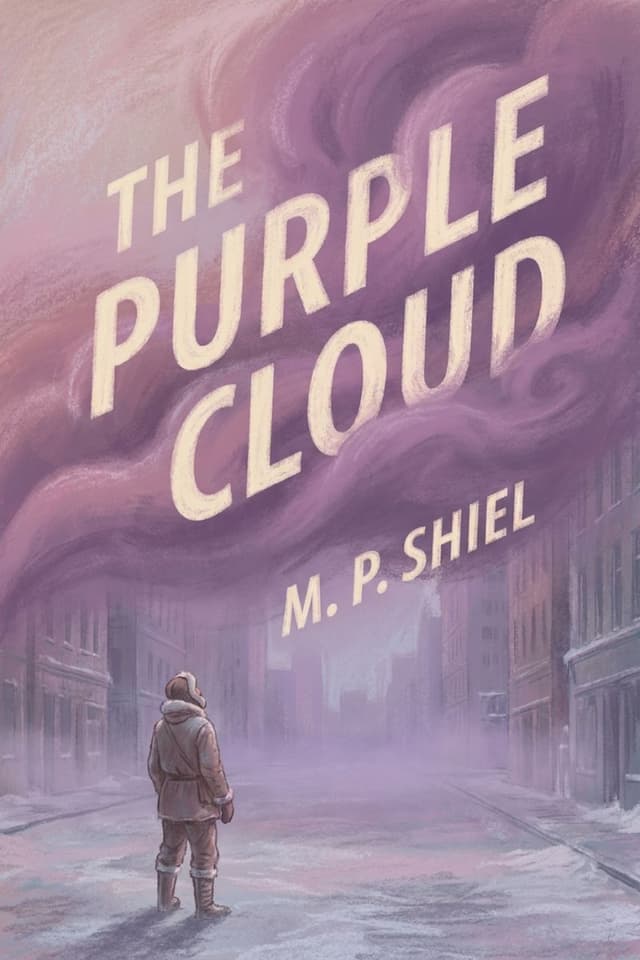
Read The Purple Cloud by M. P. Shiel for free on Novelhalla, and try out our easy-to-read modern edition of this classic book. You can also download the EPUB and read it on any device if you prefer!
The Plot
The Race to the Pole
A dead millionaire has left $175 million to the first person who reaches the North Pole and returns alive. Every previous attempt has failed. A preacher stalks the streets of London warning that the Pole was never meant to be reached, that God Himself has forbidden it, and that any expedition will bring catastrophe. Nobody listens. The money is too good.
Adam Jeffson, a doctor and a man haunted by strange voices since childhood, secures a place on the expedition's ship, the Boreal. His fiancee, Clodagh, made sure of it. She poisoned her own cousin to open a spot for him. Jeffson may not know this when he boards the ship. Or he may suspect and choose not to ask.
The Boreal sails north. The crew begins to die. Not from cold or starvation, but from each other. The closer the ship gets to the Pole, the more something seems to go wrong with the men aboard. Violence. Paranoia. Madness. One by one, they fall. Jeffson pushes on alone, over the ice, until he stands where no human being has ever stood.
At the top of the world, he finds something that defies explanation. And then he smells it: a strange, sweet scent, like peaches. Faint at first. Then stronger. Behind him, to the south, a cloud is moving across the sky. It is purple.
The Last Man
Jeffson makes his way back to the ship. The crew is dead. He sails south alone, and with every mile the horror deepens. Dead animals on the shore. Dead sailors on passing ships, frozen in their final postures. Entire populations wiped out on islands he passes, bodies without wounds, as if they simply stopped.
The purple cloud has rolled across the earth. It smells sweet and it kills everything it touches. Every human being, every animal, every warm-blooded creature on the planet. Gone.
Jeffson reaches London. The streets are full of the dead. He searches for survivors, finds barricades smashed open by panicked crowds, churches packed with bodies. He goes to the home of a friend and finds him slumped at his desk, a half-finished poem still under his pen. There is no one left.
Adam Jeffson is the last man alive on earth.
The Descent
What happens to a person when there is no one left to be a person for?
Jeffson's mind begins to unravel. At first he searches. He travels the dead world looking for any sign of life, crossing oceans and continents, finding only silence and the sweet lingering smell of the cloud. Then the searching stops and something else begins.
He starts setting fires. London goes first. Then Paris. Then Bordeaux. He burns cities the way a child knocks over sandcastles, not out of anger exactly, but out of a terrible need to do something, anything, in a world where nothing matters anymore. He declares himself king, emperor, god. He dresses in stolen finery and talks to no one.
Two forces have been pulling at Jeffson since childhood, forces he thinks of as "the White" and "the Black." One pulls him toward creation, toward hope. The other toward destruction and despair. Alone on a dead planet, with no one to anchor him, the Black begins to win.
He decides to build. On the island of Imbros, in the Aegean Sea, he begins constructing a palace of staggering scale and beauty, furnished with the looted treasures of every civilization on earth. It takes him seventeen years. It is magnificent and completely insane.
The Signal
And then, in the ruins of Constantinople, after he has set another city ablaze, Jeffson finds something impossible.
Footprints. Small ones. Fresh.
There is someone else alive.
She is young, perhaps seventeen or eighteen, and she has been living in a sealed cellar beneath the old Turkish palace since the day she was born. The airtight chamber kept the cloud out. She knows nothing of the world, nothing of what happened, nothing of anything beyond the walls that saved her.
Jeffson's first impulse is not kind. He has been alone too long. The Black has its hooks in him. But something prevents him from acting on his worst instincts, and instead he is left with a question he never expected to face: If you are Adam, and she is Eve, and the entire future of the human race rests on what you decide to do next, what do you choose?
He is not sure he wants humanity to have a future. He has seen what humans are. He has become the proof.
The Choice
The girl reads the Bible and begins to understand her situation faster than Jeffson is comfortable with. She is not stupid. She is not passive. And she has opinions about what the two of them owe the dead world.
Jeffson fights against her. He fights against hope. He fights against the White. He has spent nearly two decades as the sole inhabitant of a planet-sized graveyard, and the idea that it might all start over, that the whole miserable story of humanity might begin again from nothing, fills him with something between terror and rage.
But she is there. And he is no longer alone. And somewhere above them, the purple cloud is still moving through the sky.
About the Author: M. P. Shiel
Island Origins
Matthew Phipps Shiell was born in 1865 on the island of Montserrat in the British West Indies. His father was a shopkeeper and Methodist preacher of Irish descent. His mother was most likely the daughter of freed slaves. The family's heritage was complex, spanning the colonial, the Caribbean, and the Irish, and Shiel would carry all of those identities with him into his writing life.
He was educated at Harrison College in Barbados before leaving the Caribbean for England in 1885, where he dropped the second "l" from his surname and began reinventing himself.
London and the Decadent Scene
In London, Shiel studied at King's College, worked as a teacher and translator, and taught himself half a dozen languages. He fell in with the literary bohemians of the 1890s, counting Arthur Machen, Ernest Dowson, and Oscar Wilde among his circle. His early short story collections, Prince Zaleski and Shapes in the Fire, were steeped in the extravagance of the Decadent movement and the gothic influence of Edgar Allan Poe.
He turned to commercial serial fiction in the late 1890s, writing novels of future war and global catastrophe for popular magazines. His most commercially successful book during his lifetime was The Yellow Danger, a sensational tale of East-West conflict that he considered hackwork but that readers devoured.
The Purple Cloud and After
The Purple Cloud, serialized in The Royal Magazine in 1901 and published as a novel that same year, was Shiel's masterpiece. H. G. Wells called it brilliant. H. P. Lovecraft praised it decades later as weird fiction of near-majesty. The novel cemented Shiel's reputation as one of the most imaginative and stylistically ambitious writers of speculative fiction in the English language.
Shiel continued writing for decades, revising The Purple Cloud in the 1920s and producing novels and stories well into old age. But financial stability always eluded him. He was awarded a civil pension in 1934 and died in near-poverty on February 17, 1947.
The King of Redonda
According to a legend almost certainly invented by Shiel himself, he was crowned King of Redonda, a tiny uninhabited rocky island near Montserrat, on his fifteenth birthday. There is no evidence this actually happened, but the story took on a life of its own. On his death, Shiel passed the "kingship" to his literary executor, and the title has been claimed and contested by various literary figures ever since. It is exactly the kind of beautifully absurd fiction that Shiel would have appreciated.
Fun Facts About the Book
The First Great Apocalypse Novel of the Twentieth Century
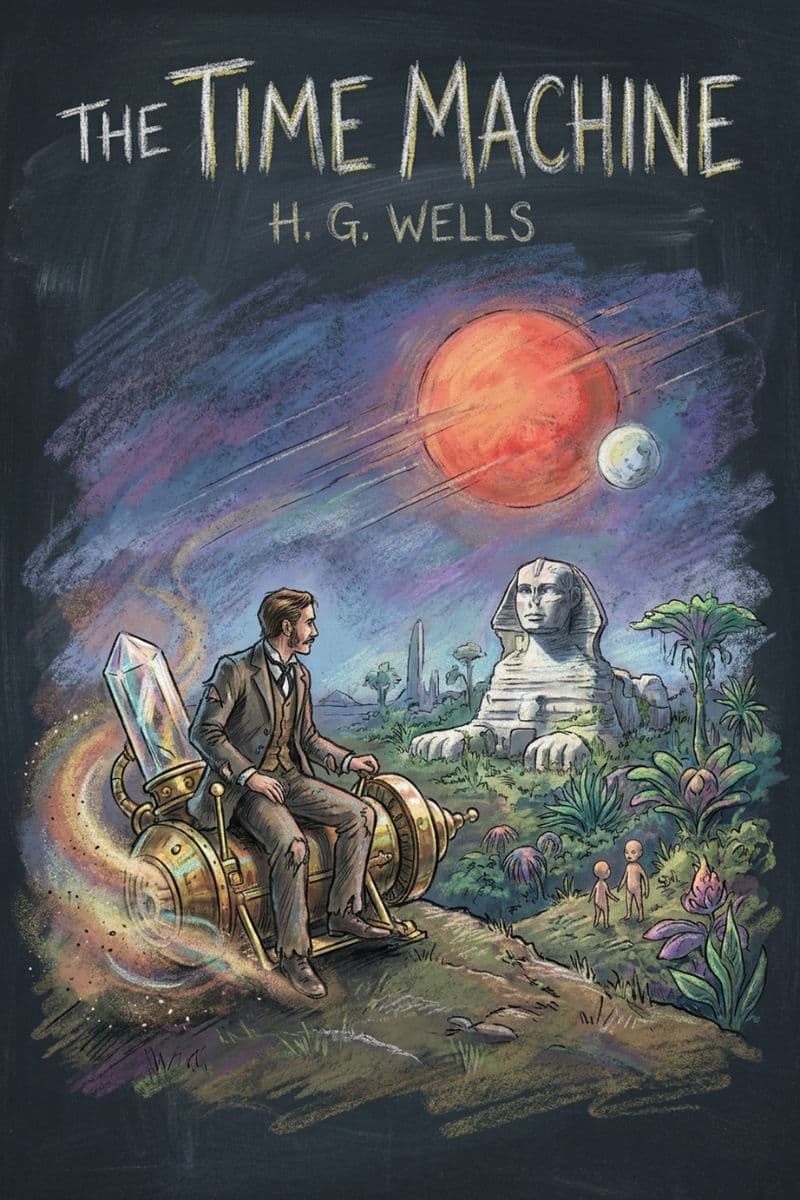
Published in 1901, The Purple Cloud is widely considered the first major apocalyptic science fiction novel of the new century. It follows a tradition that includes Mary Shelley's The Last Man and H. G. Wells' The Time Machine, but it pushes the "last man on earth" concept further than anyone had before, spending hundreds of pages inside the mind of a man watching his own sanity dissolve.
The Peach Smell of Death
The purple cloud's signature detail is its scent: a sweet, peach-like aroma. Shiel was drawing on the real properties of hydrogen cyanide gas, which smells of bitter almonds. By making the agent of extinction smell pleasant, even beautiful, he created one of the most unsettling images in early science fiction. Death doesn't come with a warning. It comes with a perfume.
The Arthur Machen Cameo
When Jeffson reaches London and begins searching the dead city, he visits the home of Arthur Machen, a real writer and one of Shiel's closest friends. He finds Machen dead at his desk, having been writing a poem when the cloud arrived. It's one of the novel's most quietly devastating moments, and a real-life friendship immortalized in fiction.
A Book Hollywood Couldn't Stop Trying to Make
Paramount Pictures purchased the film rights to The Purple Cloud as early as 1927. They attempted to produce it in 1940 with director Rene Clair and star Conrad Veidt. After the atomic bombings of 1945, several studios raced to make end-of-the-world films, and the project was revived again. It finally reached the screen in 1959 as The World, the Flesh and the Devil, starring Harry Belafonte. The film, set in a nuclear-devastated New York, kept the "last man alive" premise but added a then-daring exploration of race in post-apocalyptic America.
Lovecraft's Endorsement
H. P. Lovecraft, not a man given to easy praise, ranked Shiel among the finest writers of weird fiction. He said The Purple Cloud was delivered with skill and artistry falling little short of actual majesty. For readers of cosmic horror, the novel's vision of a universe governed by vast, indifferent forces will feel strikingly familiar.
A Novel in Three Versions
The Purple Cloud exists in three distinct texts. The original 1901 serial version was the longest. The 1901 book edition trimmed it. Shiel then revised the novel substantially in the 1920s, tightening the prose without changing the plot, and this version was published in 1929. Scholars and readers still debate which is the definitive text.
Themes
Solitude and Madness
The novel's great subject is what total isolation does to the human mind. Jeffson doesn't just lose his sanity in a dramatic break. He erodes, slowly, over years and decades, until the person he was before the cloud is almost unrecognizable. Shiel understood that loneliness isn't just sad. Given enough time, it's annihilating.
The Cosmic Tug of War
Throughout the novel, Jeffson feels himself pulled between two forces he calls "the White" and "the Black." These aren't simply good and evil. They're more like creation and entropy, hope and nihilism, the impulse to build and the impulse to burn. The novel suggests that these forces operate on a scale far larger than any individual human life, and that Jeffson is merely the battlefield.
What Humanity Deserves
Jeffson travels through a dead world and sees, in the positions of the corpses, the last things people did when they knew the end was coming. Many of them turned on each other. The novel asks, with uncomfortable directness, whether a species capable of such behavior deserves a second chance.
The Burden of Being Adam
When Jeffson discovers the girl, he is handed the most terrifying responsibility imaginable: the choice of whether the human race continues. The novel takes this biblical setup and makes it genuinely agonizing. Jeffson doesn't want to be Adam. He has seen what comes after Genesis.
Destruction as Creation
There is something almost ecstatic about Jeffson's city-burning phase. He destroys with the intensity of an artist. Shiel doesn't shy away from the terrible beauty of it, the way fire can feel like the only honest response to a world that has already ended. The novel forces the reader to sit with the uncomfortable possibility that destruction and creation come from the same place inside us.
The Book's Legacy
The Purple Cloud is one of the founding texts of apocalyptic science fiction. Every "last man on earth" story written since, from Richard Matheson's I Am Legend to Cormac McCarthy's The Road, owes it something. The novel's vision of empty cities, silent oceans, and a lone figure wandering through the ruins of civilization has become one of the defining images of the genre.
The 1959 film adaptation, The World, the Flesh and the Devil, translated the novel's premise into a Cold War parable about nuclear annihilation and racial tension, starring Harry Belafonte in one of the first mainstream Hollywood films to center a Black protagonist in a science fiction setting.
For readers who have never encountered The Purple Cloud, it remains startling. The prose is feverish and strange, the imagery is unforgettable, and the central question, whether humanity is worth saving, has only grown more urgent since 1901.