Novelhalla
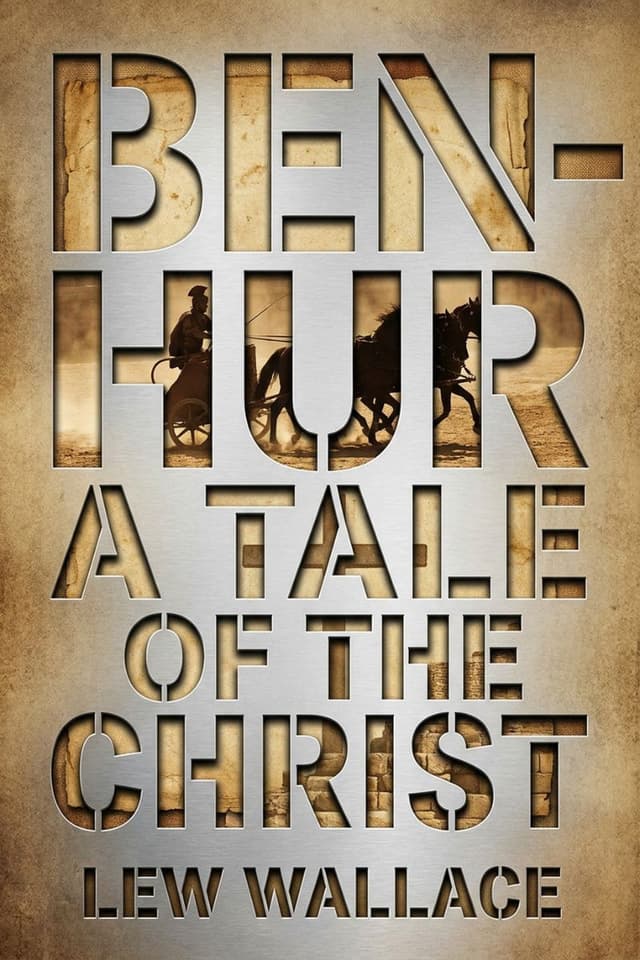
Ben-Hur A Tale of The Christ
Read Ben-Hur A Tale of The Christ by Lew Wallace for free on Novelhalla, and try out our easy-to-read modern edition of this classic book. You can also download the EPUB and read it on any device if you prefer!
The Plot
Ben-Hur is an epic tale of betrayal, vengeance, and spiritual transformation set against the backdrop of Roman-occupied Judea during the time of Christ.
The Betrayal
Judah Ben-Hur is a wealthy Jewish prince living in Jerusalem. His childhood friend Messala returns from Rome as a proud Roman officer. When Messala asks Judah to inform on his fellow Jews to help Rome maintain control, Judah refuses. Their friendship shatters.
Shortly after, a loose roof tile accidentally falls from the Hur family home during a parade for the new Roman governor. Messala seizes the opportunity for revenge. He knows it was an accident but has Judah arrested for attempted assassination. Judah's mother and sister are thrown into prison, and Judah himself is condemned to the galleys as a slave, all without trial.
Years in Chains
Judah spends three brutal years as a galley slave, rowing Roman warships. During a sea battle, his ship is destroyed, but Judah saves the life of the Roman commander Quintus Arrius. Grateful, Arrius adopts Judah as his son, giving him freedom, Roman citizenship, and wealth. But Judah cannot rest. He must return to Judea to find his mother and sister and take revenge on Messala.
The Chariot Race
Back in the East, Judah befriends Sheik Ilderim, an Arab horse breeder who offers him the chance to drive his team of magnificent horses in the great chariot race at Antioch. Messala will be racing too. The circus becomes the arena for their confrontation. What follows is one of the most famous action sequences in all of literature.
A Different Kind of King
Throughout his journey, Judah encounters people who speak of a coming King of the Jews. He meets Balthasar, one of the wise men who visited Bethlehem decades earlier, still waiting for the child he once worshipped to reveal himself. Judah dreams of this king leading armies to overthrow Rome. But the king he eventually finds is not what he expected.
Parallel Lives
The novel weaves Judah's story together with glimpses of another young man from Galilee whose path crosses Judah's at crucial moments. Their stories converge at the climax in a way that transforms everything Judah thought he wanted.
About the Author: Lew Wallace
Unlikely Novelist
Lewis Wallace was a Union general in the Civil War, fighting at the battles of Fort Donelson and Shiloh. He later served on the military court that tried the conspirators in Lincoln's assassination and presided over the trial of the commandant of the notorious Andersonville prison camp.
The Conversation That Started It All
Wallace claimed the novel originated from a train conversation with the famous agnostic Robert Ingersoll. Their discussion about faith and God left Wallace embarrassed by how little he knew about his own religion. He set out to research the life of Christ, intending to write something that would settle his own doubts.
A Governor Who Wrote
While serving as the territorial governor of New Mexico (where he dealt with Billy the Kid among other frontier troubles), Wallace worked on the manuscript. He wrote much of the book in the Palace of the Governors in Santa Fe.
Publication and Success
Ben-Hur was published in 1880 and started slowly. But word of mouth built steadily, and within a few years it became the best-selling American novel of the 19th century, a record it held until Gone with the Wind. It stayed in print continuously and has never gone out of print since.
Later Life
Wallace went on to serve as U.S. Minister to the Ottoman Empire. He wrote other novels but none approached the success of Ben-Hur. He died in 1905, having seen his book become a cultural phenomenon, including a massive stage adaptation that used real horses and chariots on a treadmill.
Fun Facts About the Book
The Subtitle Matters
The full title is Ben-Hur: A Tale of the Christ. Wallace was careful to keep Christ as a presence throughout the novel without making him a speaking character. Jesus appears at key moments but is always seen from a distance or through other characters' eyes.
The Chariot Race
The famous chariot race takes up only one chapter, but it became the most celebrated sequence in the book. Wallace researched Roman chariot racing extensively to get the details right. The scene was so vivid that it drove the theatrical and film adaptations.
Stage Spectacle
The 1899 stage adaptation was a technological marvel. The chariot race was staged with real horses running on treadmills while a painted panorama scrolled behind them to create the illusion of movement. It ran for over 20 years.
The Sears Connection
At one point, Sears Roebuck included Ben-Hur in a promotion where it was bundled with other goods. This helped spread the novel into rural American homes where books were otherwise scarce. Some historians credit this with making it a true mass-market phenomenon.
Influenced by Personal Loss
Wallace's son died during the writing of the book. Some scholars see the novel's intense focus on mothers and sons, separation and reunion, as reflecting Wallace's own grief.
Roman Research
Wallace never visited Rome or the Holy Land before writing the book. He relied entirely on research, maps, and his imagination. When he finally did visit years later, he was relieved to find he had gotten the details mostly right.
The Magi Connection
The novel opens not with Judah but with the three wise men journeying to Bethlehem. Balthasar, one of the magi, becomes a significant character later in the story, connecting the nativity directly to Judah's journey.
Themes
Vengeance Versus Forgiveness
Judah spends most of the novel burning for revenge against Messala and Rome. The question of whether vengeance can ever satisfy, and what it costs the soul, drives the narrative toward its climax.
Two Kinds of Kingdom
The novel contrasts earthly power with spiritual kingdom. Judah and others expect a messiah who will be a military leader, driving out the Romans. What they find instead forces a complete rethinking of what salvation means.
The Corruption of Rome
Roman civilization is portrayed as mighty but spiritually hollow. Its law is arbitrary, its justice is political, and its pleasures mask a deep emptiness. The contrast with Jewish faith and emerging Christianity runs throughout.
Mothers and Family
The bond between Judah and his mother and sister drives much of the plot. His desperate need to find them and learn their fate provides emotional fuel for his journey. The novel takes family loyalty seriously as a sacred obligation.
Faith and Doubt
Wallace wrote the book while working through his own religious uncertainty. That searching quality comes through in characters who question, doubt, and gradually come to faith not through easy answers but through suffering and witness.
Identity and Transformation
Judah passes through multiple identities: Jewish prince, galley slave, Roman citizen, charioteer, would-be revolutionary. Each transformation strips something away or adds something new, building toward a final change that redefines everything.
The Book's Legacy
Ben-Hur was the best-selling American novel of the 19th century and remained enormously popular well into the 20th. It shaped how generations of readers imagined the ancient world and the time of Christ.
The 1959 film adaptation starring Charlton Heston won eleven Academy Awards, a record that stood for decades. The chariot race sequence became one of the most famous scenes in cinema history. The story has been adapted for stage, screen, television, and animation multiple times.
The novel pioneered a genre of biblical epic fiction that continues today. Its combination of action, spectacle, and spiritual searching set a template that countless imitators have followed.
Beyond entertainment, the book played a role in American religious culture. For many readers it was their first imaginative encounter with the world of the Gospels. Wallace received thousands of letters from readers who said the book had affected their faith.