Novelhalla
Atlantis
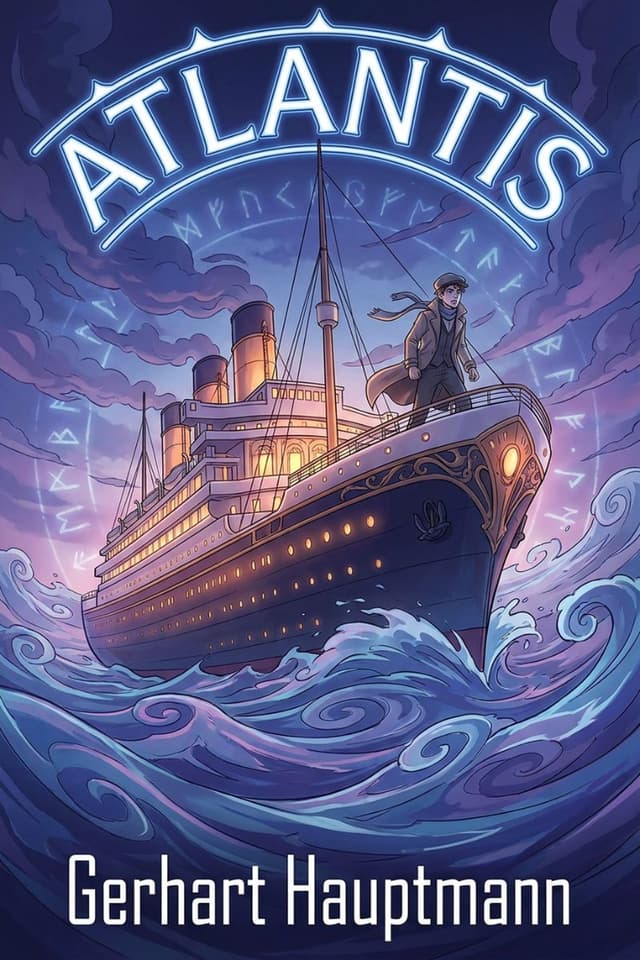
Read Atlantis by Gerhart Hauptmann for free on Novelhalla, and try out our easy-to-read modern edition of this classic book. You can also download the EPUB and read it on any device if you prefer!
The Plot
Atlantis is a psychological and philosophical novel that blends social realism with symbolism, focusing on moral responsibility, human suffering, and the fragile boundary between civilization and catastrophe.
A World on the Edge
The novel follows Friedrich von Kammacher, a cultivated and sensitive German intellectual traveling by sea with his family. From the outset, the journey carries an undercurrent of unease. Beneath the comforts of modern society lie tensions, injustices, and unresolved personal conflicts.
Friedrich is a man shaped by ideas, ideals, and emotional restraint. He struggles with guilt, self-doubt, and a growing sense that the world he inhabits is morally unstable.
Catastrophe
A sudden disaster shatters the illusion of safety. Order collapses, and social distinctions dissolve under pressure. In the face of chaos, individuals are stripped down to instinct, fear, and moral choice.
The novel closely observes how people respond to crisis. Some rise to compassion and courage, while others retreat into selfishness or paralysis. Friedrich is forced into direct confrontation with suffering, responsibility, and the limits of his own character.
Survival and Reckoning
In the aftermath of disaster, the survivors confront not only physical hardship but also spiritual and ethical reckoning. The experience becomes a crucible that exposes truths long hidden beneath social roles and cultural refinement.
Rather than offering simple heroism, Atlantis presents survival as morally complex and emotionally costly. The journey becomes inward as much as outward.
Meaning and Reflection
The title Atlantis functions symbolically, suggesting a lost world of confidence in progress and rational control. What vanishes is not only physical safety, but faith in civilization itself.
The novel ultimately asks whether humanity can rebuild on firmer ethical ground, or whether the same flaws will persist beneath new structures.
About the Author: Gerhart Hauptmann
Early Life
Gerhart Hauptmann was born in 1862 in Obersalzbrunn, in what was then Prussia. He initially studied sculpture before turning to literature, bringing a strong visual and observational sensibility to his writing.
Literary Career
Hauptmann became the leading figure of German Naturalism, known for portraying social injustice, poverty, and psychological realism. His early plays caused controversy for their unflinching depiction of working-class life.
Though best known as a dramatist, he also wrote novels, poetry, and essays. Atlantis was published in 1912 and reflects his growing interest in symbolism and philosophical questions.
Nobel Prize
In 1912, the same year Atlantis appeared, Hauptmann was awarded the Nobel Prize in Literature for his profound, versatile, and outstanding body of work.
Later Life
Hauptmann lived through the collapse of the German Empire, World War I, and World War II. His later years were marked by declining influence and complex political positioning. He died in 1946.
Fun Facts About the Book
Inspired by a Real Disaster
The novel was inspired by the 1912 sinking of the RMS Titanic. While Atlantis is fictional, its depiction of disaster at sea closely echoes contemporary public trauma.
From Naturalism to Symbolism
Unlike Hauptmann’s earlier strictly realistic works, Atlantis blends realism with allegory and psychological depth.
Title as Metaphor
The lost city of Atlantis represents the collapse of faith in modern progress, technology, and moral certainty.
Immediate Relevance
Published just before World War I, the novel now reads as an eerie premonition of a civilization heading toward self-destruction.
Themes
Civilization and Collapse
The novel examines how quickly social order disintegrates under pressure, revealing the fragility of cultural norms.
Moral Responsibility
Characters are judged less by status or intellect and more by how they respond to suffering and danger.
Guilt and Conscience
Friedrich’s inner struggle reflects broader questions about personal accountability within unjust systems.
Illusion of Progress
Technological advancement and cultural refinement are shown to be poor safeguards against ethical failure.
Human Solidarity
Amid despair, the novel explores whether empathy and shared responsibility can survive catastrophe.
The Book’s Legacy
Atlantis stands as one of Hauptmann’s most ambitious prose works, bridging realism and modernist uncertainty. It captures the anxiety of a world that still believed in progress, yet sensed impending collapse.
While less widely read today than his plays, the novel remains a powerful meditation on disaster, conscience, and the moral limits of civilization.