Novelhalla
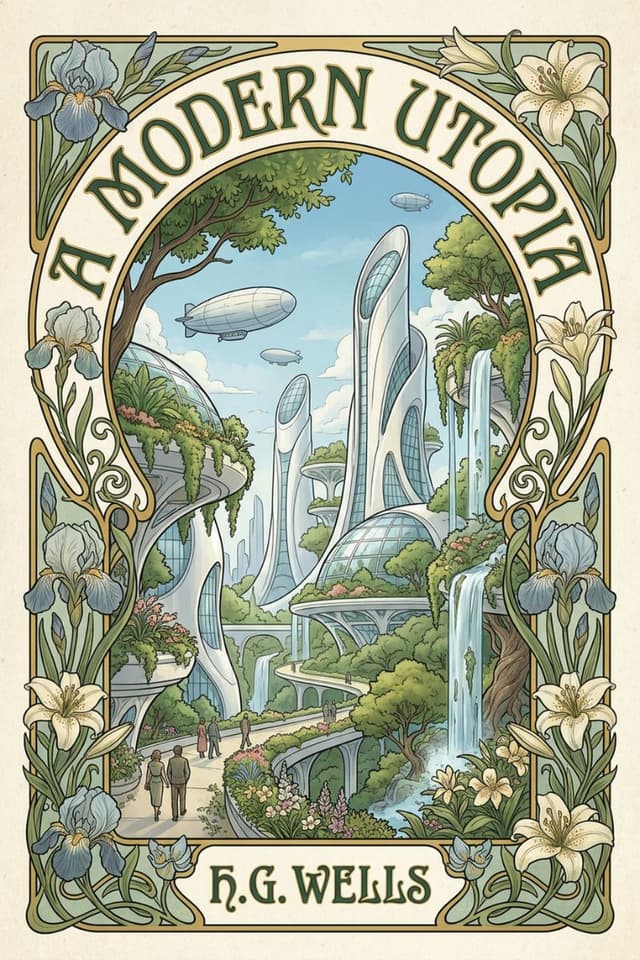
A Modern Utopia
Read A Modern Utopia by H. G. Wells for free on Novelhalla, and try out our easy-to-read modern edition of this classic book. You can also download the EPUB and read it on any device if you prefer!
The Plot
A Modern Utopia is less a traditional novel and more a philosophical exploration framed by a loose narrative device.
The Frame Narrative
The book is presented as a thought experiment undertaken by two travelers from our world: the unnamed Narrator, a rational, progressive thinker, and the Voice, a more skeptical, conservative counterpoint. While traveling together, they imagine slipping sideways into an alternate version of Earth—a parallel planet identical in geography and biology but organized according to a radically different social system.
This framing allows Wells to stage debates rather than plot twists. The “story” advances through conversations, observations, and disagreements as the travelers explore this imagined society.
The World of Utopia
In Utopia, humanity has abolished nations, private armies, and most forms of inherited privilege. The entire planet is governed as a single, coordinated world-state, run largely by a voluntary elite known as the Samurai—individuals who dedicate themselves to service, self-discipline, and intellectual rigor.
Economic life is organized to ensure material security for all, while encouraging personal responsibility and efficiency. Marriage, reproduction, education, and labor are all subject to rational planning rather than tradition or religious doctrine. Poverty, war, and extreme inequality have effectively been eliminated.
As the travelers move through Utopia, Wells describes its cities, infrastructure, social customs, and moral codes, pausing frequently to compare them to the inefficiencies and injustices of early 20th-century Earth.
Debate and Disruption
The harmony of Utopia is continually challenged by the Voice, who raises objections about freedom, human nature, and the dangers of centralized authority. He questions whether such a society could truly accommodate individuality, creativity, and dissent.
The book ultimately resists neat resolution. Rather than proving Utopia flawless, Wells allows cracks to show, emphasizing that any “perfect” society must remain flexible, provisional, and open to revision.
About the Author: H. G. Wells
Early Life
Herbert George Wells was born in 1866 in Bromley, England, to a struggling lower-middle-class family. His early life was marked by financial insecurity and limited prospects. A childhood accident that confined him to bed led him to discover books, shaping his intellectual future.
Education and Scientific Influence
Wells studied biology under Thomas Henry Huxley, a prominent advocate of Darwinism. This scientific training deeply influenced his writing, giving his work a strong evolutionary, materialist, and future-oriented perspective.
Literary Career
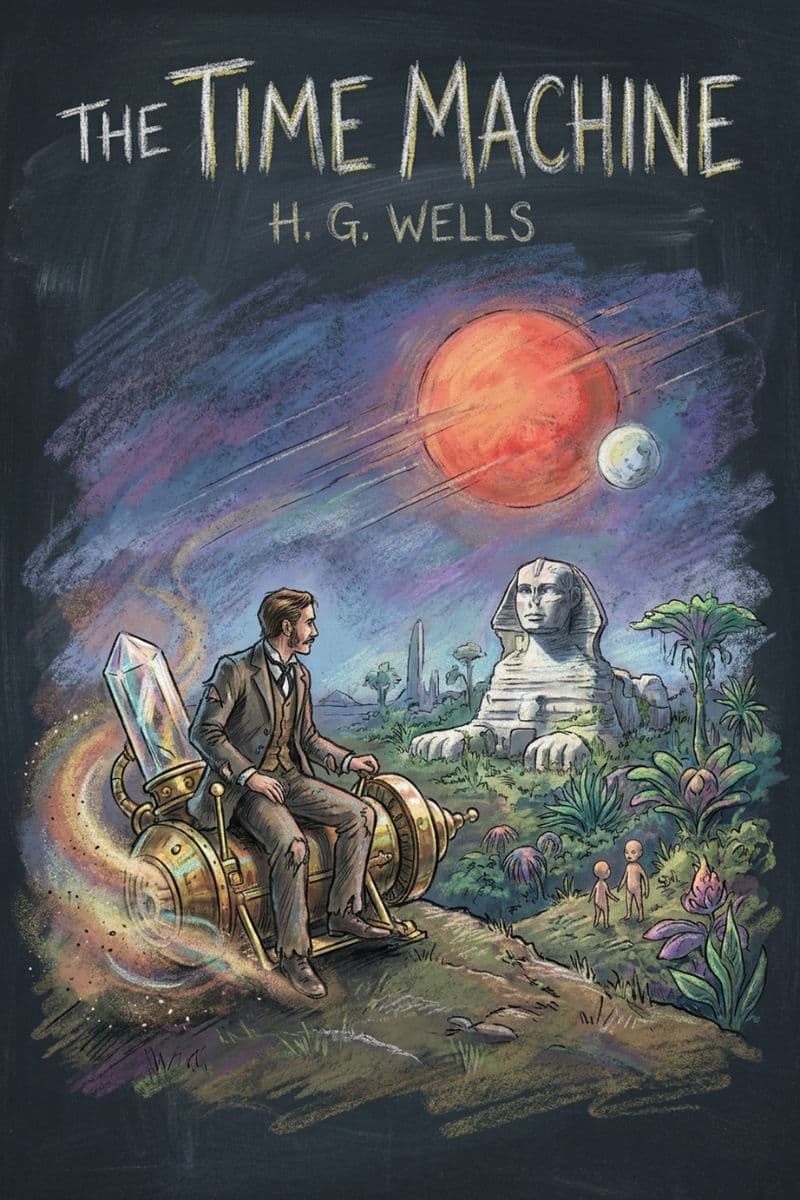
Wells first became famous for his science fiction novels, including The Time Machine, The War of the Worlds, and The Invisible Man. Unlike many later science fiction writers, Wells used speculative ideas primarily as tools for social and political critique rather than technological fantasy.
A Modern Utopia (1905) represents a turning point in his career, where speculative fiction gives way to overt political philosophy.
Political Thought and Later Life
Wells was a socialist, though often an unorthodox one. He believed in global governance, technocratic planning, and education as the key to human progress. Over time, he became increasingly pessimistic about humanity’s ability to reform itself.
He continued writing into old age, producing works on history, politics, and future world organization. He died in 1946, having lived through two world wars that both confirmed and challenged his earlier visions.
Fun Facts About the Book
Not a Traditional Novel
A Modern Utopia deliberately avoids a conventional plot. Wells himself acknowledged that it was more of a “discussion” than a story, frustrating readers expecting another adventure like The Time Machine.
The Samurai Class
The Samurai are one of the book’s most controversial ideas. They are not warriors but a self-selected ruling class bound by strict ethical rules, physical fitness, lifelong education, and public service.
A Living Utopia
Wells insisted that a true utopia must be dynamic, not static. Unlike earlier utopian works, his society is explicitly unfinished and subject to constant reform.
Globalism Before Its Time
The novel advocates for a single world government decades before international bodies like the United Nations existed, making it strikingly prescient.
Personal Projection
Many critics see the Narrator as a stand-in for Wells himself—confident, argumentative, and convinced that rational planning could solve most human problems.
Themes
World Government
The book argues that national borders and sovereign states are obsolete sources of conflict. Only a unified global system, Wells suggests, can prevent war and ensure equitable distribution of resources.
Rational Planning vs. Tradition
Wells repeatedly contrasts inherited customs with evidence-based decision-making. Religion, nationalism, and rigid morality are portrayed as obstacles to progress.
Freedom and Authority
One of the central tensions of the book is whether true freedom can exist within a highly organized society. The Voice’s objections highlight fears of conformity, surveillance, and soft authoritarianism.
Human Improvement
The novel reflects early 20th-century beliefs in education, health, and even selective reproduction as tools for improving humanity—ideas that later became ethically controversial.
Utopia as Process
Rather than presenting perfection, Wells frames utopia as an ongoing experiment. The ideal society is not one without problems, but one capable of adapting intelligently to them.
The Book’s Legacy
A Modern Utopia is one of the most influential works of political speculation in modern literature. It helped shape later discussions of global governance, technocracy, and planned economies.
While some of its ideas—particularly around social control and human improvement—have aged uncomfortably, the book remains essential reading for understanding early 20th-century optimism about reason, science, and collective progress. It stands as both a blueprint and a warning: a vision of what humanity might become, and what it risks losing along the way.