Novelhalla
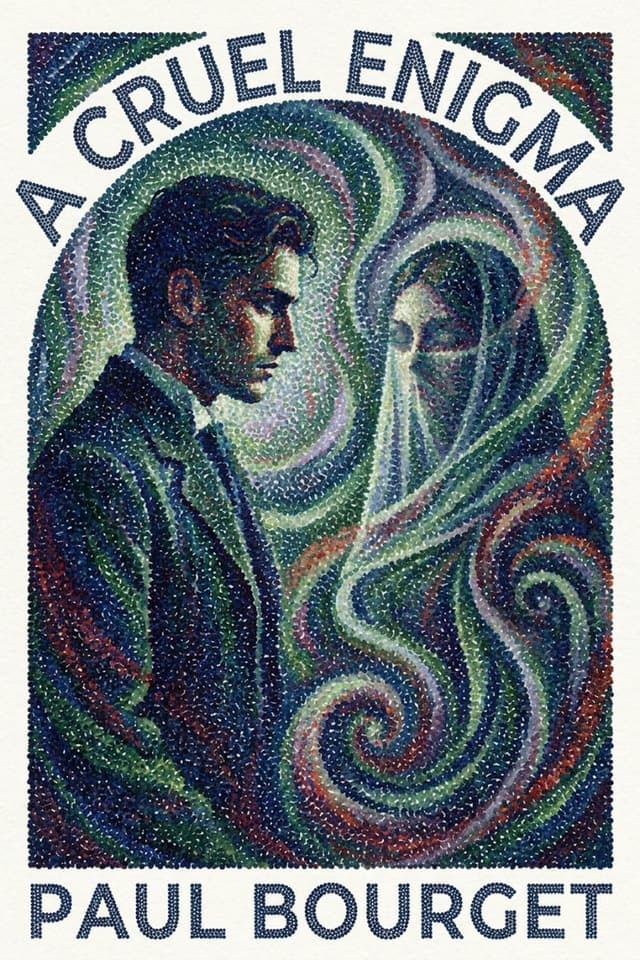
A Cruel Enigma
Read A Cruel Enigma by Paul Bourget for free on Novelhalla, and try out our easy-to-read modern edition of this classic book. You can also download the EPUB and read it on any device if you prefer!
The Plot
A Cruel Enigma is a psychological novel of obsession and moral inquiry, examining the destructive pull of desire, the limits of reason, and the danger of mistaking analysis for understanding.
An Intellectual Observer
The novel follows a cultivated, analytical man who prides himself on emotional control and intellectual clarity. He approaches life as a problem to be studied rather than experienced, convinced that human behavior can be understood through careful observation and logic.
This posture of detachment becomes the foundation of the novel’s central tension.
A Dangerous Attraction
The narrator becomes fascinated by a woman whose emotional intensity and inner life resist his attempts at rational explanation. What begins as curiosity gradually deepens into fixation.
Rather than meeting her as an equal, he studies her, interprets her, and attempts to define her according to his theories about psychology and morality. This imbalance drives much of the novel’s unease.
Analysis as Control
As the relationship develops, the narrator’s self-confidence erodes. His insistence on interpreting emotions instead of responding to them creates misunderstanding and emotional harm.
Bourget presents love not as a redemptive force, but as a test that exposes the limits of intellect when divorced from empathy.
Moral Pressure
The novel steadily tightens its focus on responsibility, asking whether emotional harm can be excused by ignorance, self-deception, or intellectual arrogance. The enigma of the title refers not only to another person, but to the narrator’s inability to fully understand himself.
About the Author: Paul Bourget
Early Life
Paul Bourget was born in 1852 in Amiens, France. He was educated in Paris and initially pursued poetry before turning to criticism and fiction.
Literary Career
Bourget became known for his psychological novels, which explored the inner lives of educated, often privileged characters. His work reflects the influence of contemporary psychology, moral philosophy, and cultural pessimism.
A Cruel Enigma, published in 1885, helped establish his reputation as a leading analyst of modern emotional life.
Intellectual Context
Bourget was deeply concerned with the moral consequences of intellectual movements such as positivism and skepticism. His fiction often questions whether analytical thinking can undermine ethical responsibility.
Later Life
In his later years, Bourget moved toward conservative and Catholic positions, reacting against what he saw as moral disintegration in modern society. He died in 1935.
Fun Facts About the Book
Psychological Precision
The novel is less concerned with external events than with subtle shifts in thought and feeling.
Modern Sensibility
Though written in the nineteenth century, the book anticipates modern themes of emotional manipulation and self-justifying rationalization.
Title Significance
The “enigma” is not meant to be solved. The novel resists clear answers, emphasizing moral ambiguity.
Influence
The book contributed to the development of the psychological novel in France and influenced later writers interested in inner conflict.
Themes
Intellect vs. Empathy
The novel critiques the belief that understanding emotions intellectually is the same as responding to them humanely.
Obsession
Curiosity turns corrosive when it replaces genuine connection.
Moral Responsibility
Bourget questions how accountable individuals are for harm they cause through emotional blindness.
Self-Deception
The narrator’s greatest misjudgments are about his own motives.
Power and Interpretation
To define another person is presented as a form of control rather than knowledge.
The Book’s Legacy
A Cruel Enigma remains a significant example of late nineteenth-century psychological fiction. Its lasting power lies in its uncomfortable examination of how intelligence and sensitivity can coexist with cruelty.
The novel endures as a cautionary study of analysis without compassion and reason without humility.