Novelhalla
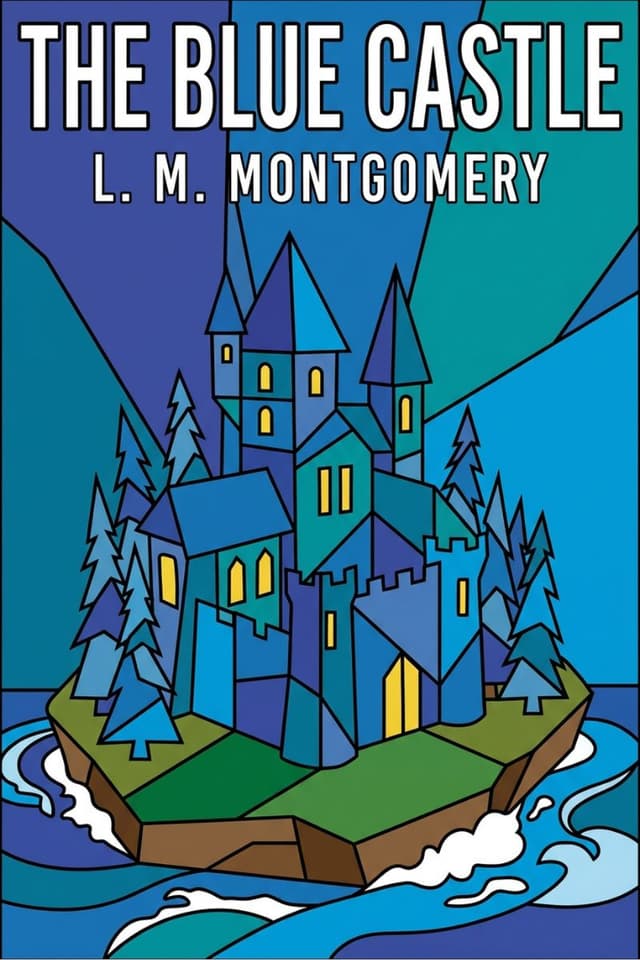
The Blue Castle
Read The Blue Castle by L. M. Montgomery for free on Novelhalla, and try out our easy-to-read modern edition of this classic book. You can also download the EPUB and read it on any device if you prefer!
The Plot
The Old Maid of the Stirling Clan
Valancy Stirling is twenty-nine years old, unmarried, and trapped. She lives with her nagging mother and her perpetually downtrodden widowed aunt in the small town of Deerwood, Ontario, surrounded by the suffocating embrace of the Stirling clan. The Stirlings are a large, respectable family who have been telling Valancy what to do, what to wear, what to think, and who to be for her entire life. They call her "Doss," her baby nickname, because apparently she hasn't earned the dignity of her own name.
She is plain. She is shy. She is afraid of everything. Her beautiful cousin Olive is engaged and radiant. Valancy is pitied, overlooked, and constantly reminded of what a disappointment she is.
Her only escapes are two: the nature books of a mysterious Canadian author named John Foster, whose descriptions of wild places make her ache for a life she's never had, and the Blue Castle of her imagination, a secret fantasy world where she is beautiful, desired, and free.
The Letter
Then Valancy starts getting pains in her chest. She visits a doctor, not the Stirling-approved doctor but a different one, because even this small act of independence feels like rebellion. What he tells her changes everything.
The diagnosis is devastating. And Valancy tells no one.
But something shifts inside her. If her life is no longer limitless, then maybe it's time to actually start living it. And the first thing she does is stop being afraid of her family.
The Rebellion
What follows is one of the most satisfying transformations you'll ever read. Valancy starts saying exactly what she thinks. To her mother. To her aunts and uncles. To every self-important Stirling who has spent decades making her feel small. She tells them the truth about themselves, and it is glorious.
The family is horrified. They decide she's gone mad. Uncle Benjamin says she's "gone dippy." Her mother deploys the silent treatment. Clan meetings are called. None of it matters anymore.
Because Valancy has a plan. Her old schoolfriend Cissy Gay is dying of tuberculosis, shunned by the whole town for the sin of having had a child out of wedlock. Her father, a notorious drunk everyone calls Roaring Abel, is a brilliant carpenter who can't take care of her. Nobody decent will go near their falling-down house.
Valancy moves in.
The Outcasts
The Stirlings are apoplectic. Their Doss, living with the town drunk and his disgraced daughter? But Valancy doesn't care anymore. For the first time in her life, she is earning her own money, spending it how she wants, and doing something that actually matters. She buys a brightly colored dress. She goes to a dance. She starts to feel alive.
And then there's Barney Snaith.
Barney is the local mystery. He lives alone on a tiny island in the middle of a lake, in a ramshackle cabin surrounded by pine trees. He drives a rattling old car. He does no apparent work. The town gossips have decided he's everything from an escaped convict to a counterfeiter to a murderer. He is also, Valancy notices, kind to Cissy and Abel when nobody else will be. He has a warm laugh and a wicked sense of humor. And something about the wild, beautiful island where he lives looks an awful lot like the Blue Castle she's been dreaming of her whole life.
The Proposal
After Cissy dies, Valancy faces a choice. She can go home to her mother, back to the silence and the quilting and the slow suffocation. Or she can do something absolutely insane.
She proposes to Barney Snaith.
She tells him she's dying. She tells him she doesn't expect love. She just wants whatever time she has left to be spent somewhere beautiful, with someone she actually likes. It's the bravest, most reckless, most Valancy thing she's ever done.
And Barney says yes.
The Island
Life on the island is everything Valancy imagined and more. The little cabin. The pine trees. The lake. A striped cat named Banjo and a grey one named Good Luck. Firelight in autumn. Wild strawberries in summer. Skating across the frozen lake in winter. Barney calling her "Moonlight." Days spent outdoors in the Canadian wilderness that John Foster described so beautifully in his books, the same books Barney strangely refuses to hear a word of.
But there are questions Valancy hasn't asked. There's a locked room in the cabin that Barney won't let her enter, the one she jokingly calls Bluebeard's Chamber. There's the matter of who Barney Snaith actually is and where he came from. There are his odd, probing questions about money and whether having a fortune would make her happy.
And there's the ticking clock of Valancy's diagnosis, which hangs over everything like a held breath.
Whether Valancy's borrowed time runs out, what's behind that locked door, and the truth about the man she married are all questions this book will answer. But not until the very last pages. And not in any way you'd predict.
About the Author: L.M. Montgomery
A Childhood on the Island
Lucy Maud Montgomery was born on November 30, 1874, in Clifton, Prince Edward Island. Her mother died of tuberculosis before Maud was two years old, and her father, grief-stricken and restless, left her to be raised by her strict, elderly maternal grandparents in the nearby village of Cavendish. It was a lonely childhood in many ways. She was essentially an only child in an old, quiet house, surrounded by adults who loved her but didn't quite know what to do with her.
What she had was the island itself: the red clay roads, the birch woods, the sea. And she had her imagination, which was fierce and vivid and entirely her own. She began writing stories and poems almost as soon as she could hold a pen, and by fifteen she had started the journals she would keep for the rest of her life.
Anne and Everything After
Montgomery trained as a teacher and worked briefly as a journalist in Halifax before returning to Cavendish to care for her aging grandmother. It was there, writing in the evenings after long days of domestic work, that she created Anne Shirley. Anne of Green Gables was published in 1908 after being rejected by five publishers. It became an instant bestseller and made Montgomery one of the most famous authors in the world.
She married the Reverend Ewan Macdonald in 1911 and moved to rural Ontario, where she spent the rest of her life as a minister's wife, mother of two surviving sons (a third was stillborn), and relentlessly productive writer. She published twenty novels, over five hundred short stories, five hundred poems, and filled volumes of personal journals. She was made a Fellow of the Royal Society of Arts in 1923 and an Officer of the Order of the British Empire in 1935.
The Private Struggle
Behind the cheerful, wholesome image her books projected, Montgomery's life was often painful. Her husband suffered from severe depression and what was then called "religious melancholia," episodes that could last months and left her carrying the weight of the household, the ministry, and her writing career alone. She fought a brutal, decade-long legal battle with a dishonest publisher. She struggled with depression herself, increasingly so in her later years.
She died on April 24, 1942, in Toronto, at age sixty-seven. She was returned to Prince Edward Island and buried in the Cavendish cemetery, near the places she had loved best and written about most beautifully.
Fun Facts About the Book
Montgomery's Only Non-Island Novel
The Blue Castle is the only novel Montgomery set entirely outside of Prince Edward Island. The fictional town of Deerwood is based on Bala, Ontario, in the Muskoka lake district, which Montgomery visited in 1922. Maps of the two towns show striking similarities. For a writer so deeply identified with one specific landscape, setting a novel in Ontario's wild lake country was a striking departure.
Written for Adults
Unlike the Anne and Emily books, The Blue Castle was written specifically for an adult audience. Valancy is twenty-nine, not eleven. The concerns are those of a grown woman: mortality, wasted years, the courage to reinvent yourself when you've been told your whole life that you're not worth the trouble. Montgomery's publisher and readers at the time preferred her younger heroines, and the book was not considered a major success when it appeared in 1926.
The Cult Following
The Blue Castle was out of print for decades before being republished in 1990. Since then, it has developed an intensely devoted following, particularly among adult readers who discover it and fall for it completely. It is now widely considered one of Montgomery's finest and most personal works, a fairy tale for grown-ups who've been told too many times that they're too old for fairy tales.
The Plagiarism Scandal
In 1987, Colleen McCullough, author of The Thorn Birds, published a novella called The Ladies of Missalonghi that bore unmistakable similarities to The Blue Castle: a plain, oppressed spinster, a terminal diagnosis, a mysterious outcast love interest, a domineering family clan, even specific details and dialogue that seemed borrowed. The resulting plagiarism controversy made international news. McCullough claimed any similarities were subconscious, that she'd read Montgomery as a child and the details must have lodged in her memory. The affair remains one of the most famous plagiarism debates in literary history, and ironically helped spark renewed interest in The Blue Castle itself.
A Polish Musical
In 1982, The Blue Castle was adapted into a successful musical in Poland, where Montgomery's books have long been beloved. A Canadian stage adaptation by playwright Hank Stinson followed in 1992. The story's fairy-tale structure lends itself naturally to musical treatment.
The John Foster Connection
One of the novel's most delightful threads involves the nature writer John Foster, whose books Valancy adores. Foster's identity is a mystery: his publishers refuse to reveal anything about him, and his writing about the Canadian wilderness has a lyrical intensity that feels deeply personal. Readers who pay close attention to certain details may guess the truth before Valancy does. But the reveal, when it comes, is still a joy.
Themes
Fear and Freedom
Valancy has spent twenty-nine years being afraid: afraid of her mother's silence, afraid of her family's judgment, afraid of being noticed, afraid of wanting things. The novel is fundamentally about what happens when fear loses its power. Not because Valancy becomes brave in some abstract way, but because the stakes of her life suddenly shift, and she discovers that the things she feared were never as dangerous as the years she wasted fearing them.
The Tyranny of Respectability
The Stirling clan is Montgomery's most savage portrait of small-town propriety. They are not villains. They are worse: they are people who have confused social respectability with actual goodness, and who enforce conformity with gossip, guilt, and the silent treatment. The novel asks whether a life lived entirely to avoid criticism is a life at all.
Finding Home
The Blue Castle of Valancy's imagination turns out to be a real place, but it's nothing like what she expected. It's not a palace. It's a tiny cabin on an island, with cats and firelight and the smell of pine trees. Montgomery suggests that home isn't where you're born or where your family says you belong. It's the place where you can finally be yourself.
Nature as Salvation
Montgomery was one of Canadian literature's great nature writers, and in this novel the wilderness is more than scenery. It's the antidote to everything that's wrong with Valancy's life. The Stirling world is stuffy parlors and closed curtains and endless quilting. The world Valancy escapes into is lakes and forests and open sky. John Foster's books are the bridge between the two, giving Valancy a language for the longing she could never articulate.
The Courage to Be Ridiculous
Valancy proposes to a man the whole town thinks is a criminal. She moves in with the town drunk. She wears a bright dress. Every choice she makes looks absurd from the outside. The novel celebrates the kind of courage that doesn't look heroic at all, that looks, to the people watching, like a woman losing her mind. Montgomery understood that sometimes the bravest thing you can do is let people think you're ridiculous.
The Book's Legacy
The Blue Castle has become one of those rare books that readers don't just enjoy but adopt as a personal talisman. It's a book people press into each other's hands, reread in difficult times, and describe with a fierce, protective love usually reserved for childhood favorites.
Montgomery wrote it during one of the more stable periods of her difficult life, and there's something luminous about it, a quality of hard-won joy that feels autobiographical even though the plot is pure fairy tale. In Valancy's escape from a stifling life into wild beauty and unexpected love, it's hard not to see Montgomery writing the freedom she wished she could have for herself.
The novel's late-blooming popularity feels fitting. Like Valancy herself, The Blue Castle spent decades being overlooked, underestimated, and dismissed as minor. And like Valancy, it turned out to be extraordinary all along. It just needed people to finally pay attention.