Novelhalla
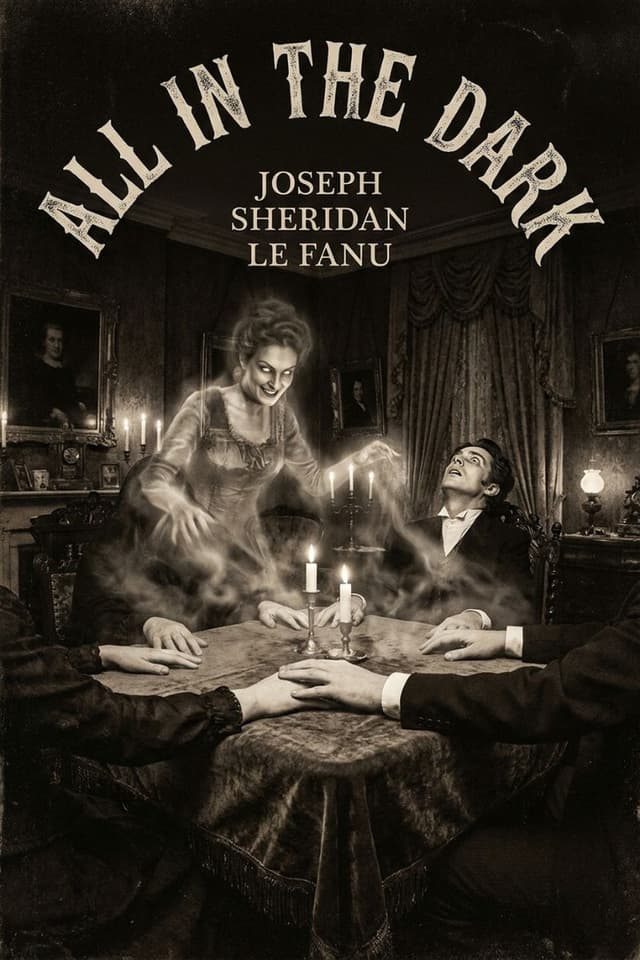
All in the Dark
Read All in the Dark by Joseph Sheridan Le Fanu for free on Novelhalla, and try out our easy-to-read modern edition of this classic book. You can also download the EPUB and read it on any device if you prefer!
The Plot
All in the Dark is a psychological mystery that blends suspense, moral unease, and subtle gothic atmosphere, focusing less on supernatural spectacle and more on fear born from uncertainty.
A Mind Under Pressure
The novel centers on a respectable, educated man whose life becomes unsettled by a series of troubling events and half-understood dangers. Though outwardly rational, he finds himself increasingly haunted by suspicion, anxiety, and a growing sense that something unseen is working against him.
Le Fanu places the reader inside the protagonist’s mental state, where imagination, memory, and fear begin to blur.
Shadows and Doubt
Much of the tension arises from what cannot be clearly seen or proven. Conversations carry hidden meanings. Ordinary situations take on ominous significance. The darkness of the title refers not only to physical obscurity, but to moral and psychological blindness.
The protagonist struggles to determine whether the threat he senses is external, internal, or the result of his own misinterpretation of events.
Social Masks
As the story unfolds, polite society reveals its fragility. Respectability and civility prove poor defenses against deception and obsession. Le Fanu carefully explores how reputation and appearances can conceal danger rather than prevent it.
Escalating Unease
Instead of relying on sudden shocks, the novel builds dread gradually through mood, implication, and psychological pressure. The reader is invited to share the protagonist’s uncertainty, never fully sure what is real and what is imagined.
About the Author: Joseph Sheridan Le Fanu
Early Life
Joseph Sheridan Le Fanu was born in 1814 in Dublin, Ireland, into a Protestant literary and clerical family. He was educated at Trinity College, Dublin, and trained in law, though he devoted most of his life to writing.
Literary Career
Le Fanu became one of the most important figures in nineteenth-century gothic fiction. He wrote novels, short stories, and journalistic work, often blending mystery, psychological realism, and supernatural suggestion.
All in the Dark, published in 1866, reflects his mature style, where terror arises more from atmosphere and moral ambiguity than overt horror.
Influence and Style
Le Fanu favored implication over explanation. His fiction often withholds certainty, forcing readers to confront ambiguity and unresolved fear. This approach strongly influenced later writers of psychological horror.
Later Life
A private and reclusive figure, Le Fanu withdrew increasingly from public life in his later years. He died in 1873.
Fun Facts About the Book
Title as Theme
The phrase “all in the dark” captures the novel’s emphasis on ignorance, secrecy, and the limits of human understanding.
Psychological Focus
Unlike many gothic works of its era, the novel relies very little on physical violence or spectacle.
Bridge Between Genres
The book sits between gothic horror and modern psychological thriller, anticipating later developments in suspense fiction.
Contemporary Reception
Victorian readers found the novel unsettling precisely because it avoided clear explanations.
Themes
Fear of the Unknown
The novel suggests that uncertainty is more frightening than any defined threat.
Reason vs. Imagination
Rational thought is repeatedly tested by emotional and psychological strain.
Respectability and Deception
Social appearance offers no guarantee of safety or moral clarity.
Isolation
The protagonist’s inner turmoil cuts him off from genuine understanding or support.
Moral Blindness
Darkness in the novel often represents ethical confusion rather than literal absence of light.
The Book’s Legacy
All in the Dark stands as an early example of psychological suspense, where dread arises from implication rather than revelation. Its restrained style and emphasis on inner fear influenced later gothic and mystery writers.
Though less famous than some of Le Fanu’s supernatural tales, the novel remains an important step toward modern psychological horror and suspense fiction.