Novelhalla

Summer
Read Summer by Edith Wharton for free on Novelhalla, and try out our easy-to-read modern edition of this classic book. You can also download the EPUB and read it on any device if you prefer!
The Plot
The Girl from the Mountain
Charity Royall knows two things about herself. She knows she was brought down from the Mountain as a small child, rescued from a community of outcasts that the rest of the county pretends doesn't exist. And she knows she hates North Dormer.
North Dormer is a tiny New England village with no shops, no theater, no train station, and a church that opens every other Sunday if the roads allow it. The library where Charity works hasn't acquired a new book in twenty years. The old ones sit moldering on damp shelves, and Charity sits behind the desk crocheting lace for a blouse she can't afford to buy, waiting for something to happen.
She lives with Lawyer Royall, the man who took her in. He's the most prominent citizen in town, which in North Dormer doesn't mean much. His wife is dead. His house is quiet. He drinks. One night, when Charity was seventeen, he came to her bedroom door with intentions that had nothing to do with fatherhood. She turned him away and has held it over him since. He hired a woman to live in the house after that, to cook and clean and serve as a buffer between them. But the damage was done, and the discomfort between them has calcified into something cold and permanent.
Charity wants out. The library job is supposed to be her escape fund. She just needs enough money to get to some bigger, brighter place. She doesn't know exactly where. She just knows it isn't here.
The Stranger
Then a young man walks into the library and everything shifts.
Lucius Harney is an architect from New York. He's visiting his cousin, Miss Hatchard, and he's come to study the old colonial houses scattered through the hills. He's educated, charming, and from a world so far beyond North Dormer that Charity can barely imagine it. He looks at her and sees something worth looking at. Nobody in this town has ever done that before.
Charity becomes his guide. She drives him around in a hired buggy, showing him the houses he wants to sketch, taking him up dirt roads and through fields she's known her whole life but never thought of as interesting until he found them so. Harney starts taking his meals at the Royall house. The two of them spend long days together, talking, riding, sitting in the tall grass while he draws.
Lawyer Royall watches this. He doesn't like it.
The Heat
The season turns. June gives way to July, and the New England countryside is bursting with it. Sweet fern and blackberry blossoms, butterflies trembling over warm grass. Wharton describes this landscape the way she usually describes Fifth Avenue ballrooms, except here the beauty is wild, fertile, and dangerous.
On the Fourth of July, Harney takes Charity to Nettleton, the closest real town, for the holiday celebrations. For Charity, it's intoxicating. The train ride alone is a revelation. Shops with plate-glass windows. Restaurants. Crowds of confident, stylish people. Fireworks over the lake. Harney buys her a brooch. They kiss for the first time.
But Nettleton has a darker side that Charity glimpses. She hears whispers about a doctor's office. She sees Julia Hawes, a girl from North Dormer who was ruined by a love affair and now works in circumstances no one will name. Julia is painted and loud and on the arm of a drunk. The drunk is Lawyer Royall.
The encounter is humiliating for everyone. Royall, caught in his shame, lashes out at Charity in public with words that cut to the bone. Charity falls into Harney's arms. After that night, everything between them accelerates.
The Abandoned House
They begin meeting in secret. An abandoned house in an orchard outside town becomes their private world. August presses down, heavy and golden. Charity has never felt anything like this before. She has never been allowed to want anything this much, and now she has it.
But the idyll has cracks. During the Old Home Week celebrations, Charity notices Harney in close conversation with Annabel Balch, a polished, blonde, blue-eyed young woman from the kind of world Harney actually belongs to. Annabel is everything Charity is not: wealthy, educated, at ease in society. The sight of them together plants a seed of dread that Charity tries to ignore.
Then Lawyer Royall finds the abandoned house. He confronts Charity and warns her that this will end badly. When Harney arrives, Royall demands to know his intentions. Harney says nothing.
The Departure
Harney leaves North Dormer. He promises to come back, promises to marry her, asks her to keep their plans secret. Charity waits. Then she hears that Annabel Balch left town with him. Then she hears they're engaged.
And then Charity discovers she is pregnant.
The letter that finally arrives from Harney offers no rescue. No return. No future together. Charity is alone in North Dormer with a secret growing inside her and a set of options that would make anyone desperate.
She knows what happened to Julia Hawes. She knows about the doctor in Nettleton. She knows what this town does to girls who make the mistake she's made. And above her, casting its shadow over the valley the way it always has, looms the Mountain, the place she came from, the place where people go when they have nowhere else.
Charity has to choose. And every direction she turns, the path looks darker than the last.
About the Author: Edith Wharton
Old New York
Edith Newbold Jones was born in 1862 into one of New York's oldest and wealthiest families. Her parents were part of the pre-Civil War aristocracy, families whose fortunes came from Manhattan real estate and whose social world was governed by rigid codes of manners, appearance, and propriety. This was the world that would later give the phrase "keeping up with the Joneses" to the English language. Edith's family may have been one of the Joneses in question.
She was educated by private tutors, traveled to Europe as a child, and began writing stories as a girl. Her mother disapproved. Writing was not considered a suitable occupation for a woman of her class. Edith wrote anyway.
A Cold Marriage
In 1885, at twenty-three, she married Edward "Teddy" Wharton, a sportsman from a respectable Boston family. They shared a love of travel and dogs but not much else. Teddy suffered from worsening depression over the years, and Edith later revealed that the marriage was essentially passionless. They never had children. Edith didn't discover sexual passion until she was in her forties, when she began a brief, intense affair with Morton Fullerton, an American journalist in Paris. Fullerton was charming, unreliable, and already entangled with multiple other lovers. The affair was short-lived but it transformed Wharton's fiction, giving her writing a new erotic charge.
Meanwhile, Teddy's condition deteriorated. He mismanaged her money, kept a mistress, and became increasingly volatile. Edith divorced him in 1913, a scandalous decision for a woman of her era, and moved permanently to France.
The Writer
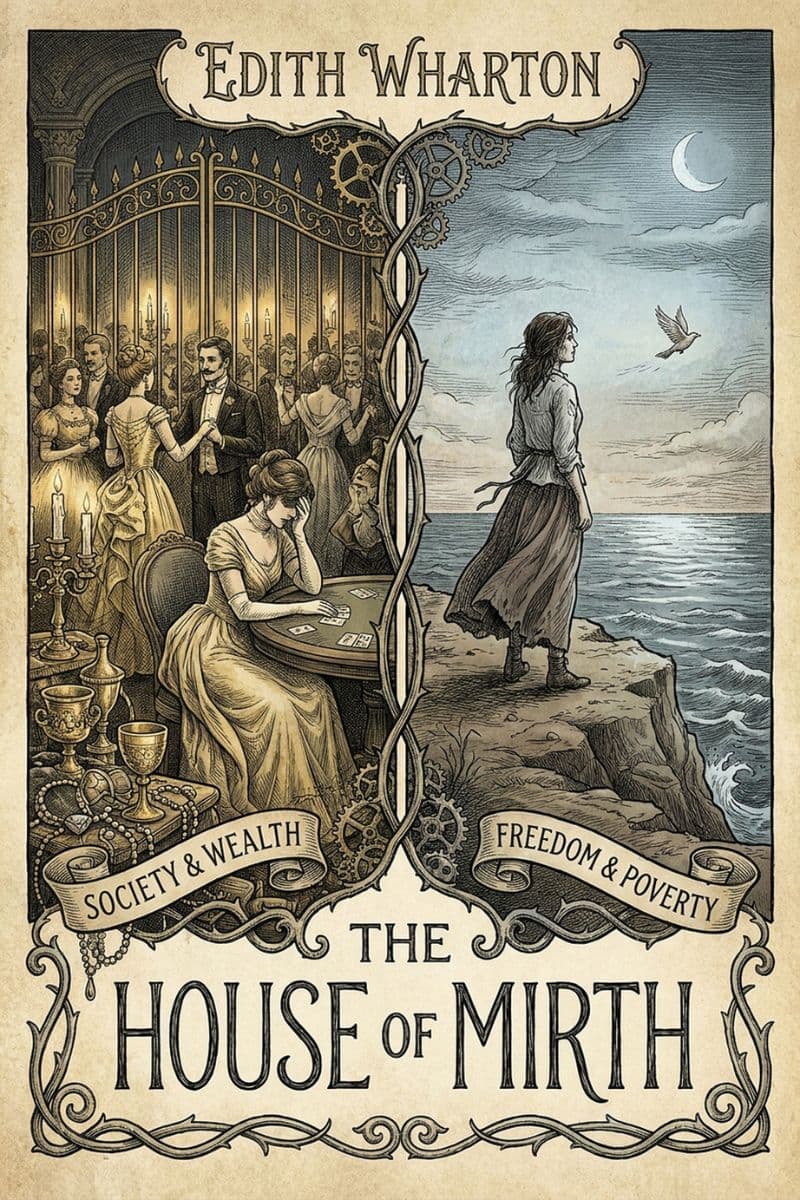
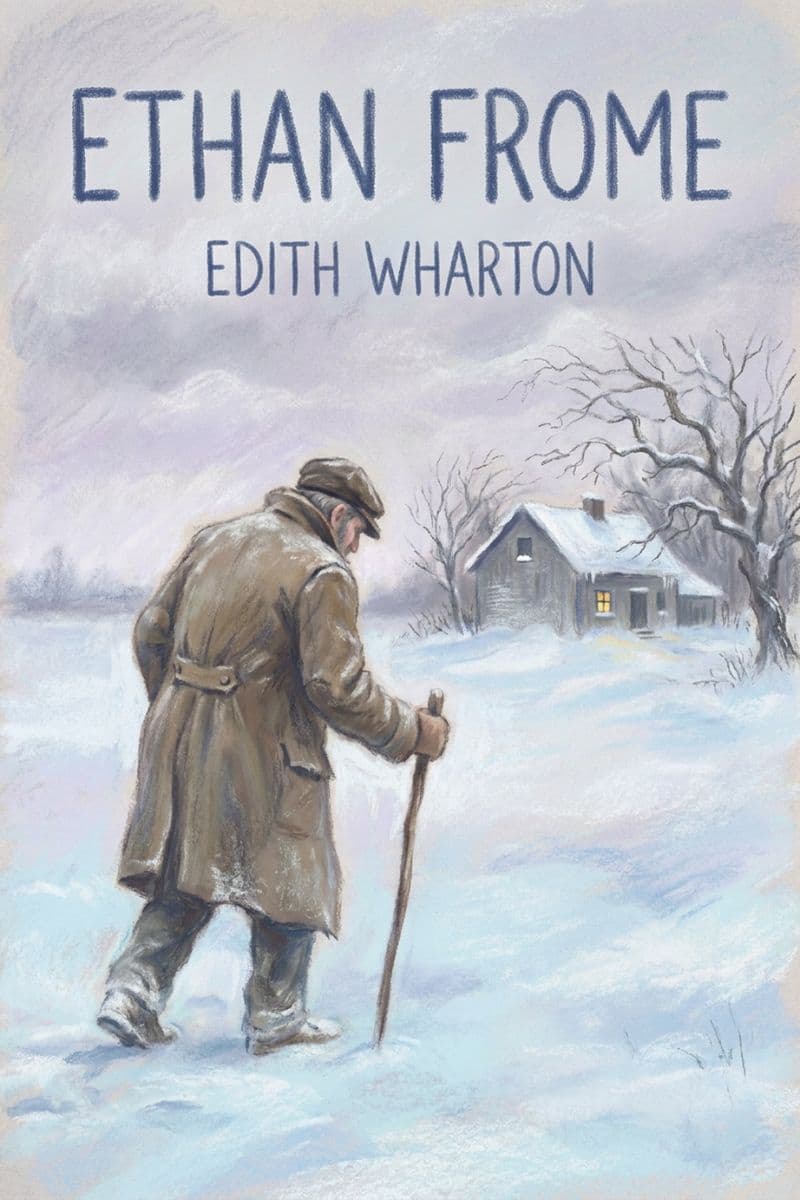
Wharton published her first novel at forty, after her mother's death freed her from a lifetime of disapproval. The House of Mirth in 1905 made her famous. Ethan Frome in 1911 proved she could write devastatingly about rural New England poverty as well as she could about Manhattan drawing rooms. Summer followed in 1917, and Wharton privately called it "the hot Ethan," a reference to both the season and the sexual frankness that shocked some of her readers.
In 1921, she became the first woman to win the Pulitzer Prize for Fiction, for The Age of Innocence. The win was controversial: the judging panel had actually voted for Sinclair Lewis's Main Street, but the Columbia University board overturned them. Over her career she published more than forty books, including novels, short story collections, poetry, travel writing, and works on interior design and gardens.
France and the Final Years
During World War I, Wharton threw herself into relief work in Paris, building homes and schools for Belgian refugees and reporting from the front lines as one of the few journalists allowed near the fighting. France awarded her the Legion of Honor. After the war, she settled in the French countryside, writing steadily, entertaining guests, and tending her gardens. She was nominated three times for the Nobel Prize but never won. She died of a stroke in 1937 at her home outside Paris, at seventy-five, and is buried in the American cemetery in Versailles.
Fun Facts About the Book
"The Hot Ethan"
Wharton's private nickname for Summer was "the hot Ethan Frome." Both novels are set in rural New England, both feature protagonists trapped by poverty and circumstance, and both end with the kind of bleak compromise that Wharton excelled at depicting. But where Ethan Frome is frozen and repressed, Summer is lush, warm, and sexually alive. The two novels are mirror images of each other, one set in winter and one in summer, one about desire crushed before it starts and one about desire fully realized and then paid for.
Controversial for Its Candor
When Summer was published in 1917, it was one of the first American literary novels to deal frankly with a young woman's sexual awakening. The affair between Charity and Harney is not merely suggested. Wharton writes about physical desire with an openness that startled her contemporary readers, and the novel's treatment of pregnancy, abortion, and prostitution made it a subject of heated debate. Some critics found the subject matter beneath an author of Wharton's stature. Others recognized it as some of her bravest work.
Wharton's Favorite
Summer was one of Wharton's own favorites among her novels. This is notable because critics have often ranked it below her more famous works. Wharton seemed to understand that she had done something different and personal with this story, something closer to the bone than her elegant New York satires.
The Mountain Is Real
The Mountain community in the novel, with its outlaws and outcasts and desperate poverty, was based on real settlements that existed in the hills of western Massachusetts and the Berkshires. Wharton lived for years at The Mount, her estate in Lenox, Massachusetts, and she was well aware of the impoverished hill communities that existed within sight of the wealthy summer estates. The contrast between these worlds feeds directly into the novel's central tensions.
Written During Wartime
Wharton wrote Summer while living in France during World War I, surrounded by the devastation of the Western Front and her own exhausting relief work. That she produced a novel so intensely focused on a young woman's desire and entrapment in a small American town, while bombs were falling across the French countryside, speaks to the kind of imaginative compartmentalization that serious writers learn to practice.
An Operatic Adaptation
In 1999, the Berkshire Opera Company premiered an operatic adaptation of Summer, with music by Stephen Paulus and a libretto by Joan Vail Thorne. The performance took place in the Berkshires, just miles from the landscape Wharton was writing about, closing a circle between the fictional North Dormer and the real New England hills that inspired it.
Themes
Desire and Its Consequences
Summer is a novel about wanting things. Charity wants out of North Dormer. She wants beauty and excitement and a bigger life. She wants Harney. And when she gets him, even briefly, the consequences are swift and merciless. Wharton never punishes Charity for her desire. She doesn't moralize. But she is ruthlessly honest about what happens to women in Charity's position when desire meets a world designed to punish it.
Class and the Illusion of Escape
Harney represents everything Charity dreams of, but he also represents a world she can never truly enter. He can summer in North Dormer because he has a life to return to. Charity doesn't. The class divide between them is not just about money. It's about mobility, about who gets to leave and who gets left. Annabel Balch, with her blonde hair and blue eyes and education, is the woman Harney's world expects him to marry. Charity never had a chance.
The Trap of Place
North Dormer is a trap, but so is the Mountain, and so is Nettleton. Every location in the novel represents a different kind of confinement. The village is stifling and small. The Mountain is wild and brutal. The city is indifferent and full of dangers that prey on unprotected women. Charity keeps trying to find a place where she can be free, and the novel keeps showing her that for a woman in her circumstances, no such place exists.
Women Without Options
Every woman in the novel is shaped by the narrowness of her choices. Julia Hawes loved the wrong man and was destroyed by it. Ally Hawes watches and whispers and takes no risks. Miss Hatchard lives in genteel ignorance. Charity's birth mother exists in a poverty so deep it's barely human. Wharton lines these women up like cautionary tales, each one representing a different version of what can happen when you have no money, no education, and no power, and all of your options depend on men.
The Seasons of a Life
The novel's title isn't just a setting. It's a metaphor. Charity's romance with Harney follows the arc of the season exactly: tentative in June, blazing in July, fully ripe in August, and dying as the cold comes. By the time the leaves turn, summer is over in every sense. Wharton maps an entire emotional life onto a few months of weather, and the result is a novel that feels inevitable, like watching fruit ripen and fall.
The Book's Legacy
Summer has long lived in the shadow of Wharton's more celebrated novels, but its reputation has grown steadily, particularly among readers interested in early feminist literature. It is now recognized as one of the first American novels to take a young woman's sexual agency seriously, not as scandal but as the central fact of her experience.
The novel occupies a unique place in Wharton's work. It's the rare book where she turns her gaze away from the ballrooms and brownstones of old New York to focus on rural poverty, female desire, and the brutal math of class. It has more in common with Thomas Hardy than with Henry James, and Wharton knew it. She put something of herself into Charity Royall, a woman who discovers passion late and loses it quickly and is left to build a life from what remains.
Modern readers often find Summer more emotionally direct than Wharton's more famous books. The Age of Innocence is a masterpiece of surface and subtext. Summer goes for the gut. Its portrait of a woman caught between desire and survival, between the man she loves and the man who can protect her, between the life she wants and the life she can actually have, still hits hard more than a century later.