Novelhalla

Charles Rex
Read Charles Rex by Ethel M. Dell for free on Novelhalla, and try out our easy-to-read modern edition of this classic book. You can also download the EPUB and read it on any device if you prefer!
The Plot
A Man Who Has Run Out of Things to Want
Charles Burchester, Viscount Saltash, is thirty-six years old and bored out of his mind. He has money, a castle in the English downs he never sleeps in, a yacht called the Night Moth, and a reputation so thoroughly ruined that he has stopped bothering to defend it. His face is famously ugly and famously charming. His eyes don't match, one black and one grey, which gives him a look of permanent instability. There is supposed to be a strain of royal blood somewhere back in the family, and in his wilder youth people called him the merry monarch. Later a friend upgraded the joke into something grander, and that name, half mockery and half genuine homage, is the one this book is named after and the one everyone who knows him now uses.
He has been drifting around the Mediterranean for six weeks with his silent, bearded captain, Larpent, a man who has spoken roughly four full sentences about his own life in twenty years. Saltash is done with it. He announces he'll go to sea for home in the morning, after one last night ashore.
He says it lightly, the way he says everything. Then he asks Larpent whether he's ever been in love, gets an answer that surprises him, and goes ashore to see what the gods have got for him.
The Gift
What they have for him is a starved, fair-haired hotel page in a brown livery with brass buttons, being beaten half-senseless in a garden arbour by an Italian manager who wants him gone. Saltash breaks it up, insults the manager with enormous good humour, and tries to get a look at the boy's face. The boy bolts.
That night, back aboard, he finds the same child hiding in his cabin, filthy, terrified, and asking to be kept. He says his name is Toby. He also says his name is Toby Wright, and then Toby Barnes, and eventually admits it might as well be Toby nothing, because he'll answer to anything. He says he's sixteen. He says he can cook and clean boots and iron trousers and wait tables and do women's work as well as men's. He says he'd love to work, for him, specifically, and that the only reason he chose this yacht is that it belongs to Saltash.
Saltash, who has spent his entire life being wanted for his money and his title and never once for himself, looks at this small wreck of a person and says yes.
He also makes him promise one thing: whatever happens, however badly Saltash treats him, he will never go over the side. Toby agrees without hesitation, which tells Saltash rather a lot.
What the Gods Take Back
What follows is one of the strangest stretches in Dell's work. Toby becomes Saltash's shadow, sleeping in the cabin off his dressing room with the door open between them, polishing his boots and whistling over the work, sitting curled at his feet like a dog. Saltash teaches him chess and picquet, discovers the boy is a natural gambler, and then catches him cheating, and has to deliver the first punishment of his life to somebody other than himself. It goes badly for both of them.
He knows he isn't fit company for a child. Larpent tells him so outright. Saltash agrees, and keeps him anyway, and starts saying things about making a respectable citizen of him, and about the future, whether they want to think about it or not.
Then, in the fog off the English coast, on their last night aboard, an outbound liner comes out of the murk and cuts the Night Moth in half.
Saltash goes down into a black flooded saloon after his cabin boy, and what he carries back out of it, and what the ship's doctor discovers when the survivors are taken aboard the liner, changes every single thing about the arrangement. Toby is not a boy. Toby is a sixteen-year-old girl who has been running from something she won't name, and every hour of the last several weeks has been spent alone in the cabin of the most notorious rake in England.
Saltash, standing in a captain's cabin with a brandy in front of him and a doctor looking at him with open disgust, does not blink. He tells them the child is Larpent's daughter. Larpent is unconscious and can't contradict him. Then he goes below to tell her what her name is now.
Home
So he brings her ashore into a country that has very firm views about him, and installs a girl with no history and a borrowed father into a world of racing meetings, castles and county families.
There is a household nearby that has known him for years: Jake Bolton, the blunt red-headed trainer who once cowhided him and later married the woman Saltash himself had courted, and Maud, who has never entirely given up on him, and Maud's brother Bunny, now twenty-three, upright and restless and devoted to Saltash in a way that makes his brother-in-law distinctly uneasy. Saltash arrives among them full of talk about turning philanthropist and doing somebody a good turn for once, just to see what it feels like.
He says nothing at all about the girl.
Because here is his problem, and it's a real one. She worships him. She has told him plainly that she is his, for as long as she lives, and she means it in a way that a sixteen-year-old rescued from a beating means anything. He is thirty-six, faithless, funny, and quite genuinely not good enough, and he knows it better than any of his critics do. So he has decided what a decent future for her would look like, and it is one that ends with her safely married to someone else.
There is a secret in her past. There is a mystery about who her father actually was. There are people circling who would be delighted to find out what the great Charles Burchester has hidden at the castle. And there is the small matter of a man who has spent his whole life breaking his toys and is now holding something he can't bring himself to break.
About the Author: Ethel M. Dell
The Quietest Woman in England
Ethel May Dell was born on 2 August 1881 in South London, the youngest of three children in a comfortable middle-class family. Her father was a clerk in the City. She was painfully shy as a girl and remained so for the rest of her life, and she wrote enormous, sun-drenched, violent romances about ranches, regiments, racing stables and the Indian frontier without having seen very much of the world beyond suburban southern England.
Her relatives found this funny. Her cousins are supposed to have kept a running count of how often she used the words passion, tremble, pant and thrill.
Rejected Eight Times, Then Everywhere
Her first novel, The Way of an Eagle, was turned down by eight publishers before T. Fisher Unwin took it in 1911. It went through something like thirty printings in four years, and after that Dell was one of the most widely read authors alive. Around thirty novels, eight collections of stories, and at her height an income of twenty to thirty thousand pounds a year, which was a fortune.
She never gave interviews. She avoided her readers. She lived in the country, worked with an almost monastic discipline, and would apparently get out of bed to write through the night in her bathroom so as not to wake the house.
1922
This book belongs to the biggest year of her life. She published it at forty, and that same year she married Lieutenant-Colonel Gerald Tahourdin Savage, who gave up his commission when they married, which made her the sole earner. By all accounts the marriage was happy. Also that same year Rebecca West published a full-dress demolition of Dell in the press, using this very book as the exhibit.
She kept working. The critics never let up, and she never seemed to mind. She considered herself a storyteller, no more and no less, and the arithmetic was on her side.
The End
Dell died in hospital at Hertford in September 1939, aged fifty-eight, at the very start of the Second World War. Her husband had been posted there in anticipation of it.
Fun Facts About the Book
It's a Sequel, and It Isn't
This picks up eight years after Dell's 1917 bestseller The Hundredth Chance, in the same seaside town, with the same trainer, the same wife and the same brother. But it's built so that you can start here. Plenty of readers did, then went backwards to find out how the villain of the earlier novel came to be a family friend. If you read them in order, the earlier book is the better first stop. If you read this one first, you'll spoil that book's ending, and you'll still have a wonderful time.
Dell Named a Racehorse After Her Own Previous Novel
The Boltons' star sire in this book is called The Hundredth Chance, and the promising two-year-old by him is Prince Charlie. Dell was quietly having a lovely time.
The Dedication Is a Love Letter
The book is dedicated to G. T. S., in remembrance of a winter day. That's Gerald Tahourdin Savage, the soldier she married the year it came out. She dedicated the biggest book of her career to her fiancé and told nobody what happened on the winter day.
Every One of Her Novels Opened with a Poem
She wrote them herself. This one follows an Emerson line about half-gods departing so the gods can arrive, and then runs three stanzas about the false idols of Sin, Success, Pleasure and Gold being quietly displaced by Courage, Honour, Faithfulness and Love. It's a fair summary of everything Dell believed and everything her critics found unbearable.
Rebecca West Used This Book to Attack Her
West's essay "The Tosh Horse," published the same year, took the hero of this novel as her prime specimen of the bestseller in full gallop. Her argument was that nobody reaches the top of the sales lists by thinking hard, they get carried there by something wilder and sillier. It's a genuinely funny piece of criticism. It sold Dell more books.
The First Quarter Reads Very Differently Now
For roughly a hundred pages, the story is about a jaded aristocrat becoming utterly devoted to a sixteen-year-old cabin boy who sleeps in the next cabin with the door open. Dell was writing in 1922 with total innocence of how that scans today, and contemporary readers were more amused than scandalised. Modern readers tend to spend those chapters with their eyebrows somewhere near the ceiling, which is part of the fun.
Dell's Surgeon Gets Around
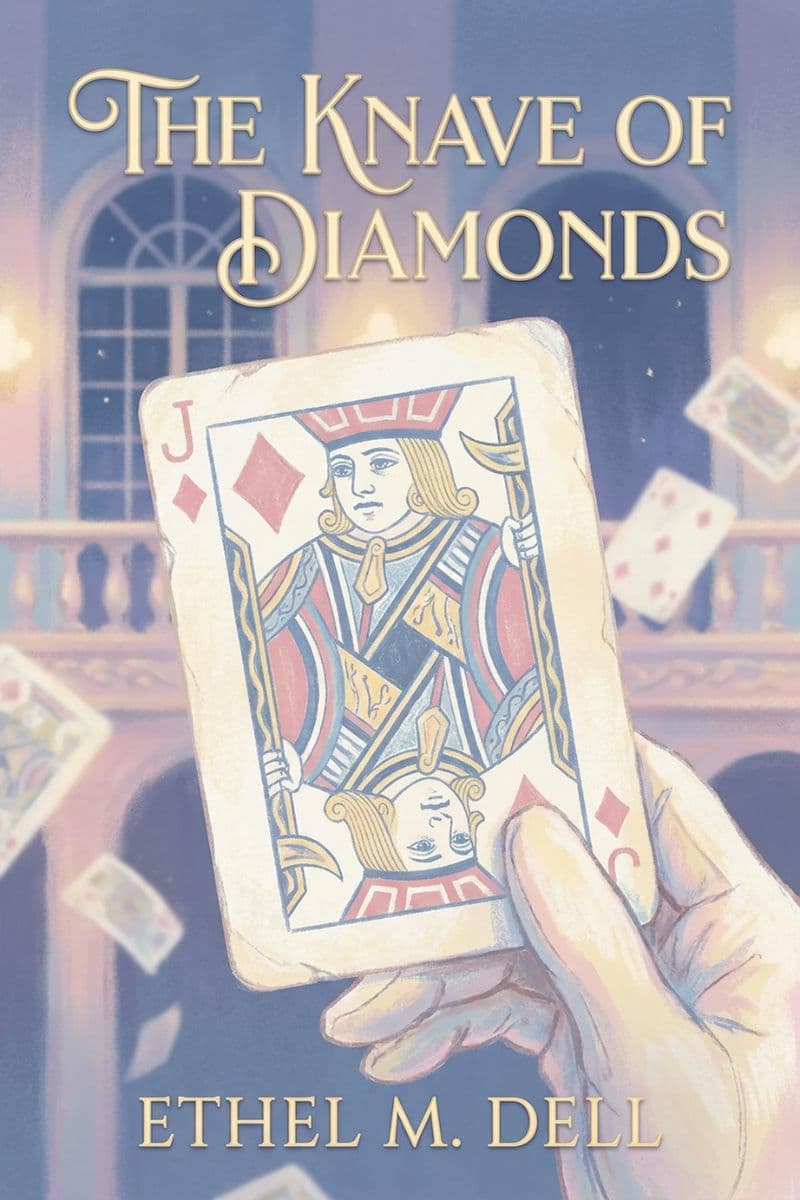
The American spinal specialist Capper, who is such a fixture in Dell's Fairharbour books, had already turned up in her 1913 novel The Knave of Diamonds. She built a shared universe out of doctors, trainers and viscounts decades before anybody had a term for it.
The Silent Film Boom She Never Watched
Stoll Pictures adapted Dell novel after Dell novel in the early 1920s, including The Knave of Diamonds and the earlier Fairharbour book. This particular novel seems never to have been filmed, which is odd given how cinematic the shipwreck is, and a shame.
The Name Came Before the Title
The hero's nickname originates inside the story as a joke about his supposed royal descent and his rather Stuart approach to women. Dell liked it enough to put it on the cover, which means the title is really a piece of gossip that the characters made up about him.
Themes
The Rake Who Believes His Own Reviews
Saltash is the most interesting thing Dell ever built. He is genuinely selfish, genuinely disreputable, and genuinely convinced that he is worse than he is. Everyone in the book has an opinion about his soul, and the book's real question is whether a man who has spent twenty years playing a part can stop, and whether anyone would believe him if he did.
Rescue and Ownership
He tells her he has bought her, body and soul, and she is delighted. She tells him she is his for life, and means it. The book is fascinated and slightly troubled by this, because it keeps asking what a rescued person actually owes, whether devotion given out of gratitude counts as free, and whether a man can hold something absolutely and still be doing right by it.
Disguise and the Self
Toby has three names in the first fifty pages and gets a fourth from Saltash. She is dressed as a boy, then dressed as somebody's daughter, then dressed as a respectable girl of the county. The book keeps circling the question of which layer, if any, is the real one, and whether a past you refuse to name can be genuinely left behind.
Protection Versus Love
Saltash's plan for her is a decent, safe, respectable future with a better man. It is arguably the most unselfish decision of his life, and the book is not at all sure it isn't also the cruellest. Wanting the best for someone and wanting them are set directly against each other here, and Dell refuses to make it easy.
Reputation
Almost every problem in the story is generated not by what anyone has done but by what people will say. A girl's whole future can be destroyed by a rumour about where she slept. A man's word is worthless because of what he was at twenty-five. The book is sharper about this than its reputation suggests.
Fathers
There's a father who is missing, a father who is invented, a father figure who is a captain, and Jake Bolton down the road quietly being a good one. For a novel this melodramatic, it thinks carefully about what men owe children who aren't theirs.
The Book's Legacy
This is the one people still name when they name Dell, partly because of the hero and partly because Rebecca West made it famous by trying to bury it. It captures the moment when the popular novel and the literary establishment formally stopped speaking to each other, and it remains a lively test case for whether the critics or the two million readers had the better of the argument.
The hero has had a long afterlife whether or not anyone credits the source. The mismatched-eyed, self-loathing, quick-witted aristocrat who is far better than he claims to be is now a permanent fixture of romantic fiction. Georgette Heyer read Dell, and readers who come to this one after These Old Shades tend to do a double take at how much of the later book's DNA is already sitting here in 1922. Barbara Cartland, who idolised Dell, later put her back into print for a new generation.
What makes it worth reading now is Saltash himself. Dell's heroines are often more devoted than interesting, and the prose runs hot enough to fog a window, but she built one character who genuinely eludes his own author's moral scheme. He is funny, restless, self-aware, and never quite convinced by his own redemption, and a hundred years later he is still better company than most heroes twice his age in literary terms.
There's also the sheer nerve of it. A 1922 romance whose first act is a cross-dressed teenager, a flogging, a shipwreck and an aristocrat inventing a fake paternity to keep a scandal quiet is not a genteel book. Dell was never as safe as her cardigan-and-cottage reputation suggests.