Novelhalla
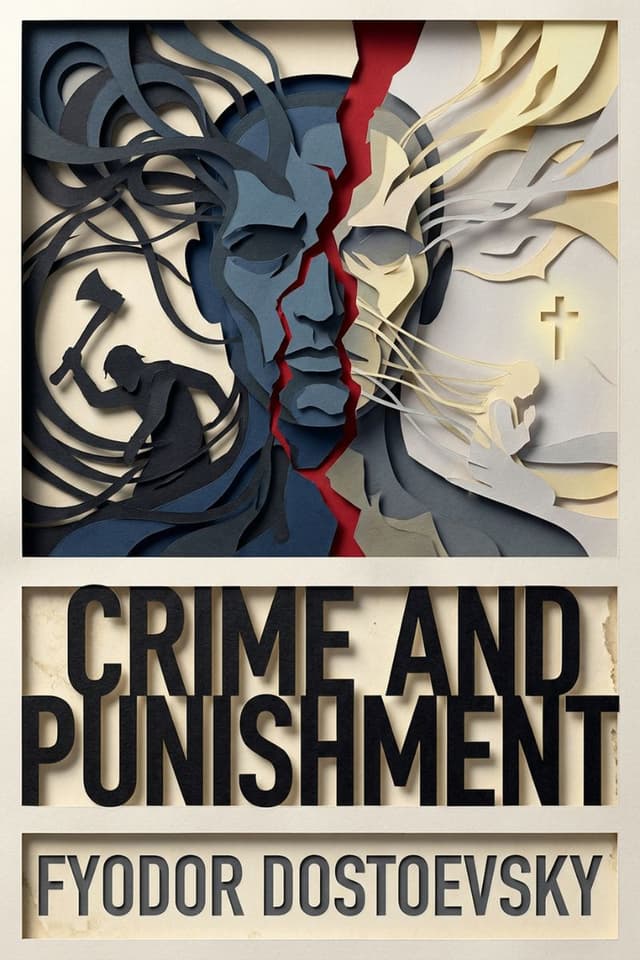
Crime and Punishment
Read Crime and Punishment by Fyodor Dostoyevsky for free on Novelhalla, and try out our easy-to-read modern edition of this classic book. You can also download the EPUB and read it on any device if you prefer!
The Plot
The novel follows several interweaving storylines set in 1860s St. Petersburg, with the psychological unraveling of its protagonist at the center.
Raskolnikov's Crime
Rodion Raskolnikov is a former law student living in crushing poverty in a tiny rented room. Brilliant but isolated, he has developed a theory that extraordinary people are above conventional morality and can transgress laws if it serves a higher purpose. To test this theory and solve his financial desperation, he plans and commits a murder of a pawnbroker. The crime does not go as planned, and the psychological aftermath begins immediately.
The Investigation
Porfiry Petrovich, the detective assigned to the case, suspects Raskolnikov almost from the start. What follows is a cat and mouse game between them, with Porfiry using psychological tactics rather than direct evidence. He seems to enjoy watching Raskolnikov squirm, waiting for a confession rather than building a case.
Raskolnikov's Family
Meanwhile, Raskolnikov's mother Pulcheria and sister Dounia arrive in Petersburg. Dounia is engaged to Pyotr Luzhin, a wealthy but controlling lawyer who sees the marriage as a transaction that will give him power over a beautiful, intelligent wife. Raskolnikov despises him immediately. Another man, Svidrigailov, has followed Dounia to Petersburg. He is a wealthy landowner with a sinister reputation and an obsessive interest in her.
Sonya
Raskolnikov forms a strange bond with Sonya Marmeladov, a young woman forced into prostitution to support her family. Her father Marmeladov is a tragic alcoholic, and her stepmother Katerina Ivanovna is slowly dying of tuberculosis while caring for young children. Despite her circumstances, Sonya maintains a deep religious faith. She becomes the moral center of the novel and the only person Raskolnikov can truly confide in.
About the Author: Fyodor Dostoevsky
Early Life
Fyodor Mikhailovich Dostoevsky was born in Moscow in 1821. His father was a doctor at a hospital for the poor, which exposed young Fyodor to human suffering from an early age. His mother died when he was fifteen, and his father was murdered by his own serfs two years later, an event that may have triggered Dostoevsky's lifelong epilepsy.
Mock Execution
In 1849, Dostoevsky was arrested for participating in a liberal intellectual group that discussed banned books and criticized the Tsar. He was sentenced to death. The prisoners were taken to the execution grounds, tied to posts, and faced a firing squad. At the last possible moment, a messenger arrived with the Tsar's commutation of the sentence. The whole thing had been staged as psychological torture. Dostoevsky spent the next four years in a Siberian prison camp, followed by mandatory military service.
Gambling and Debt
After returning from exile, Dostoevsky struggled financially for most of his life. He had a serious gambling addiction that repeatedly left him broke and fleeing creditors. He wrote many of his greatest works under extreme deadline pressure to pay off debts, sometimes dictating chapters to his second wife Anna just hours before they were due to the publisher.
Major Works
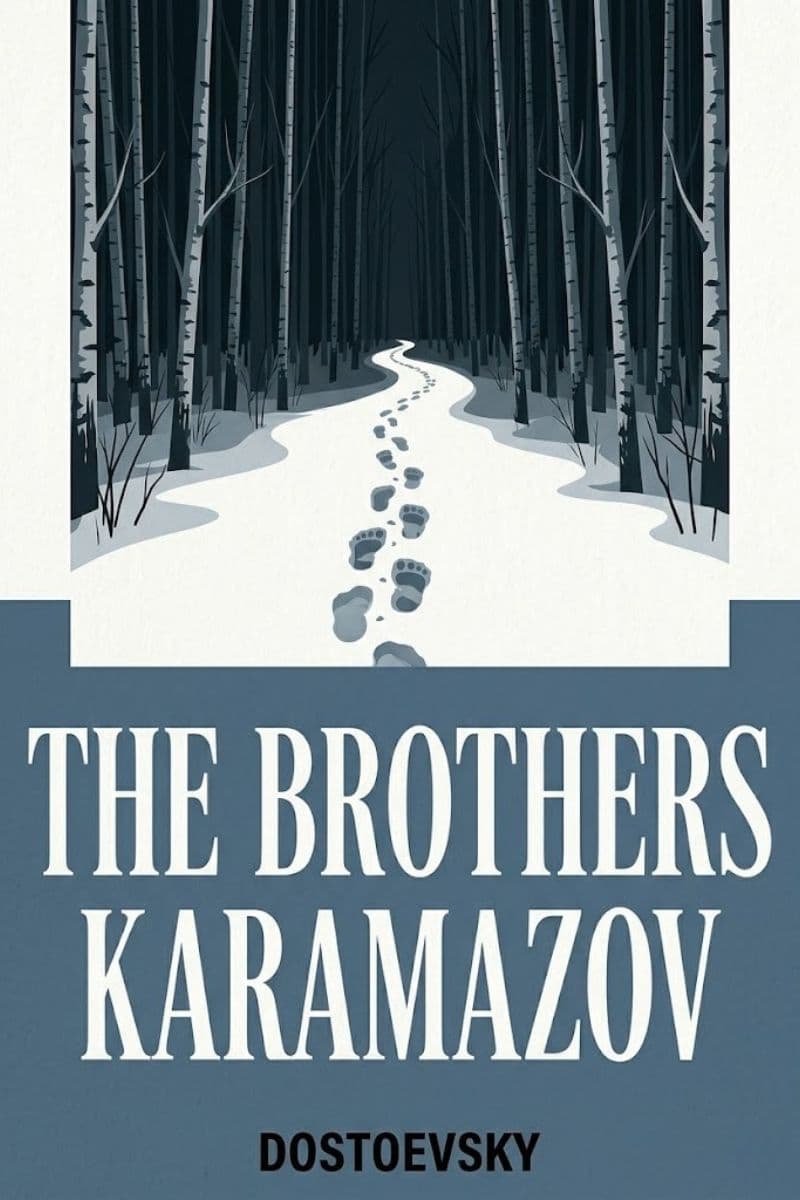
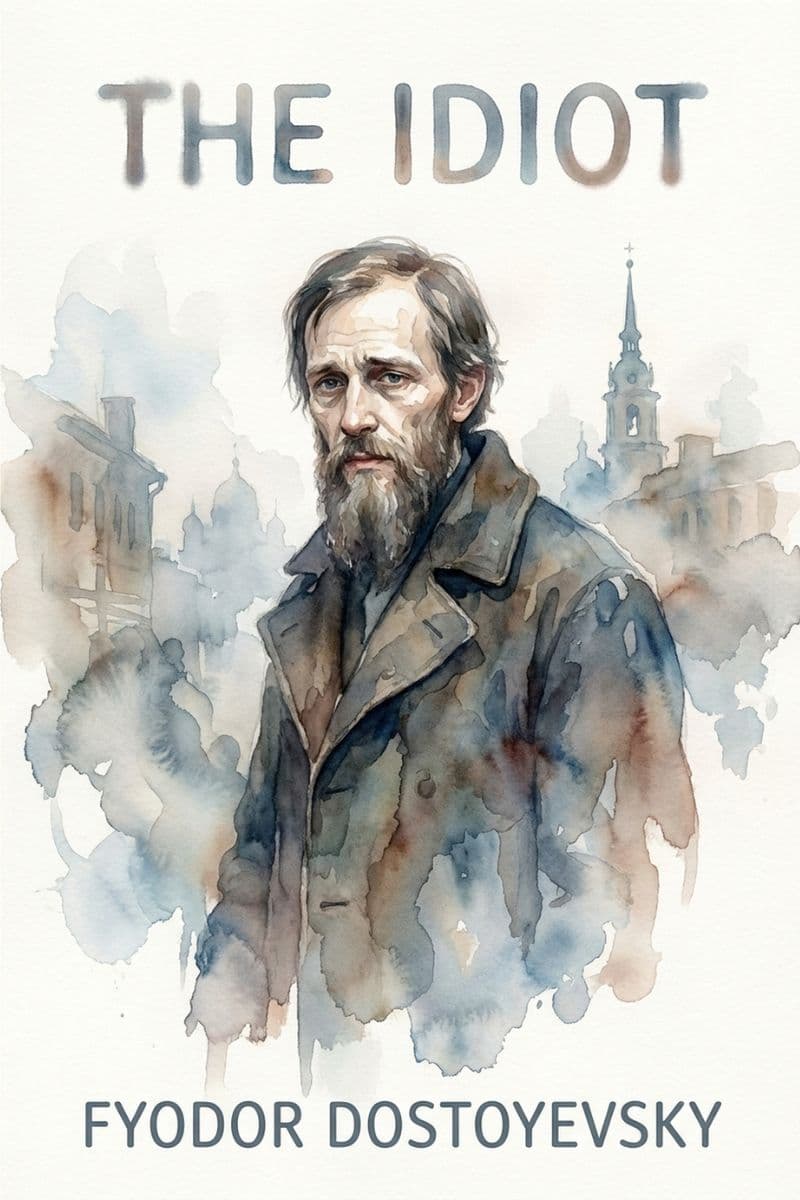
Crime and Punishment was published in 1866. He followed it with The Idiot, Demons, and The Brothers Karamazov. All explore similar themes of faith, morality, psychology, and Russian society. He died in 1881 at age 59, finally having achieved financial stability and widespread recognition.
Legacy
Dostoevsky is considered one of the founders of literary modernism and a pioneer of psychological fiction. His influence extends beyond literature into philosophy, psychology, and theology. Nietzsche, Freud, Kafka, and countless others acknowledged their debt to him.
Fun Facts About the Book
Written Under Pressure
Dostoevsky wrote Crime and Punishment while simultaneously working on another novel called The Gambler. He had signed a disastrous contract that would have cost him the rights to all his works for nine years if he missed a deadline. He dictated The Gambler to a stenographer named Anna Snitkina in just 26 days, then married her four months later.
Serialized Publication
Like many 19th century novels, Crime and Punishment was published in installments in a literary journal called The Russian Messenger throughout 1866. Readers followed along month by month, not unlike a TV series today.
The Title in Russian
The Russian title is "Prestuplenie i Nakazanie." Interestingly, the word "prestuplenie" literally means "stepping across" or "transgression," which captures Raskolnikov's theory about extraordinary people stepping over moral boundaries better than the English word "crime" does.
Autobiographical Elements
Like Raskolnikov, Dostoevsky knew extreme poverty in St. Petersburg. He also shared his character's interest in radical ideas, though his time in the prison camp had transformed his views. The novel can be read partly as Dostoevsky arguing with his younger self.
The Pawnbroker's Name
The murdered pawnbroker is named Alyona Ivanovna. "Ivanovna" literally means "daughter of Ivan," the most common Russian name. She is deliberately ordinary, which makes Raskolnikov's attempt to cast her as a worthless "louse" more disturbing.
Raskolnikov's Name
The name Raskolnikov comes from the Russian word "raskol" meaning schism or split. This reflects his divided nature throughout the novel.
No Chapter Titles
Unlike many 19th century novels, Crime and Punishment has no chapter titles, just numbered parts and chapters. This creates a relentless forward momentum that mirrors Raskolnikov's feverish mental state.
Themes
Rationalism vs. Faith
Raskolnikov represents the danger of pure rationalism divorced from human feeling and spiritual truth. His theory about extraordinary men is logically constructed but morally monstrous. The novel suggests that reason alone cannot guide human life.
Poverty and Desperation
The grinding poverty of St. Petersburg's underclass pervades the novel. Dostoevsky shows how poverty degrades and traps people, while also refusing to let it excuse moral failure. The Marmeladov family's suffering is portrayed with devastating clarity.
Redemption and Confession
The novel explores whether genuine redemption is possible after terrible acts. Confession, both legal and spiritual, becomes central to this question. The path to redemption proves to be through suffering and love rather than intellectual understanding.
The Psychology of Guilt
Dostoevsky pioneered the literary exploration of guilt and its physical and mental effects. Raskolnikov's deteriorating state after the crime, his strange compulsion to return to the scene, his inability to simply act normal, all ring psychologically true.
Extraordinary vs. Ordinary People
Raskolnikov's theory divides humanity into extraordinary people who can transgress moral law and ordinary people who must obey it. The novel systematically dismantles this idea while taking it seriously as a philosophical position.
Isolation vs. Community
Raskolnikov's intellectual pride isolates him from human connection. His journey involves recognizing his need for others and his place in the human community. Characters like Sonya and Razumikhin represent the life-giving power of genuine connection.
The Book's Legacy
Crime and Punishment is widely considered one of the greatest novels ever written and a founding text of psychological fiction. It influenced everything from existentialist philosophy to modern crime fiction. The novel's exploration of a criminal's psychology opened new territory for literature.
The philosophical questions it raises about morality, free will, and redemption continue to resonate. Raskolnikov's theory about extraordinary people has been cited in discussions of everything from Nietzsche's philosophy to true crime cases.
The novel has been adapted into films, television series, operas, and stage plays in dozens of countries. Its influence can be seen in works ranging from Woody Allen's Match Point to the TV series Breaking Bad.