Novelhalla
A Christmas Carol
Read A Christmas Carol by Charles Dickens for free on Novelhalla, and try out our easy-to-read modern edition of this classic book. You can also download the EPUB and read it on any device if you prefer!
The Plot
The Meanest Man in London
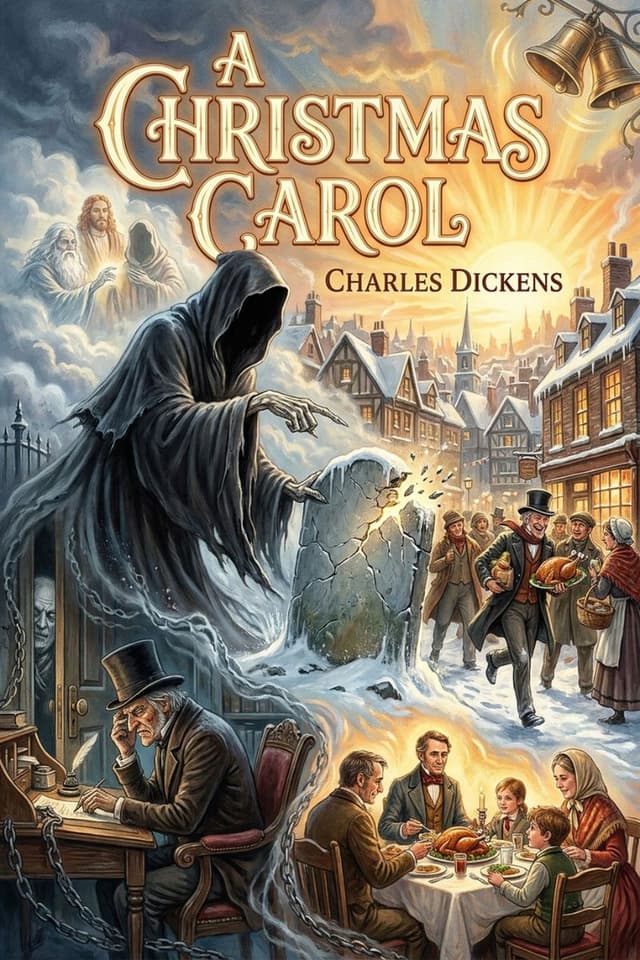
Ebenezer Scrooge is a rich, cold, tight-fisted old moneylender who hates Christmas with every fiber of his being. It's Christmas Eve in London, the streets are full of fog and frost and cheerful shoppers, and Scrooge is right where he always is: in his freezing counting house, squeezing every last minute of work out of his underpaid clerk, Bob Cratchit, who's trying to warm himself over a single lump of coal.
When his cheerful nephew Fred stops by to invite him to Christmas dinner, Scrooge sends him away. When two gentlemen come collecting money for the poor, Scrooge asks whether there aren't prisons and workhouses for people like that. Christmas, as far as he's concerned, is humbug.
A Visitor Who Should Be Dead
Scrooge's business partner, Jacob Marley, died exactly seven years ago on Christmas Eve. Scrooge hasn't given him much thought since. But that night, as he trudges home to his gloomy, empty rooms, the knocker on his front door turns into Marley's face. And then, as Scrooge sits alone by his tiny fire, he hears the sound of heavy chains dragging up the stairs.
Marley's ghost appears, bound in a long chain of cash boxes, keys, padlocks, and ledgers, every link forged by the greed and selfishness of his life. He's condemned to wander the earth forever, and he's come with a warning. Scrooge's own chain is even heavier, and there may be one last chance to escape Marley's fate. Three spirits will visit him, one after another.
The Three Spirits
The first is the Ghost of Christmas Past, a strange, glowing figure who takes Scrooge back through the years to places and people he's spent a lifetime trying to forget: a lonely boy left at school over the holidays, a jolly old employer named Fezziwig who threw the best Christmas party in London, and a young woman Scrooge once loved.
The second is the Ghost of Christmas Present, a booming, jovial giant surrounded by mountains of feasting food, who whisks Scrooge invisibly through the city on Christmas Day. He watches the Cratchit family make a celebration out of almost nothing, sees the frail little son they call Tiny Tim, and peeks in on gatherings where people talk about him when they think he can't hear.
And then the third spirit arrives. It's silent, shrouded in black, and it doesn't speak at all. It only points. Scrooge is more afraid of this one than anything he has ever seen, and he's about to find out what it wants to show him.
About the Author: Charles Dickens
A Childhood Cut Short
Charles Dickens was born in 1812 in Portsmouth, England, the second of eight children. His father, John, was a cheerful but hopeless spender, and in 1824 he was thrown into debtors' prison. Twelve-year-old Charles was pulled out of school and sent to work in a rat-infested factory pasting labels onto pots of boot polish. It lasted only months, but he never got over it, and he kept it secret from almost everyone for the rest of his life.
From Reporter to Superstar
After a patchy return to school, Dickens worked as a law clerk, then a shorthand reporter covering Parliament, then a journalist writing humorous sketches of London life under the pen name "Boz." In 1836, The Pickwick Papers turned him into a sensation almost overnight. That same year he married Catherine Hogarth, and the couple would go on to have ten children.
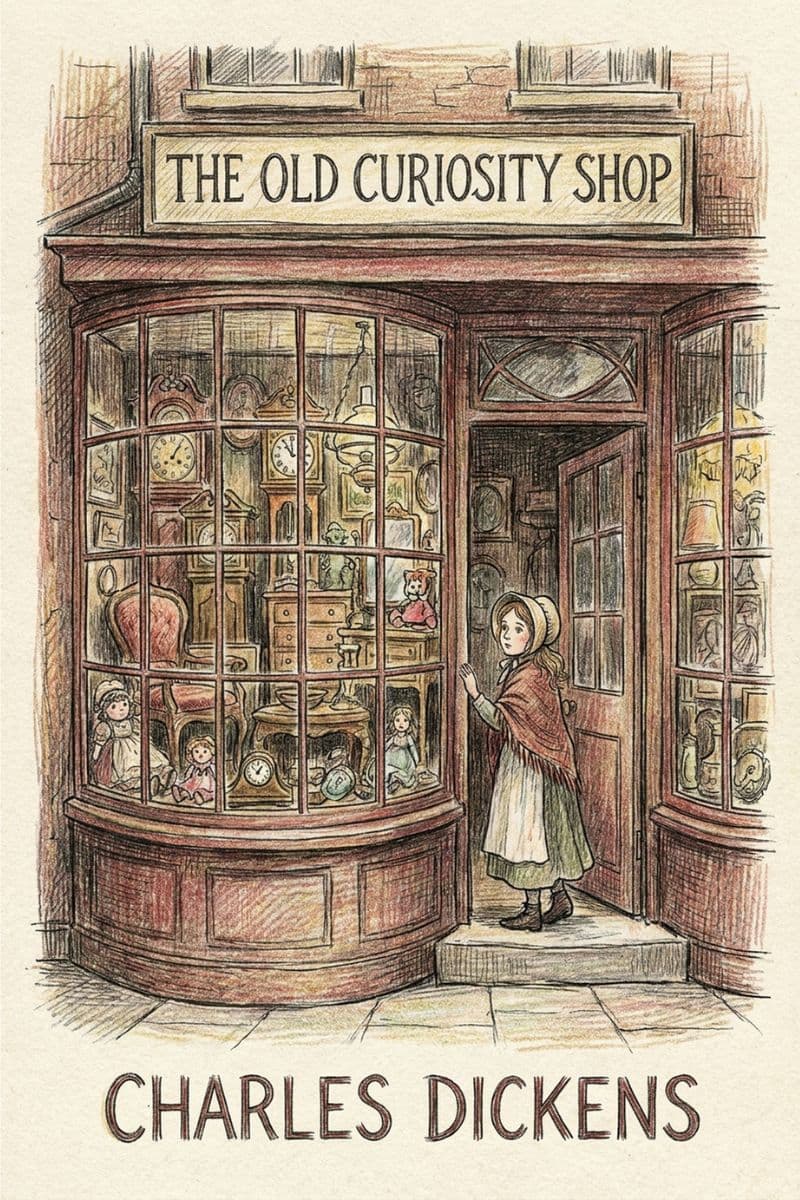
Hit after hit followed: Oliver Twist, Nicholas Nickleby, The Old Curiosity Shop. His novels came out in monthly installments, and readers on both sides of the Atlantic waited for each one like the next episode of a hit TV show.
The Great Novels
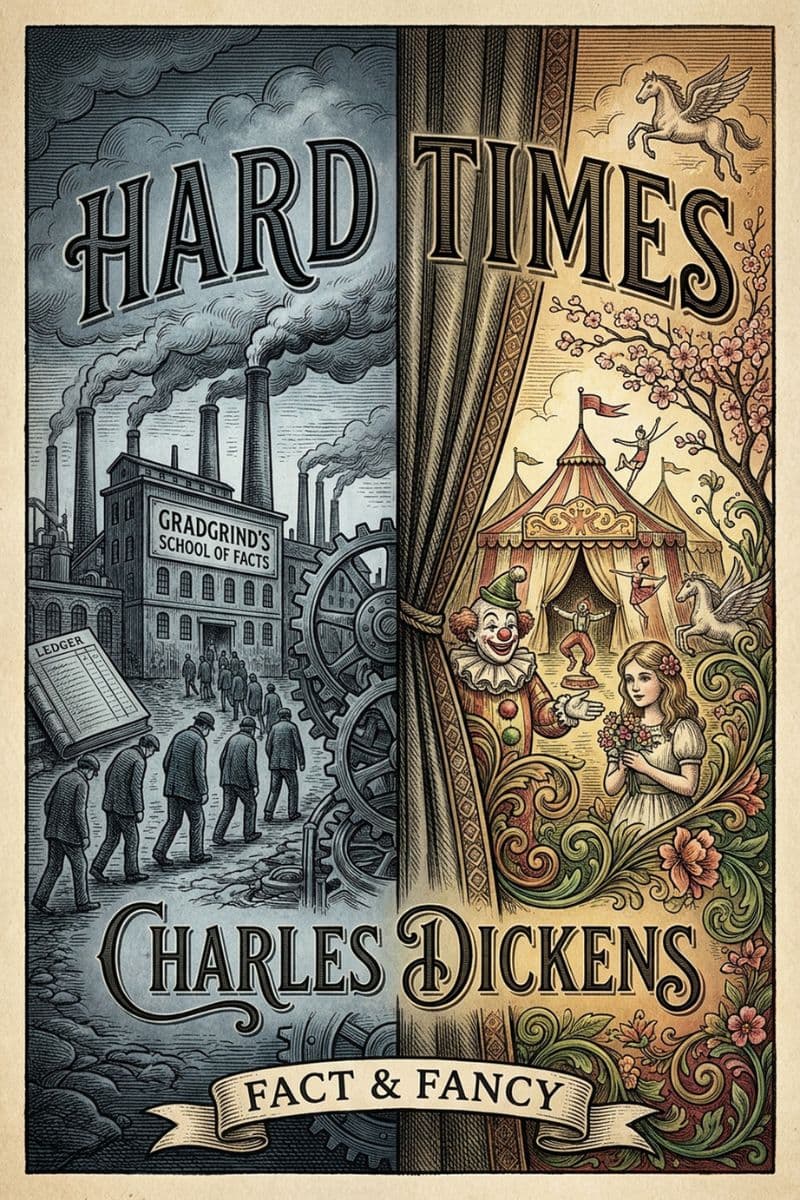
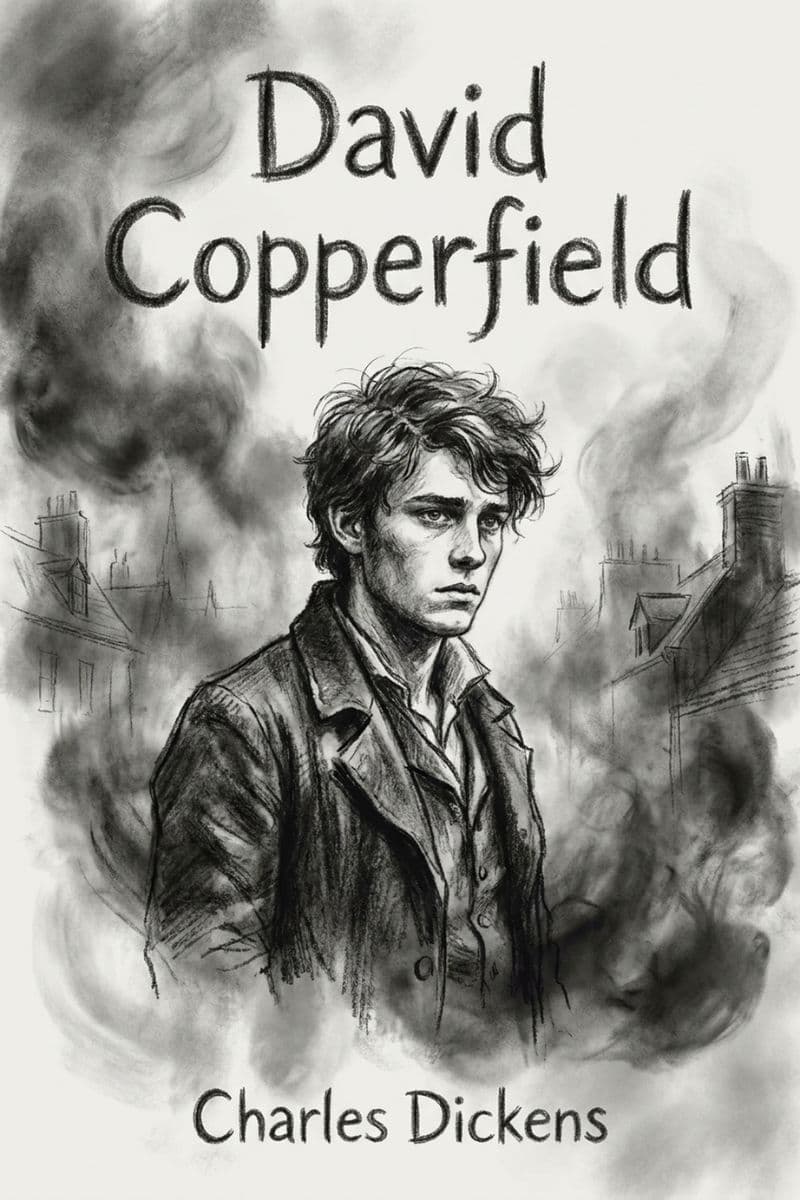
Over the next few decades Dickens wrote many of the most famous novels in the English language, including David Copperfield, Bleak House, Hard Times, A Tale of Two Cities, and Great Expectations. He also edited his own magazines, campaigned for social reform, and ran a home for women trying to rebuild their lives.
The Performer
In his later years Dickens became a celebrity performer, giving dramatic public readings of his work to packed halls in Britain and America. He acted out every character with different voices and gestures, and audiences went wild. The tours were enormously profitable but physically draining.
Final Years
Dickens survived a serious railway crash in 1865 that shook him badly. He pushed on with exhausting reading tours anyway, and in June 1870 he died after a stroke at his home, Gad's Hill Place in Kent, at age 58. His final novel, The Mystery of Edwin Drood, was left unfinished, and readers have been arguing about how it would have ended ever since. He's buried in Poets' Corner in Westminster Abbey.
Fun Facts About the Book
Written in About Six Weeks
Dickens dashed off the whole book in roughly six weeks in October and November of 1843. He composed much of it in his head on long night walks through the streets of London, sometimes covering fifteen or twenty miles.
He Was Broke When He Wrote It
Dickens's latest novel, Martin Chuzzlewit, wasn't selling as well as he'd hoped, his wife was expecting another baby, and money was tight. A quick Christmas book seemed like a smart way to bring in some cash.
A Hit That Barely Paid
He published it at his own expense and insisted on luxurious production: red cloth binding, gilt edges, and hand-colored illustrations. The first 6,000 copies sold out by Christmas Eve, but the costs were so high that Dickens made only about £230 instead of the £1,000 he was counting on.
Pirates Made It Worse
A cheap knockoff edition appeared within weeks. Dickens sued and won, but the pirates simply declared bankruptcy, and he got stuck paying the legal costs, which left him even further out of pocket.
Chapters Called Staves
The book is divided into five "staves" instead of chapters. A stave is a verse of a song, fitting for a book called a carol.
The Full Title
The complete title is A Christmas Carol. In Prose. Being a Ghost Story of Christmas. Dickens very much meant it to be a ghost story, and the Victorians loved telling spooky tales around the fire at Christmas.
Inspired by Real Poverty
Dickens was furious about child poverty after reading a government report on children working in mines and factories and visiting one of London's "ragged schools" for destitute kids. He came up with the idea for the book shortly after giving a speech about education for the poor in Manchester. He once said he wanted the story to hit readers with the force of a sledgehammer.
Illustrated by a Punch Cartoonist
The original illustrations, including the famous picture of Fezziwig's ball, were by John Leech, a caricaturist for the satirical magazine Punch.
Dickens's Favorite Reading
When Dickens began giving public readings, A Christmas Carol became his signature piece. He performed it more than any other work, trimming it from about three hours down to around ninety minutes.
Scrooge Became a Word
"Scrooge" is now in the dictionary as a word for a miserly, grumpy person, and "Bah! Humbug!" has become shorthand for anyone who hates the holidays.
Themes
Redemption
The whole story turns on one huge question: is it ever too late for a person to change? Scrooge is old, set in his ways, and has spent decades hardening his heart. The book asks whether someone like that can still be reached.
Greed Versus Generosity
Scrooge has more money than he could ever spend and still lives like a pauper, while the Cratchits have almost nothing and share it joyfully. Dickens makes it very clear which of them is really poor.
Social Responsibility
The ghosts force Scrooge to look at the poverty around him that he's spent his life ignoring. Dickens wanted his readers to look too, and to stop treating the poor as someone else's problem.
Memory and the Past
The Ghost of Christmas Past shows that Scrooge wasn't born cold. Something happened along the way. The book is surprisingly tender about how loneliness, disappointment, and fear can slowly turn a person into someone they never meant to become.
The Spirit of Christmas
For Dickens, Christmas wasn't mainly about gifts or ceremony. It was about warmth, family, feasting, forgiveness, and opening your heart and your door to other people, a time when everyone, rich or poor, was a fellow passenger on the same journey.
Mortality
Underneath the holly and the plum pudding, this is a book about death, about what we leave behind, and about who will remember us. That shadow is a big part of what makes it so powerful.
The Book's Legacy
It's hard to think of a book that's done more to shape a holiday. When A Christmas Carol came out, Christmas in Britain was a fading, fairly low-key celebration. Dickens didn't invent the holiday, but his story helped revive it and define what it meant for the Victorians and everyone after them: family gatherings, big Christmas dinners, generosity to those in need, and that warm, cozy, snow-dusted feeling we now take for granted. Some historians have gone so far as to say he almost singlehandedly created the modern idea of Christmas.
It's never been out of print and is easily Dickens's most adapted work. There have been dozens of film versions, from Alastair Sim's beloved 1951 Scrooge to George C. Scott, Patrick Stewart, and Jim Carrey's motion-capture Scrooge in 2009. There's Mickey's Christmas Carol, Bill Murray's Scrooged, and, for many fans, the greatest of them all, The Muppet Christmas Carol, with Michael Caine playing it completely straight opposite a cast of felt.
Theaters around the world stage it every single December, and the story's basic shape, a selfish person shown their past, present, and future, has been borrowed by countless TV episodes, movies, and novels.
Nearly two centuries later, people still read it aloud by the fire on Christmas Eve, which is exactly what Dickens would have wanted.